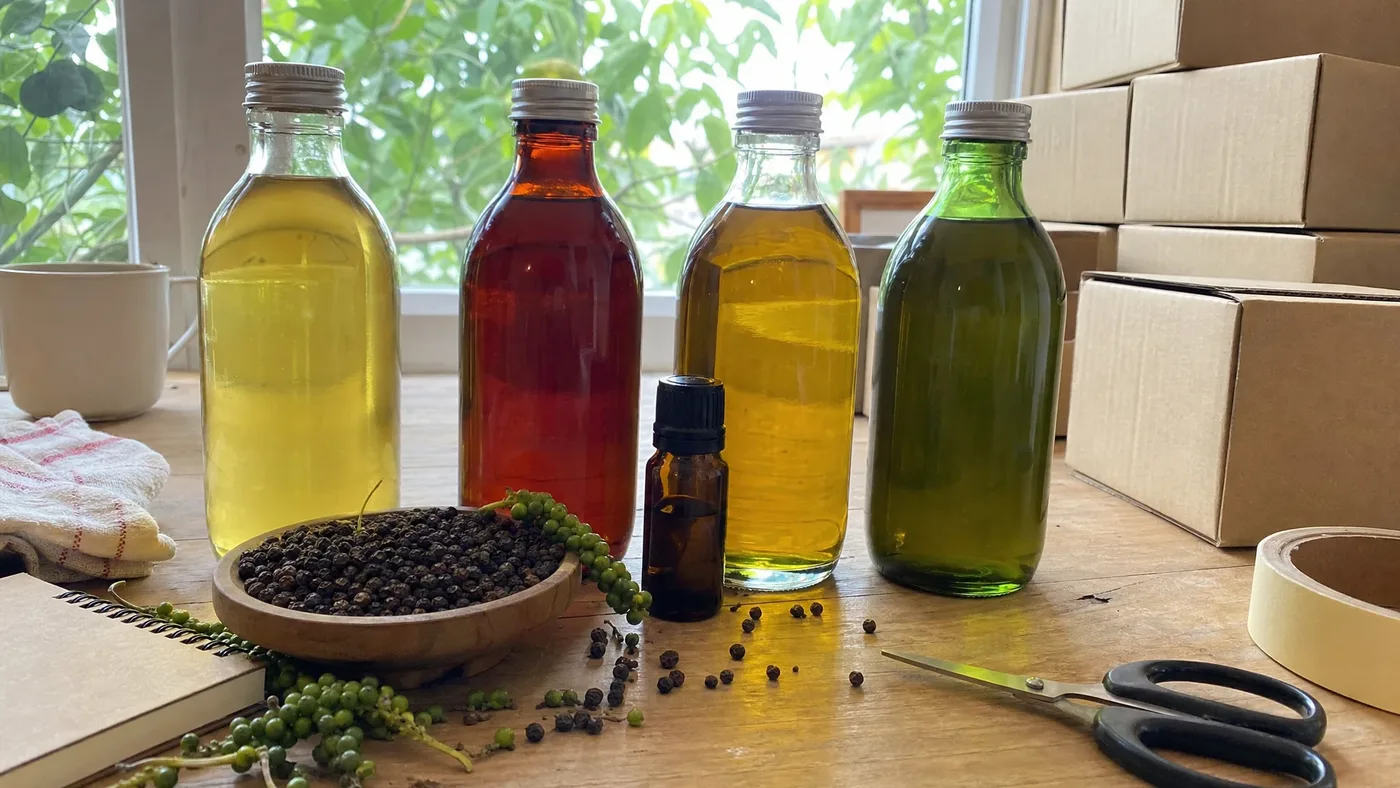
Best Carrier Oils for Black Pepper Essential Oil
Ask an aromatherapist how they pick a carrier oil and they won't start by listing ingredients. They'll ask what the blend is for. A roller bottle meant to go under a shirt cuff during a workday needs something that disappears fast and doesn't leave a mark. A longer massage session wants more glide, something that stays slippery on the skin instead of soaking in after ninety seconds. A bath-safe dispersal has its own rules entirely. The carrier isn't an afterthought you grab on the way out the door. It's half the formula.

Black Pepper Essential Oil
Our own Black Pepper Essential Oil, in sizes from 0.5 oz to bulk.
From $11.99
Shop Now →That matters even more with a warming, peppery oil like black pepper. Before you can think about dilution rates and patch testing, you need a carrier oil for black pepper oil that actually suits how you plan to use the blend. This guide walks through what separates a good carrier from a mediocre one, how the common options stack up against each other (starting with the question everyone asks first, jojoba vs fractionated coconut oil), and what to watch for when you're buying.
Start With the Essential Oil, Then Match the Carrier
It's tempting to shop for carrier oil the way you'd shop for a phone case: pick whatever's cheapest and move on. But the order matters. Decide first what the black pepper oil is doing in your routine, a warming pre-exercise rub, an aromatic roller, a massage oil, and only then choose the carrier that fits that job. A fast-absorbing carrier wasted in a slow massage blend just means you're reapplying every ten minutes. A rich, heavy carrier in a roller bottle leaves sleeves stained. Match the tool to the task, not the other way around.
What to Look For: Quality Indicators
Not all bottles labeled "carrier oil" are equal. A few things separate a carrier worth keeping on your shelf from one you'll regret buying:
- Clear sourcing and extraction method. Cold-pressed, unrefined oils (where that matters, like almond or grapeseed) retain more of their natural character. Fractionated coconut oil and jojoba are processed differently by nature, so look instead for clarity on how they're filtered.
- Packaging that blocks light. Amber or cobalt glass, or opaque HDPE plastic, protects the oil from UV degradation. A carrier sold in a clear bottle sitting under store lighting has already started breaking down before it reaches you.
- A visible production or best-by date. Carrier oils have a shelf life. Reputable sellers print it. If you can't find a date anywhere on the label or listing, that's a gap worth asking about.
- Batch or lot information. This is less about any single bottle and more about whether the seller can answer questions if something seems off.
- A reasonable, consistent scent. Jojoba should smell faint and nutty at most. Fractionated coconut oil should smell like nothing. Sweet almond carries a light, mild aroma. If a carrier smells sharp, sour, or "off," that's a red flag before it ever touches your black pepper oil.
Key Features to Compare
Once you've confirmed quality, the real decision is about function. Here's how the most common carriers compare on the things that actually affect how a black pepper blend feels and performs.
Jojoba vs Fractionated Coconut Oil
This is the comparison most people land on first, and for good reason: both are popular, both are widely available, and both behave very differently on skin.
Fractionated coconut oil (sold under the name caprylic/capric triglyceride on some ingredient lists) is colorless, essentially odorless, and stays fully liquid at room temperature, unlike whole coconut oil, which solidifies below about 76°F. It's commonly cited as absorbing into skin within roughly two minutes, which makes it the practical default for roller bottles, daytime wear, and anywhere you don't want a lingering sheen on your wrists or neck.
Jojoba oil is technically a liquid wax ester, not a true oil, and its structure closely resembles human sebum. It absorbs a little more slowly than fractionated coconut oil, but it tends to leave a less "oily" finish over time once it settles in, and it's a common pick for sensitive or acne-prone skin thanks to that sebum-like profile. If you're building a facial-adjacent blend or something for skin that reacts easily, jojoba is worth the slightly longer absorption window.
Sweet Almond and Grapeseed Oil
For a longer massage session, where glide matters more than speed, sweet almond and grapeseed oils earn their place. Both are heavier than jojoba or fractionated coconut, which means more slip on the skin and a slower absorption rate, exactly what you want when the goal is extended contact rather than a quick application. Grapeseed is the lighter of the two and a common choice for people who want some richness without heaviness. Sweet almond is a long-standing massage therapy staple for a reason: it stays workable on the skin for longer stretches of time.
Quick Comparison Table
| Carrier | Absorption Speed | Best For | Texture |
|---|---|---|---|
| Fractionated coconut oil | Fast (often cited around 2 minutes) | Rollers, daily wear blends | Colorless, odorless, very light |
| Jojoba oil | Moderate | Sensitive or acne-prone skin, facial blends | Light, sebum-like, non-greasy finish |
| Sweet almond oil | Slow | Longer massage sessions | Medium weight, good glide |
| Grapeseed oil | Slow to moderate | Massage, lighter-feel blends | Medium-light, slightly silky |
Diluting Black Pepper Essential Oil: What's Standard
A commonly referenced adult dilution range for essential oils generally is about 2 to 5 percent, which works out to roughly 4 to 10 drops of essential oil per 10 ml of carrier. For black pepper oil specifically, it's worth leaning toward the lower end of that range. Black pepper's chemical profile can become more likely to cause skin sensitization as it oxidizes with age and air exposure, so a lighter hand is the more cautious choice, especially in a new blend you haven't tried before. For the full breakdown of ratios and how to patch test before committing to a blend, see our guide on dilution rates and patch testing. If you're building a blend for abdominal massage specifically, the carrier choice and dilution both shift slightly, which we cover in our piece on abdominal massage blends.
Top Picks at Different Price Points
Carrier oils are a category where price mostly tracks packaging, volume, and sourcing transparency rather than dramatic differences in performance. A few general guidelines by tier:
- Budget tier: Large bottles (16 oz or bigger) of fractionated coconut oil or sweet almond oil from sellers who clearly state cold-pressed or fractionation method. Good for people blending often and wanting a workhorse carrier.
- Mid tier: Smaller, dated bottles (2 to 4 oz) in amber glass, often jojoba or grapeseed, aimed at people building specific blends rather than stocking up.
- Premium tier: Organic-certified or specialty carriers, sometimes unrefined and cold-pressed with visible lot numbers and extraction detail. Worth it if you're sensitive to subtle scent or residue, less necessary if your main blend use is a quick daytime roller.
There's no single "best" tier here. A budget fractionated coconut oil that's fresh and properly stored will outperform an expensive jojoba oil that's been sitting open on a windowsill for a year.
Red Flags to Avoid
- No date anywhere. If a listing or label gives zero indication of production date or shelf life, you're guessing at freshness.
- Clear plastic or clear glass bottles sold under direct light. UV exposure degrades carrier oils faster than almost anything else.
- Vague labeling like "natural oil blend" with no single named carrier. You want to know exactly what you're diluting into.
- A rancid or sharp smell straight out of the bottle. Carrier oils oxidize too, and a rancid carrier can irritate skin on its own, regardless of what essential oil you mix into it. This matters just as much for a bottle that's been open on your shelf for eight months as it does for one you're about to buy. Store carriers away from heat and light, and give a bottle a quick smell test before using it if it's been open a long time.
- Prices that seem too low for the stated volume and oil type. Jojoba in particular is rarely cheap in bulk. A suspiciously low price on a "pure jojoba" listing is worth a second look at the fine print.
Where to Buy
Specialty essential oil retailers and botanical suppliers are generally your best bet for carriers with clear sourcing, dated bottles, and accurate labeling. Health food stores and co-ops often carry sweet almond and grapeseed oil in the cooking aisle, which can work for carrier purposes but isn't always packaged with light protection in mind, check the bottle before buying. Large online marketplaces carry everything from budget fractionated coconut oil to premium organic jojoba, but seller reputation and recent reviews matter more there than almost anywhere else, since listings change hands and quality can vary between sellers offering the "same" product.
Whichever carrier you land on, the decision works best in this order: figure out what your black pepper oil blend needs to do, pick the carrier that matches that job, then dilute conservatively and patch test. A great carrier oil won't make up for skipping that last step, but it does make the whole experience of using black pepper oil more pleasant day to day, which, honestly, is most of the point.
This article is for educational purposes and does not constitute medical advice. Always consult a qualified healthcare provider before using essential oils, particularly if pregnant, nursing, or managing a health condition.