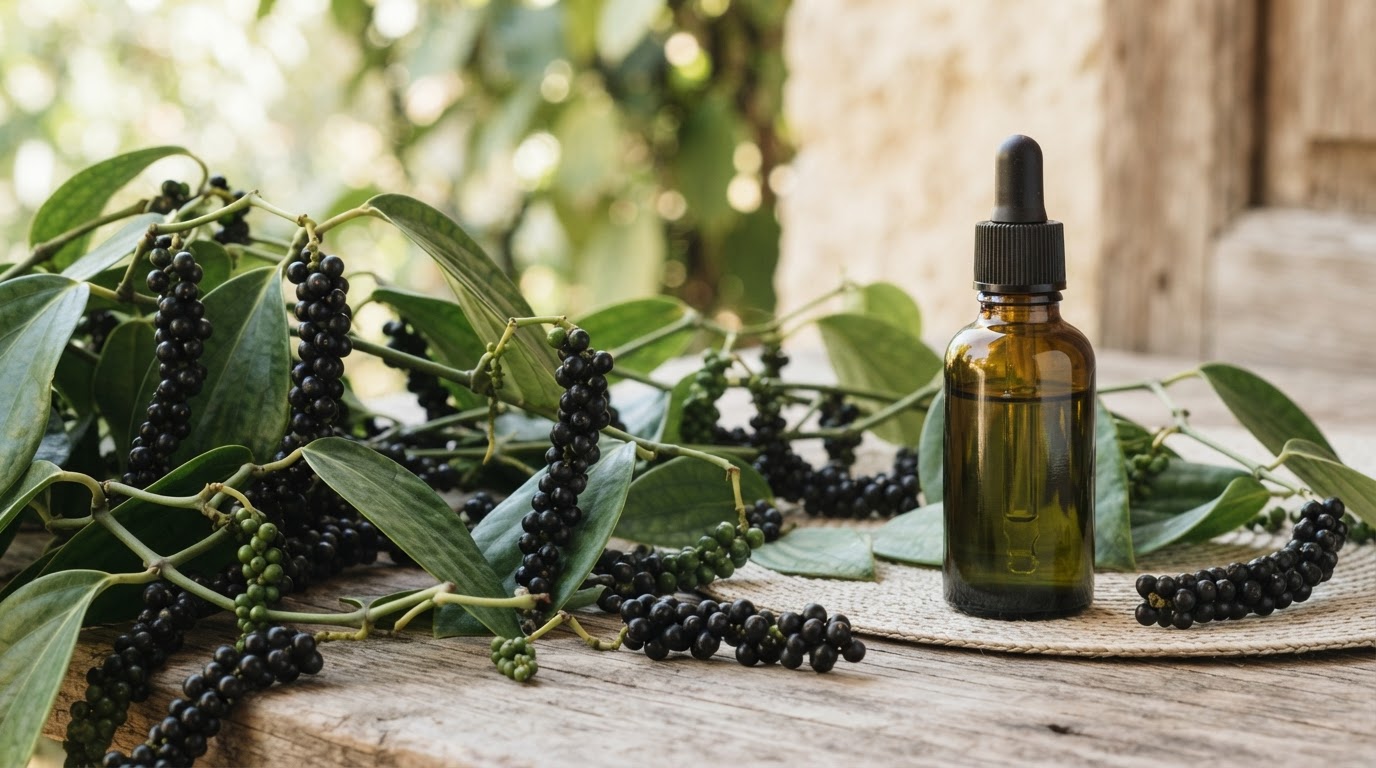
How to Scent Unscented Lotion with Black Pepper Oil, Step by Step
Unscented lotion is one of the most useful things you can keep in a bathroom cabinet. It gives you a blank canvas: a stable, already-formulated base that you can customize with whatever scent fits your mood, without paying for fragrance you didn't choose. Black pepper essential oil is a favorite for this kind of project. It's warm, a little spicy, and slightly woody, closer to the smell of freshly cracked peppercorns than anything sweet or floral. Blended thoughtfully into a fragrance-free lotion, it can turn an ordinary moisturizing routine into something that feels a bit more grounding and a bit more like a small ritual.

Black Pepper Essential Oil
Our own Black Pepper Essential Oil, in sizes from 0.5 oz to bulk.
From $11.99
Shop Now →This guide walks through exactly how to scent unscented lotion with essential oil using black pepper as the featured note: what to gather, how to work out a safe dilution, and the mixing steps that keep the finished lotion smooth, evenly scented, and stable on the shelf.
What You'll Need
- Unscented lotion base: a 4 oz (about 120 ml) fragrance-free lotion, either a purpose-made DIY lotion base or a plain moisturizer you already own with no added fragrance
- Black pepper essential oil: 100% pure, ideally from a supplier that publishes GC-MS testing so you know exactly what's in the bottle
- A carrier oil such as jojoba or fractionated coconut oil (optional, useful if you want to pre-dilute the essential oil before adding it to the lotion)
- A small glass mixing bowl, or you can work directly in the lotion's original jar or bottle if there's room to stir
- A stirring tool: a stainless steel spoon, a glass rod, or a wooden coffee stirrer. Essential oils can degrade some plastics over repeated use, so glass or metal is the safer long-term choice
- A glass measuring dropper or the dropper insert that came with your essential oil bottle, for accurate drop counts
- A funnel, if you plan to transfer the finished lotion into a pump bottle
- Labels and a permanent marker, to record the date and dilution percentage
- A small, clean storage jar or bottle, glass or PET plastic rated for essential oil contact
Understanding Black Pepper Oil Dilution for Lotion
Getting the black pepper oil dilution for lotion right is the single most important part of this project. Black pepper is considered a warming oil, and using too much in a leave-on product applied over a large area of skin increases the chance of a reaction for some people, particularly those with sensitive skin. Because lotion is meant to go on generously and often, a conservative dilution is the right starting point, not an afterthought.
Cosmetic formulators generally recommend keeping warming oils like black pepper toward the lower end of typical essential oil dilution ranges when the product covers a large body area and is used daily. The table below shows drop counts for a standard 15-drops-per-ml dropper, which is typical for most essential oil bottles.
| Dilution | Drops per 1 oz (30 ml) lotion | Drops per 4 oz (120 ml) lotion | Best for |
|---|---|---|---|
| 0.5% | 3 drops | 12 drops | First-time use, sensitive skin, full-body application |
| 1% | 6 drops | 24 drops | Everyday DIY scented body lotion, black pepper as a supporting note |
| 2% | 12 drops | 48 drops | Small, targeted areas only, such as pulse points on the wrists |
For a first batch, start at 0.5% to 1%. You can always scent a second batch a little stronger once you know how your skin responds and how the fragrance settles once it's mixed in. Black pepper oil is also a strong top note, meaning it reads as more intense right after mixing than it will a day or two later once it has had time to blend into the base.
Step-by-Step: How to Scent Unscented Lotion with Black Pepper Oil
- Choose and measure your lotion base. Pour or scoop your unscented lotion into a clean glass bowl, or work directly in its original container if there's enough headroom to stir without spilling. Measure the amount so you can calculate the correct number of drops from the dilution table above. For a first attempt, 1 oz (30 ml) is a manageable test size before you commit a full bottle.
- Decide on your dilution. Pick a percentage from the table based on how the lotion will be used. A lotion for hands and arms that goes on once or twice a day can sit at 1%. A lotion meant for the whole body, applied generously and often, is safer at 0.5%.
- Pre-dilute the essential oil if you'd like extra control. This step is optional but helpful for beginners. Mix your calculated drops of black pepper oil into a teaspoon of carrier oil first. This spreads the essential oil across more liquid, which makes it easier to fold evenly into the lotion instead of getting a concentrated pocket in one spot.
- Add the black pepper oil to the lotion slowly. Using your dropper, add the oil (or the pre-diluted oil and carrier mixture) a few drops at a time rather than all at once. Adding it gradually, while stirring between additions, is the most reliable way to add black pepper oil to lotion without ending up with an uneven scent.
- Stir thoroughly and patiently. Use your glass or metal stirring tool to fold the oil into the lotion in slow, even strokes for at least a full minute. Essential oil doesn't dissolve into lotion the way it dissolves into alcohol, so it needs mechanical mixing to distribute evenly. Scrape the sides and bottom of the bowl as you go, since oil tends to pool there first.
- Check the consistency. The mixed lotion should look uniform, with no visible oil droplets floating on the surface or separated at the edges. If you see small beads of oil sitting on top after a minute of rest, stir again. A whisk works well if a spoon isn't breaking the droplets up.
- Transfer to your storage container. Use a funnel to move the finished lotion into a clean, dry glass jar or PET bottle. Fill it most of the way, leaving a little headspace if the container has a pump so it can draw properly.
- Label the container immediately. Write the date, the essential oil used, and the dilution percentage on the label. This matters more than it seems: scent fades slightly over time, and knowing your original ratio lets you recreate or adjust the next batch accurately.
- Let the scent settle before judging it. Set the lotion aside, out of direct sunlight, for 24 to 48 hours before forming an opinion on the final fragrance. Black pepper's sharper top notes soften as the oil blends fully into the base, so a lotion that smells strong right after mixing often mellows into something warmer and rounder by the second day.
Tips for a Better Blend
- Pair black pepper with a complementary note if you want more depth. Citrus oils like sweet orange or bergamot brighten it, while cedarwood, patchouli, or clary sage add warmth underneath it.
- Work in small batches (1 to 2 oz) while you're still dialing in the dilution and scent strength you like. It's easier to scale up a formula you've already tested than to fix a full bottle that's too strong.
- Keep the finished lotion away from direct heat and sunlight. Both can cause the aromatic compounds in black pepper oil to fade faster and can also affect the lotion base itself.
- If your lotion base already contains an emulsifier, it will hold the essential oil in suspension better than a very simple, water-heavy lotion. If separation keeps happening no matter how well you stir, a small amount of an emulsifying wax or a dedicated fragrance solubilizer, stirred in first, can help.
- Shake or stir the lotion again before each use for the first week. Some settling and re-mixing is normal in a small-batch, hand-mixed product.
Common Mistakes to Avoid
- Adding too much oil at once. Dumping the full drop count in without stirring between additions almost always leaves concentrated pockets of oil in the finished lotion, which raises the chance of a skin reaction in that spot even if the overall dilution looks correct on paper.
- Skipping the patch test. Even a well-diluted DIY scented body lotion with black pepper oil should be tested on a small area first, especially if it's your first time using this oil.
- Guessing at drop counts instead of measuring. Dropper size varies by manufacturer. Use the dropper that came with your specific bottle, or check its rated drops-per-ml, rather than assuming every dropper measures the same.
- Mixing into warm or hot lotion. If you're melting a lotion base to work with it, let it cool close to room temperature before adding the essential oil. Heat can cause some of the more volatile aromatic compounds to evaporate before they've even had a chance to blend in.
- Forgetting to label the batch. Without a label, it's easy to lose track of the dilution and end up guessing again for the next batch, or worse, mixing up which jar is scented and which one isn't.
- Using cloudy or old carrier oil. If you're pre-diluting with a carrier oil, make sure it isn't past its shelf life. A rancid carrier oil will affect the scent of the whole batch.
What to Expect
A well-diluted black pepper lotion tends to open with a sharp, spicy top note right after application, the same brightness you'd get from cracking fresh peppercorns, before settling into a rounder, warmer background scent as it sits on the skin. Many people describe it as a grounding or invigorating scent to reach for during a morning routine, and some report enjoying it as part of an evening wind-down when paired with a softer note like cedarwood. These are personal, anecdotal impressions rather than guaranteed outcomes, since scent perception and skin chemistry vary quite a bit from person to person.
Expect the fragrance to be noticeable but not overwhelming for the first hour or two after applying, then to fade to a subtler skin-close scent as the day goes on, which is typical of how essential oils behave in a lotion base rather than a stronger format like a perfume oil.
Patch Testing and Safety Notes
Before applying any new black pepper lotion broadly, apply a small amount to the inside of your forearm and leave it uncovered for 24 to 48 hours, checking periodically for redness, itching, or general discomfort. If any of those show up, wash the area and skip using that batch.
- Keep dilution at 0.5% to 1% for full-body, everyday use, reserving anything higher for very small, targeted areas.
- Avoid applying near the eyes, mouth, or other sensitive areas.
- Keep finished lotion and the essential oil bottle itself out of reach of children and pets.
- If you are pregnant, nursing, managing a health condition, or taking medication, check with a qualified healthcare provider before adding essential oils to a personal care routine.
- Store the finished lotion in a cool, dark place and use it within the timeframe recommended for your lotion base, generally a few months for a DIY, preservative-light formula.
A good rule of thumb for any first attempt at scenting unscented lotion with essential oil: start lower than you think you need, mix a small test batch, and give the scent a day or two to settle before deciding whether it needs more.
Once you've made one successful batch, adjusting the formula for future rounds is straightforward. You'll know your preferred dilution, how strong you like the black pepper note, and whether you want to round it out with a second oil. From there, scenting unscented lotion becomes less of an experiment and more of a five-minute routine.