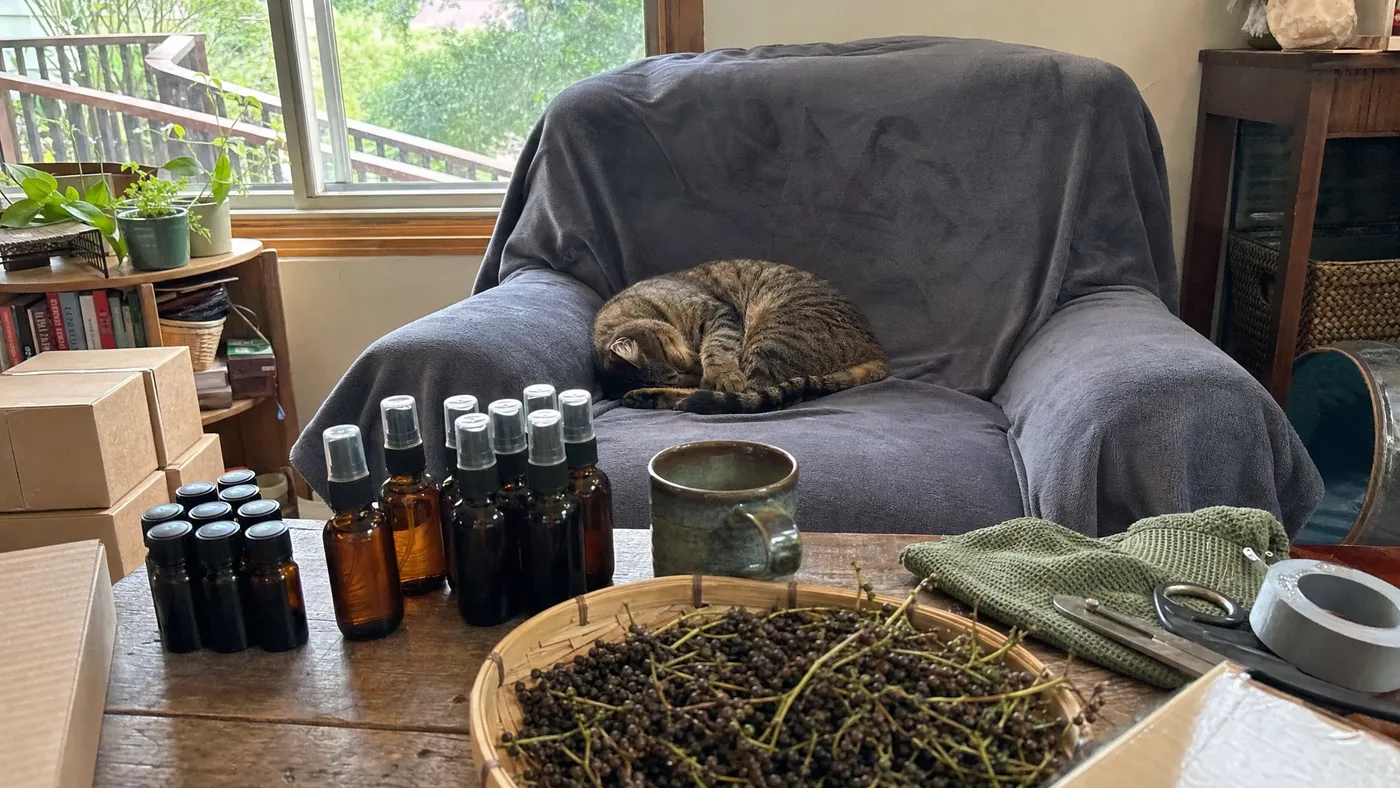
Black Pepper Oil and Pets: Diffusing Around Dogs, Cats
Anyone who loves a warm, peppery room and also shares the house with a cat or dog has probably hesitated with a finger over the diffuser button. The good news is that a few habits cover most of the risk, and none of them cost you the scent. Here is the routine we would follow.

Black Pepper Essential Oil
Our own Black Pepper Essential Oil, in sizes from 0.5 oz to bulk.
From $13.99
Shop Now →Why cats get the most attention
Pet Poison Helpline explains that cats lack a liver enzyme that helps other animals break down and clear certain toxins, and that they are especially sensitive to phenols, which some oils contain. Concentrated essential oils should never be applied directly to a cat. Dogs are generally discussed with less alarm, but the same sources treat essential oils as a category to handle carefully around any pet, and smaller animals have less body weight to spare.
The advice you will find from veterinary poison services covers essential oils as a group, not black pepper oil by itself. We do the same thing here: apply the general rules and keep them simple.
The good news is that most of what helps is common sense. Pets are creatures of routine, and they tell you a lot just by how they behave. A dog that wanders over and flops down in the usual spot is giving you a different message from a cat that gets up, stretches and leaves the room. Pay attention to those small signals.
How diffusers reach a pet
Pet Poison Helpline separates two kinds of diffusion. A passive diffuser mostly causes breathing irritation. Active diffusers, both nebulizing and ultrasonic, release microdroplets that can settle on fur and then get absorbed or swallowed when the animal grooms. So a pet does not have to be in the same spot as the bottle to pick up oil; it can pick it up from the air and from surfaces.
That is the reasoning behind our tips:
- Leave a door open. A pet that can walk away can manage its own exposure. Never diffuse in a room where a cat is shut in.
- Keep sessions short. The Tisserand Institute suggests running a diffuser 30 to 60 minutes and then giving it 30 to 60 minutes off with fresh air, and our own diffuser suggestion is only two or three drops. See our diffusing guide for the details.
- Watch your pet, not the clock. If a dog or cat leaves, sneezes, drools or seems off, turn the diffuser off and open a window.
- Wipe the surfaces. Mist can settle on a shelf, a lid or a blanket, and animals groom.
It also helps to think about where in the house you diffuse. A bedroom or study with the door closed is a better choice than a hallway or the living room where your pet spends the day, because it gives the scent somewhere to stay put and leaves your animal's favorite spots alone. Open a window afterward and let the room air out before you let the dog or cat back in.
Skin, fur and food are off limits
We do not suggest putting black pepper oil on a pet's coat or in its food or water, diluted or not. Animals lick whatever is on them, and our own guidance for the oil is to keep it away from children and pets. If you wear a diluted blend, let it settle before a cuddle and wash your hands after handling the bottle.
Everyday routines that help
- Diffuse when you are home. You can notice a change in your pet's behavior only if you are there to see it.
- Start with one drop. A small room does not need more, and you can add a drop later if you want to.
- Empty and rinse the diffuser. Old oil residue in the tank is one more thing a curious nose does not need.
- Plan for visitors. If you take a pet to a friend's house, ask first whether they have been diffusing.
Storage is half the plan
A knocked-over bottle is the most direct way a pet meets concentrated oil. Keep it capped, in a closed cabinet up high, and put it away after every use. Our oil is sold neat, so a spill is the full-strength product.
If you share a home with a bird, a rabbit or a small animal in a cage, the safest course is to skip the diffuser in that part of the house altogether and talk to your veterinarian about it. Smaller animals have less body weight to spare, and a cage cannot walk away from the air.
If something seems wrong
Move the animal to fresh air first. Pet Poison Helpline notes that cats with breathing symptoms need to get to fresh air right away and need emergency care if they do not improve quickly. The service is open around the clock at (855) 764-7661, and your veterinarian knows your pet's history best. Please call before trying anything at home.
A pet-friendly home can still smell wonderful.
Black Pepper Essential Oil
Black Pepper Essential Oil from our own shop, in sizes from 0.5 oz to bulk.
From $13.99
Shop Now →Sources & Further Reading
- Pet Poison Helpline, Essential oils and cats
- Tisserand Institute, Safety guidelines
- National Capital Poison Center, Essential Oils