Black Pepper Oil Stinging Skin? What to Do Next
If black pepper oil is stinging or reddening your skin right now, deal with that first. Stop using it, wash the area, and come back to read the rest once you are comfortable.

Black Pepper Essential Oil
Our own Black Pepper Essential Oil, in sizes from 0.5 oz to bulk.
From $13.99
Shop Now →The first few minutes
- Stop. Do not apply more oil, diluted or not. The National Capital Poison Center, Essential Oils advises stopping and washing off if a rash appears.
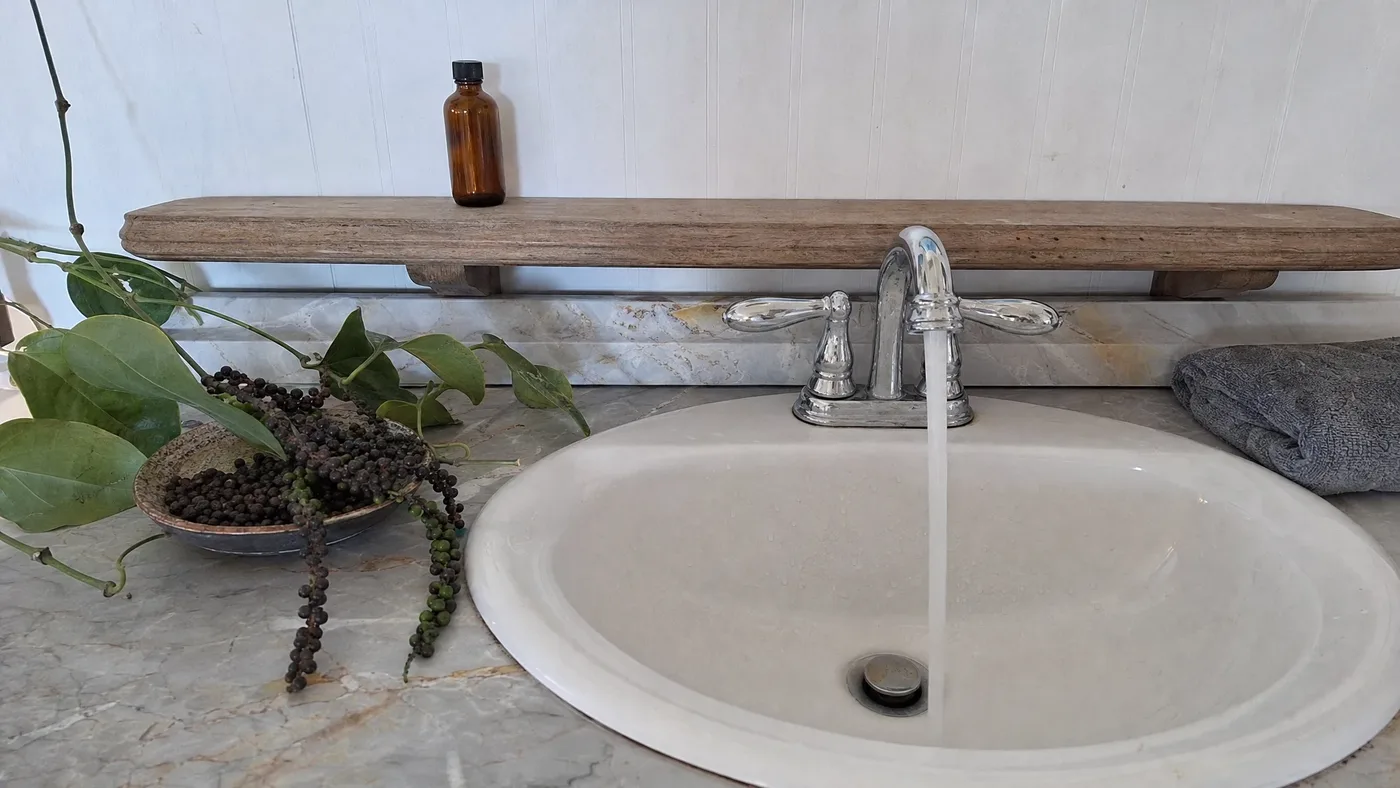
- Wash gently. Use mild soap and lukewarm water for a few minutes. Reasoning from the fact that oil and water do not mix, soap gives the water something to lift the oil with, which is why rinsing alone does less.
- Pat dry. No scrubbing.
- Skip the rescue creams. Adding another oil mostly spreads what is already there.
- Leave the area alone and watch how it settles.
Write down what happened
While the details are fresh, jot down a few notes: which oil, how many drops, what carrier, where on the body, and roughly when you put it on. It sounds fussy, but these notes are the most useful thing you can bring to a conversation with a doctor or pharmacist, and they help you work out later what changed. Many reactions turn out to involve more than the oil, such as a new lotion, a new laundry soap or a carrier you had not used before.
Mild irritation or something more?
Mild irritation usually stays where the oil touched: some redness, a tingle or warmth. It tends to settle after washing. We describe the oil as a skin irritant at any generous dilution, and that kind of reaction is what that phrase is about.
An allergic reaction behaves differently. It can spread beyond the spot, bring hives, bumps or blisters, and show up later than you expect. DermNet NZ notes that reactions to patch-tested allergens often need 48 to 96 hours to develop (DermNet NZ, Patch tests), and it describes fragrance allergy as affecting about 1% of adults, with natural extracts among the recognised triggers (DermNet NZ, Fragrance allergy). So a day-two rash after an evening application still counts.
When to get help
- Redness that is spreading, worsening or still there after a day.
- Blisters, hives or swelling, especially around the eyes, lips or face.
- Any trouble breathing, which needs emergency care right away.
- Oil in the eyes or swallowed oil. Call a poison center, using the online tool on the NCPC page, and see a doctor for eye symptoms.
A doctor or dermatologist can work out whether you have irritation or a true allergy, and that answer tells you whether this oil is for you.
Bring the bottle
If you do see a professional, bring the oil and anything else you put on that day, or at least photos of the labels. Say clearly what the product is, how strong the blend was and how long it sat on the skin. The more specific you are, the faster someone can help you sort out what is going on. If the blend was made from several oils, bring every one of them, because the culprit is not always the one you suspect.
Why it happened
Two things usually sit behind a reaction. The first is strength: undiluted oil, or a blend stronger than the skin liked. Our guidance is 0.5% to 2% in a carrier, starting low; our dilution guide has the numbers. The second is age and air. Oxidation of oil components can raise the risk of skin reactions, and a review recommends sealed, dark bottles kept cool and a patch test with the actual product you will use (Sharmeen et al., Molecules 2021). Our post on storing black pepper oil shows how to keep a bottle in good shape. Sensitisation can also build over repeated use, so a reaction after months of no trouble is possible.
When you do come back to it, come back gently. Many people find they are happier simply smelling the oil from the bottle or in a diffuser, with no skin contact at all, and that is a perfectly good way to keep enjoying it. There is no prize for pushing through a reaction.
After a reaction, do not try the oil again at a higher strength to prove a point. Let the skin recover, and ask a professional if you want to try again. Our safety overview covers the wider picture, and a diffuser is always there as a gentler way to enjoy it.
Black Pepper Essential Oil
Black Pepper Essential Oil from our own shop, in sizes from 0.5 oz to bulk.
From $13.99
Shop Now →