Black Pepper Oil vs Pink Pepper Oil: Same Name, Different Plant
Stand at a shelf of essential oils long enough and you'll eventually pick up two bottles with almost identical labels: black pepper and pink pepper. Same word, same rack, same general "spice" category. It's easy to assume they're two shades of the same thing, maybe a lighter and darker version of one pepper plant. They aren't. This is one of the more genuinely useful black pepper oil vs pink pepper oil comparisons to understand before you buy, because the two come from entirely different plant families, and that difference shows up in the bottle, in the scent, and in how each oil behaves once it's in a blend.

Black Pepper Essential Oil
Our own Black Pepper Essential Oil, in sizes from 0.5 oz to bulk.
From $11.99
Shop Now →We carry black pepper oil here, so we'll be upfront about that. But a fair comparison means giving pink pepper its due, not just talking it down. Below is the botany, the scent profile, a side-by-side table, honest pros and cons for each, and recommendations by use case so you can decide which bottle (or both) belongs in your kit.
Is Pink Pepper Real Pepper? The Botanical Backstory
This is the question that trips up most shoppers, and the honest answer is: not really, at least not in the botanical sense. Is pink pepper real pepper depends entirely on which definition of "pepper" you're using.
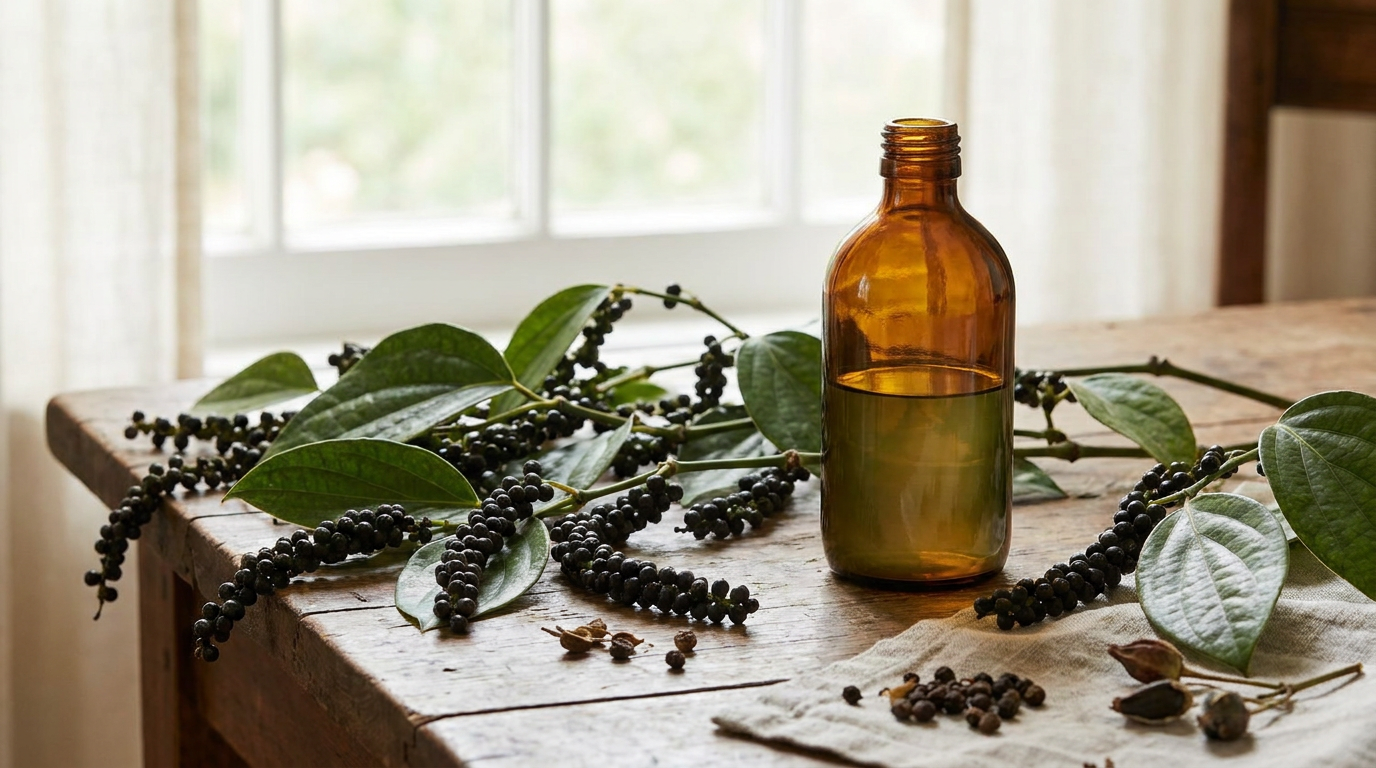
Black pepper oil is steam distilled from the dried, unripe berries of Piper nigrum, a woody, climbing vine native to the Malabar Coast of India and now cultivated across South and Southeast Asia. It belongs to the Piperaceae family, the same botanical family that gives us long pepper and, distantly, kava. When people talk about "real" pepper (the stuff in a pepper mill, the spice that built trade routes), this is the plant.
Pink peppercorns, by contrast, come from one of two related shrubs: Schinus terebinthifolia (Brazilian pepper tree) or its cousin Schinus molle (Peruvian pepper tree). Both belong to Anacardiaceae, the cashew and mango family, not the pepper family at all. Pink pepper's berries got their name because early European traders thought they resembled peppercorns and used them as a spice substitute, not because of any botanical relationship to black pepper.
There's a practical footnote worth knowing here: people with sensitivities to cashews, mangoes, or poison ivy (all Anacardiaceae relatives) sometimes react to pink pepper, since the family carries related compounds. If that applies to you, a patch test and a conversation with a qualified healthcare provider before use is the sensible move, the same advice we'd give for any new botanical.
So the short version: black pepper is a true pepper, botanically and culinarily. Pink pepper is a pretty, aromatic berry that borrowed the name.
How Each Oil Is Made
Black pepper essential oil is produced by steam distilling dried peppercorns, the same berries that get ground into your pepper mill, just before or sometimes after grinding. You can read more about how black pepper oil is made from sun-dried berries if you want the full picture of harvest to bottle. The yield is low (peppercorns aren't oil-rich), which is part of why quality black pepper oil isn't the cheapest thing on the shelf.
Pink pepper oil is also typically steam distilled, sometimes from the dried berries, sometimes from the berries along with small amounts of leaf and twig material depending on the producer. Because Schinus trees are more of an invasive, fast-spreading species in a lot of regions (including parts of the southern United States), pink pepper raw material is often more abundant and can be less expensive to source, though pricing still varies by supplier and distillation method.
Black Pepper vs Pink Pepper: Scent Comparison
This is where the two oils diverge the most, and it's the heart of any honest black pepper pink pepper scent comparison.
Black Pepper Oil's Aroma
Black pepper oil smells warm, dry, and unmistakably peppery in the way freshly cracked pepper smells right before it hits food. It has a sharp, slightly woody top note that mellows into something deeper and almost leathery as it sits on skin or in a diffuser. Perfumers generally treat it as a middle to base note, meaning it has staying power and anchors a blend rather than flashing and disappearing. If you want the long version, our full breakdown of what black pepper essential oil smells like goes note by note.
Pink Pepper Oil's Aroma
Pink pepper oil is lighter, brighter, and noticeably sweeter. Think pink peppercorns crushed between your fingers: a fruity, almost rosy top note with a faint woody-pepper undertone, but nowhere near as sharp or dry as black pepper. It reads more as a top note in perfumery, meaning it shows up first and fades faster, giving a blend sparkle rather than depth.
Side by Side
If black pepper oil is a low, warm drumbeat, pink pepper oil is the bright, quick strike of a triangle. Both can work beautifully in the same composition, but they're doing different jobs. A lot of modern niche perfumery actually uses them together on purpose, letting pink pepper announce the opening and black pepper carry the finish. For more on how black pepper behaves as a fragrance note on its own, see black pepper as a perfume note in modern fragrance.
Comparison Table
| Attribute | Black Pepper Oil | Pink Pepper Oil |
|---|---|---|
| Botanical source | Piper nigrum (Piperaceae family) | Schinus terebinthifolia or Schinus molle (Anacardiaceae family) |
| Related to true pepper? | Yes, this is the source plant of table pepper | No, botanically unrelated despite the shared name |
| Extraction method | Steam distilled from dried peppercorns | Steam distilled from dried berries (occasionally with leaf/twig) |
| Scent character | Warm, dry, sharp, woody, slightly leathery | Bright, sweet, fruity, lightly woody |
| Perfumery role | Middle to base note, long staying power | Top note, fades faster |
| Typical price point | Moderate to premium, lower yield from raw material | Often more affordable, more abundant source plant |
| Common uses | Colognes, warm autumn blends, candles, soap, room sprays | Fresh or floral-adjacent perfumery, brighter seasonal blends |
| Sensitivity notes | Standard dilution and patch-testing guidance applies | Possible cross-reactivity for those sensitive to cashew, mango, or poison ivy family plants |
| Availability | Widely available from reputable single-origin suppliers | Available but less standardized; quality varies more by supplier |
Pros and Cons
Black Pepper Oil
Pros:
- Genuine botanical connection to the pepper you already know from the kitchen, which makes the scent instantly recognizable
- Long-lasting base note that anchors a blend instead of vanishing within the hour
- Well documented in perfumery and aromatherapy literature, so sourcing and dilution guidance is easy to find
- Pairs naturally with warm autumn and winter notes: sandalwood, cedarwood, citrus, cardamom
Cons:
- Sharper, more assertive scent that can read as "too spicy" if overdosed in a blend
- Lower distillation yield tends to push the price higher than pink pepper
- Not the right choice if you want a light, fresh top note
Pink Pepper Oil
Pros:
- Bright, sweet opening note that lifts a blend without heaviness
- Often more budget-friendly thanks to a more abundant source plant
- Works well in lighter, warmer-weather or floral-adjacent compositions where full black pepper would feel too heavy
Cons:
- Not a true pepper botanically, so labeling and marketing can be misleading if a brand implies otherwise
- Possible cross-sensitivity for people with cashew, mango, or poison ivy family sensitivities
- Fades faster in a blend, so it needs a supporting base note to carry longevity
- Quality and sourcing standards are less consistent across suppliers than for black pepper
Best For: Recommendations by Use Case
The pink peppercorn essential oil difference from black pepper isn't just academic. It changes which bottle you should reach for depending on the project.
Best for Warm, Grounding Blends
Black pepper oil. If you're building an autumn simmer pot, a spiced candle, or a cologne base meant to feel cozy and dry-down heavy, black pepper's depth does the work. See our guide to autumn simmer pots and candle scents with black pepper oil for specific ratios.
Best for Bright, Fresh Compositions
Pink pepper oil. If the goal is a lighter room spray or a perfume opening that feels crisp rather than heavy, pink pepper's fruitier top note fits better. It's the one to reach for when black pepper would feel like too much too fast.
Best for Soap and Cold Process Work
Black pepper oil has a longer track record in cold process soap, where its scent tends to hold up better through saponification. Our soapmaker's batch notes on black pepper in cold process walk through real trial results.
Best for Budget-Conscious Projects
Pink pepper oil generally costs less per bottle, which matters if you're testing a new blend idea and don't want to commit to a premium oil before you know the formula works.
Best for Skin-Applied Blends
Both oils require careful dilution before any skin contact, and black pepper oil in particular has more established dilution guidance available. Read black pepper oil on skin: dilution rates and patch testing before using either oil this way, and always patch test first regardless of which one you choose.
Best for Layering Together
Honestly, a lot of perfumers use both. Pink pepper up top for lift, black pepper underneath for weight. If you're building a from-scratch blend, it's worth testing a small batch with both before committing to a full formula. Our guide on what black pepper essential oil blends well with covers pairing logic that applies here too.
A quick safety note: whichever oil you choose, dilute before skin contact, patch test on a small area first, and check with a qualified healthcare provider if you're pregnant, nursing, or managing a sensitivity to related plant families. This applies equally to black pepper and pink pepper oil.
The Verdict
Black pepper oil and pink pepper oil aren't competitors so much as they're two different tools that happen to share a name. If you want the real thing, the plant that put pepper on every table in the world, with a scent that's warm, dry, and built to last in a blend, black pepper oil is the more honest and more versatile choice, especially for candles, colognes, and cold process soap.
If you want a lighter, sweeter, more budget-friendly top note and you're not fussed about botanical pedigree, pink pepper oil earns its place too. Just buy it from a supplier who's upfront about what it actually is rather than one that lets the name do the talking.
Our recommendation, if you can only pick one to start: black pepper oil. It's the more established, better-documented, longer-lasting option, and it's genuinely the plant the name promises. But if your project calls for brightness over depth, don't rule pink pepper out just because it's the less "authentic" of the two. Different plant, different job, both worth knowing.
Curious about sourcing quality before you buy either one? Our guide on how to buy pure black pepper essential oil covers the label details and testing standards worth checking, and much of that same logic (batch testing, clear botanical naming, transparent sourcing) applies just as well when you're shopping for pink pepper.