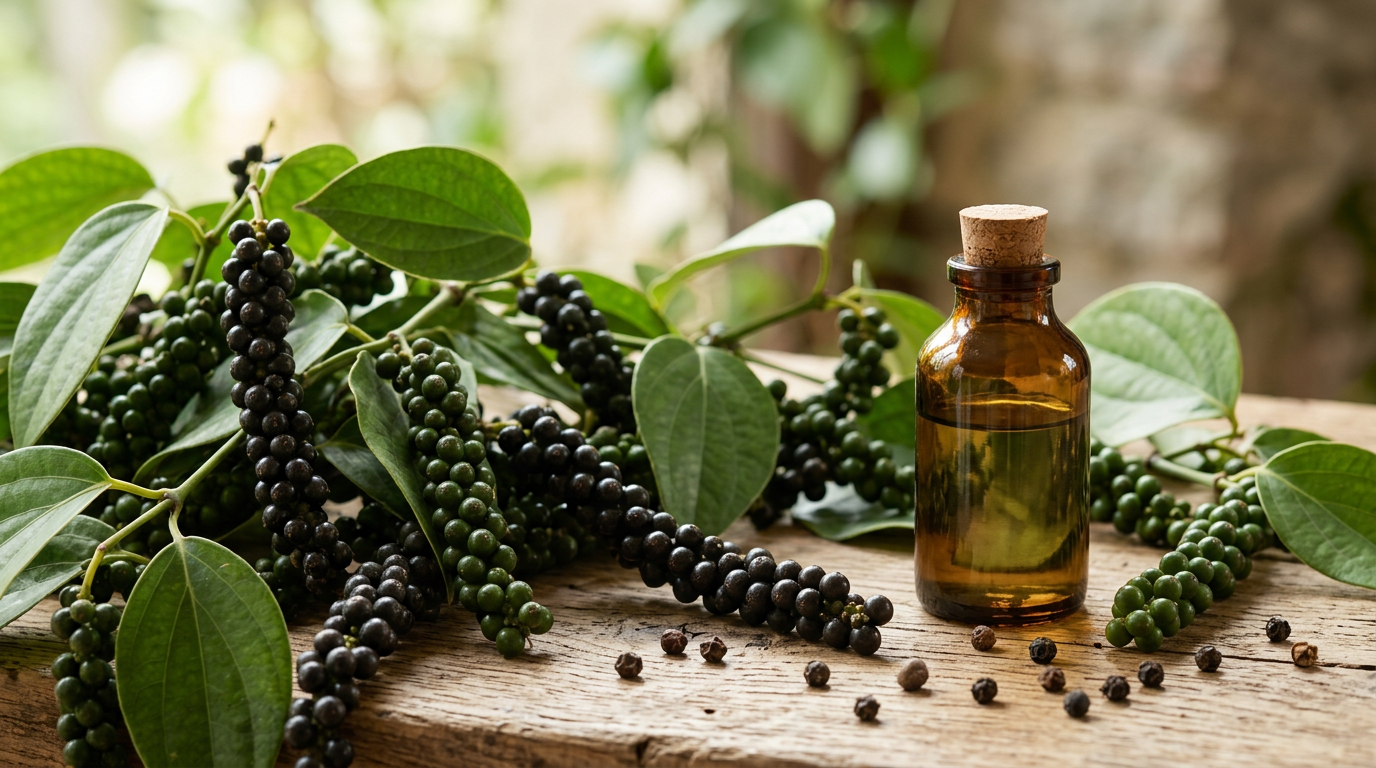
Case Study: A Candle Studio's Hot Throw Trial with Black Pepper Oil
A small candle studio reached out to us this spring with a straightforward question: could black pepper essential oil hold its own in a finished candle, or would it fade out the moment the wick was lit? This black pepper oil candle case study walks through what the studio tried, what they measured, and what they'd tell another maker starting from scratch. None of this is a promise about how the oil will behave in your workshop. Wax chemistry, wick choice, and pour temperature all move the needle, sometimes more than the fragrance oil itself.

Black Pepper Essential Oil
Our own Black Pepper Essential Oil, in sizes from 0.5 oz to bulk.
From $11.99
Shop Now →We're presenting this as a set of trial notes, not a verdict. The studio kept a log across three wax batches, and we've organized their observations into a narrative any hobbyist or small-batch maker can follow along with.
The Problem: Why Hot Throw Is Hard to Predict
Cold throw, the scent a candle gives off unlit, is relatively easy to judge. You open the jar, take a sniff, and you have your answer. Hot throw, the scent released once the candle is burning, is a different animal entirely. Heat changes how volatile compounds evaporate, wax type changes how evenly heat spreads across the pool, and even room size and airflow can make the same candle read as bold in one space and barely-there in another.
Black pepper essential oil has a reputation among candle makers as a supporting note rather than a headline scent. It's peppery, a little woody, with a warmth that some describe as almost leathery once it's diffused through hot wax. The studio wanted to know if that character survived the burn, or if it got lost under the weight of the base wax and the other notes in a blend.
Their working hypothesis going in: black pepper would perform best as an accent in a spice or woods-forward blend, not as a solo scent, and fragrance load would matter more than wick size in getting the throw to show up at all.
The Approach: Setting Up the Trial
The studio ran candle maker black pepper trial notes across three variables: wax type, fragrance load, and blend versus solo use. They kept everything else as consistent as they could, using the same jar size, the same wick series (moving up only when a burn was visibly struggling), and the same 24-hour cure time before any burn testing began.
Wax Types Tested
- Soy wax (single-pour, no additives): The studio's default for most of their line.
- Coconut-soy blend: A softer wax with a lower melt point, chosen because some makers report it carries fragrance differently than straight soy.
- Paraffin blend: Included as a comparison point since paraffin has a longer history in commercial candle work and a different scent-release profile.
Fragrance Loads Tested
This is where the trial gets most useful for anyone doing their own candle black pepper fragrance load candle testing. The studio poured batches at 6%, 8%, and 10% fragrance oil by weight, which covers the typical range recommended by most wax suppliers for essential-oil-based blends. They noted that black pepper oil, being a true essential oil rather than a synthetic fragrance oil, can behave differently at the higher end of that range, sometimes separating slightly in the wax if not stirred long enough during the pour.
"We expected 10% to just be a louder version of 6%. It wasn't. The character of the scent actually shifted a little, more peppery and sharp at the top end, warmer and rounder at 6-8%," one of the studio's candle makers noted in their log.
Solo Versus Blended Pours
The studio also poured a set of jars where black pepper was blended at a 1:3 ratio with cedarwood, and another set blended with a small amount of sweet orange, to see whether it needed a supporting cast to come through in the hot throw. If you're curious how individual spice and citrus notes behave on their own before blending, our deep dive on black pepper's scent profile is a useful companion read alongside these trial notes.
Observations: What the Studio Noticed
Every observation here is the studio's own account of their burns. We're reporting what they saw and smelled, not making claims about how black pepper oil will perform in a different studio, a different wax, or a different climate. Candle testing is famously inconsistent between makers, and this trial should be read as one data point rather than a rulebook.
Hot Throw by Wax Type
The studio felt the coconut-soy blend gave the most noticeable hot throw black pepper essential oil result of the three waxes, followed by straight soy, with paraffin trailing slightly behind in their notes. They attributed this to melt pool size. The coconut-soy candles developed a fuller, wider melt pool more quickly, and a bigger melt pool generally means more surface area for the fragrance to evaporate from.
The paraffin batch actually threw scent faster in the first 20 minutes of a burn, an observation the studio found interesting since it ran counter to their expectation. By the one-hour mark, though, the soy and coconut-soy batches had caught up and, in their subjective assessment, edged ahead.
Hot Throw by Fragrance Load
Here's a summary of what the studio logged across their three fragrance loads, averaged across the wax types tested:
| Fragrance Load | Cold Throw (studio rating) | Hot Throw (studio rating) | Notes from the log |
|---|---|---|---|
| 6% | Mild | Mild to moderate | Warm, rounded, easy to live with in a small room |
| 8% | Moderate | Moderate | The studio's preferred balance point |
| 10% | Moderate to strong | Moderate to strong | Sharper, more peppery character; slight separation noted in one soy batch |
The studio's team leaned toward the 8% load as their sweet spot, describing it as the point where the pepper note stayed recognizable without tipping into something that read as harsh. They cautioned that this is a subjective call and that their team's noses, room size, and burn habits all shaped that preference. A different studio testing the same oil might land somewhere else entirely, and this is exactly why keeping a written log matters more than trusting memory between burns.
Solo Versus Blended Performance
The cedarwood blend was the standout in the studio's notes. They described the combination as reading "warmer and more finished" than black pepper on its own, with the cedarwood seeming to give the pepper note something to sit on top of rather than floating alone in the wax. The sweet orange blend was more divisive within the team, with some testers preferring the brightness it added and others feeling it pulled focus away from the pepper character they were trying to showcase.
Solo black pepper, at every fragrance load tested, was described as "present but quiet" by the studio, a scent that read more as a background note than a room-filling statement. This lines up with how black pepper is generally discussed in blending circles: a supporting player rather than a lead. If you're new to essential oil blending more broadly, our guide to blending oils for candle work covers some of the pairing logic the studio leaned on here.
Outcomes: What Shipped and What Didn't
After the trial, the studio moved forward with a limited-run candle built on the coconut-soy wax, an 8% fragrance load, and the cedarwood-black pepper blend at roughly a 3:1 ratio favoring cedarwood. They reported that early customer feedback on the limited run was generally positive, with several buyers commenting on the warmth of the scent, though the studio was careful to note this is anecdotal evidence from a small batch of customers rather than any kind of formal survey.
The paraffin batch and the solo black pepper pours did not make it into the studio's regular lineup, not because they performed badly, but because they didn't distinguish themselves clearly enough from the studio's existing offerings to justify a new SKU.
Key Learnings for Other Candle Makers
A few takeaways surfaced repeatedly in the studio's own summary of the trial, and they're worth passing along to anyone planning their own testing round.
- Fragrance load isn't linear. The jump from 8% to 10% changed the character of the scent, not just its volume. Testing at multiple percentages, rather than assuming more oil simply means more throw, gave the studio information they wouldn't have had otherwise.
- Wax choice shapes the story. The same oil at the same load produced noticeably different results across soy, coconut-soy, and paraffin. Anyone doing candle black pepper fragrance load candle testing of their own should plan to run at least two wax types before drawing conclusions.
- Blending gave the note more staying power. The studio's own read was that black pepper worked better as a supporting note than a solo lead, at least in this trial. Cedarwood in particular seemed to give it a fuller finish.
- Written logs beat memory. More than one tester on the studio's team commented that their impression of a burn changed between the first sniff and a return visit an hour later. Logging notes in the moment, rather than relying on a general impression after the fact, made their comparisons across batches more reliable.
- Results are studio-specific. The studio was upfront that their climate, their pour technique, and their particular wick supplier all shaped these results. They don't present this trial as a universal formula, and neither do we.
A Note on How We're Framing This
This case study is meant as an educational look at one studio's approach to testing an essential oil in a finished candle, not as a guarantee of results. Fragrance behavior in wax is genuinely variable, and the studio's own notes reflect that variability rather than smoothing over it. If you're considering your own trial, treat their fragrance loads and wax choices as a starting point for your own log, not a fixed recipe. For anyone sourcing the oil itself, our guide to evaluating black pepper oil quality covers what to look for before you even get to the pour.
Small-batch testing like this is slow work. The studio's full trial, across three waxes and three fragrance loads plus blend variations, took the better part of three weeks from first pour to final burn notes. That patience is probably the real lesson here: hot throw isn't something you can guess your way into, and the only way to know how an oil behaves in your specific setup is to burn it, write it down, and burn it again.