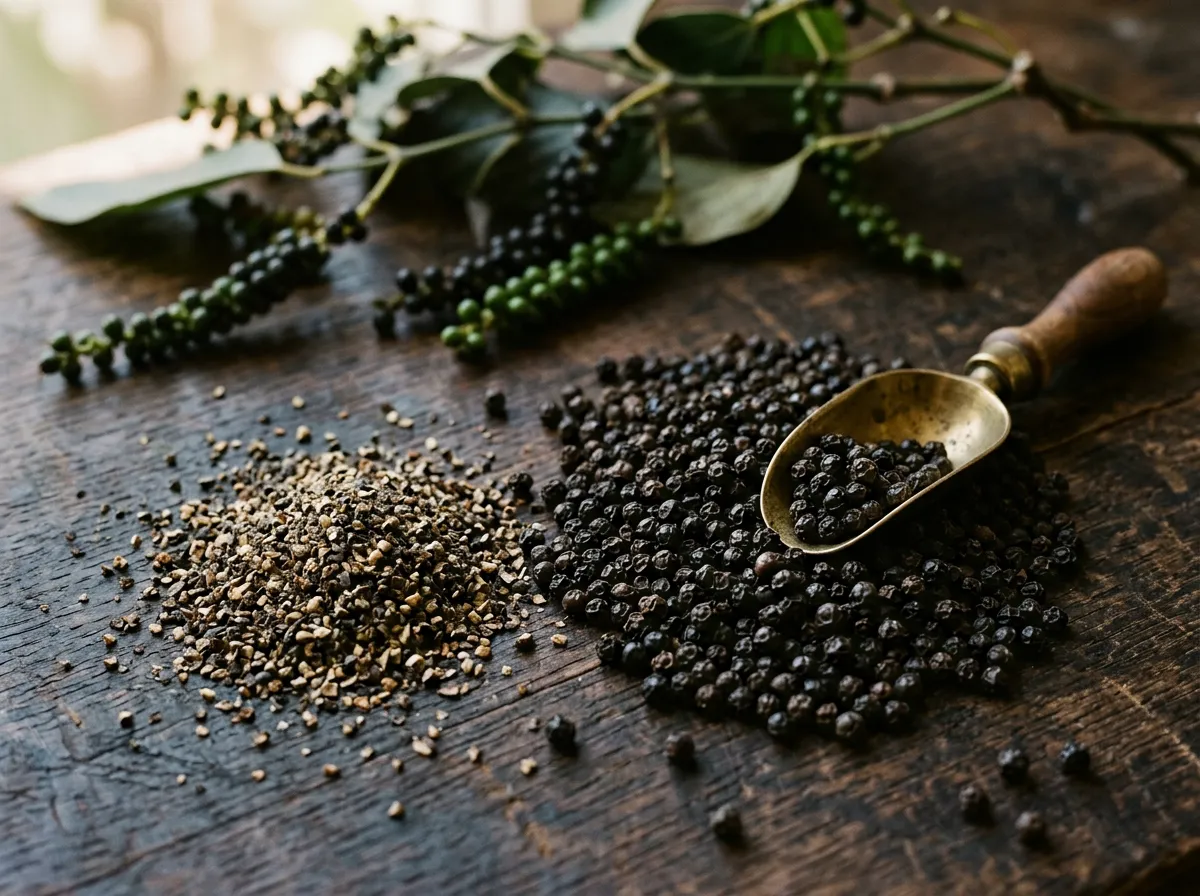
A peppercorn holds its aroma until you break it. Ours are bought whole from India, stored whole, and cracked in the hour before the still is charged.
Black pepper is the dried unripe fruit of Piper nigrum, a climbing vine. Botanically these are drupes rather than seeds, which is worth saying because pepper is habitually grouped with the spice seeds it is sold beside.
We buy to a stated screen size with a ceiling on moisture, rejecting split, shrivelled, immature or off-colour corns. On pepper, screen size is close to a direct measure of maturity, and immature corns give both less oil and a flatter profile.
The material most commodity distillation runs on is the opposite of that: light corns, broken ones, and the fraction that could not be sold to the spice trade. Our test is whether we would happily put the same corns in a mill at the table.
Everyone has smelled the difference between a peppercorn cracked at the table and pepper from a tub that has been open a month.
That difference is exactly what a distiller is fighting. The corn's skin is a seal; once broken, the volatile aromatics start leaving, oxygen gets in, and the fruit's own enzymes begin rearranging what remains. Pre-ground pepper bought in from a supplier has been through weeks of it.
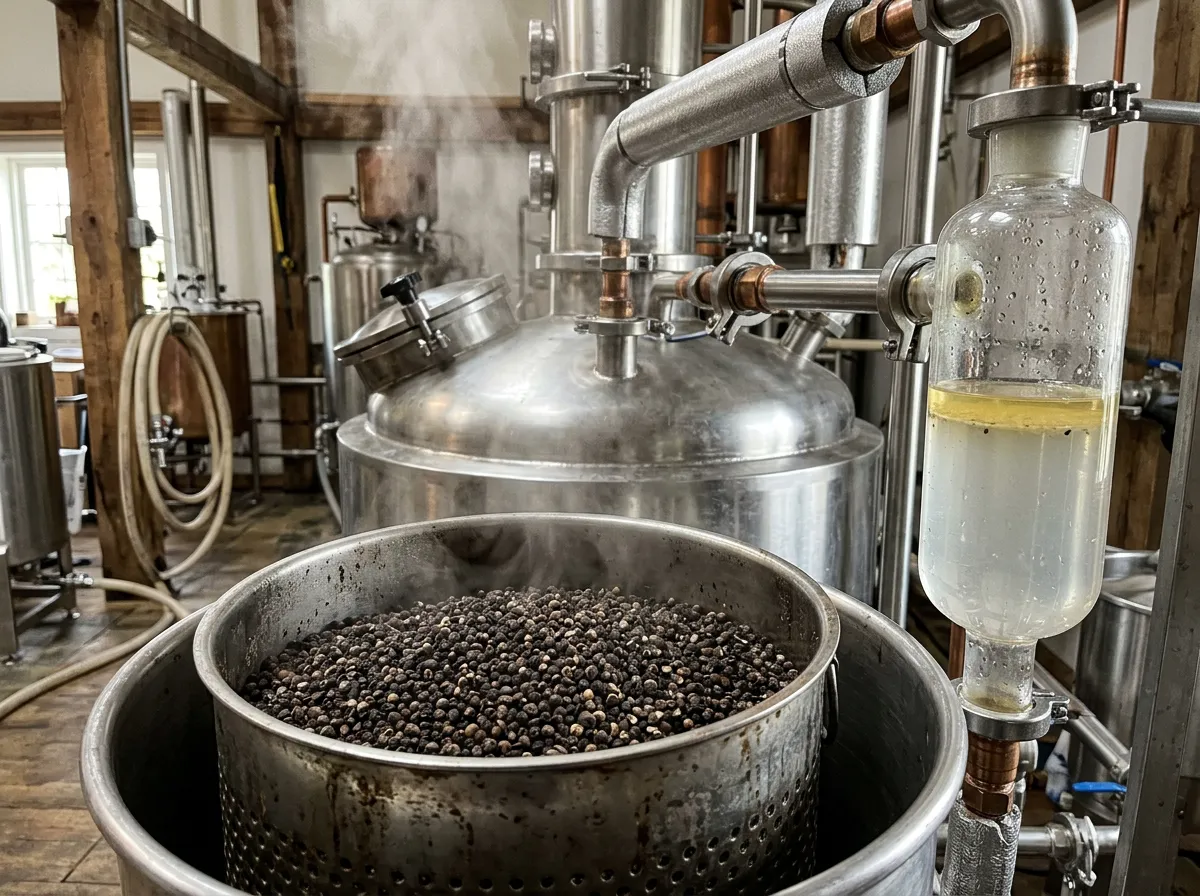
So the corns arrive whole, sit whole and dry until they are wanted, and go through the mill in the hour before the charge. What we grind is a coarse crack rather than a powder, because powder packs down and lets steam slide around the outside of the charge instead of working through it.
The distillation happens here, minutes from the mill. Buying finished pepper oil would mean inheriting somebody else's decisions about corn grade and grind, which are the two decisions that matter most.
Steam carries over the aromatics and leaves the piperine behind, which is why the oil smells of pepper without carrying any of its heat on the tongue. It opens dry and spicy, then settles warm, woody and faintly floral.
The charge is run to exhaustion rather than to a clock, and the lot is analysed before a bottle is filled.
Six positions applied to every pepper lot.
Bought and stored intact, never pre-ground by anyone else.
A stated screen size and moisture cap, with light and shrivelled corns refused.
Coarse-cracked on site about an hour before the still runs.
Independent analysis available against any lot number.
No cheaper spice oils and no solvent-extracted material in the bottle.
Every size poured from the same run.
Year and country stay with the lot; the bottle carries the date it came off the still.
Full-strength Piper nigrum in amber glass, with nothing blended in to stretch a lot.
Each lot is analysed by an independent laboratory with no interest in the result.
The principal sesquiterpene and the backbone of black pepper's warm, woody depth.
The bright top end, and a good indicator of how fresh the corns were when they were cracked.
Confirms Piper nigrum at full strength, with no cheaper spice oil or solvent-extracted material blended in.
Send the lot number and we will return the profile, or reach us via the contact page.
There is no medical claim on this page. Black pepper oil is a warm spice note with real use in perfumery and blending, and that is the whole of it.
It is a skin irritant at any generous dilution, so keep the percentage low, take it well down in a carrier, and try a small area before anything wider. Keep it away from eyes and mucous membranes.
The oil carries pepper's scent but not its piperine, so it will not taste hot; that is not an invitation to take it internally. When a lot does not analyse as it should, we go out of stock instead of bottling it.
Whole Indian peppercorns bought to spec, coarse-cracked on site, distilled here, with beta-caryophyllene confirmed by an outside laboratory.
Compare it with your pepper mill.
Shop Black Pepper Oil