Black Pepper Oil for Skin: Aroma, Not an Active
Black pepper oil earns its place in a body oil the way a good spice earns its place in a stew: for character, not for a miracle. It is dry, warm and peppery, opening sharp before settling into woody warmth, and that is the whole reason we love it in a blend. This is how we would think about it for skin, in plain terms.

Black Pepper Essential Oil
Our own Black Pepper Essential Oil, in sizes from 0.5 oz to bulk.
From $13.99
Shop Now →Why the skin reputation exists
Lists of "oils for skin" tend to sweep in whatever is popular and smells interesting, and black pepper is both. It sits in massage and body blends because of how it smells. A pleasant, warm scent is easy to mistake for an active ingredient, but we sell ours as an aroma ingredient for diluted body oils and make no claims about skin conditions. If you have a skin concern, a dermatologist is the right person to ask.
The part worth understanding: concentration
Essential oils are concentrated, and black pepper oil is no exception. The EFSA opinion on the oil describes it as an irritant to skin and eyes and a skin and respiratory sensitiser, a classification taken from the applicant's safety data sheet (EFSA FEEDAP Panel, 2022). Plant origin says nothing about how gentle an ingredient is; concentration matters more. That is why we recommend diluting to 0.5% to 2% in a carrier oil, roughly 3 to 12 drops per ounce, and patch testing on a small area first. The Tisserand Institute points out that dermal maximums are concentration-based and do not change with the area covered (Tisserand Institute), so a large patch of skin is not a reason to add drops.
A good habit is to start at the low end of the range for any first batch. Our dilution and patch test guide works through the numbers.
Fresh oil, calm skin
Here is a detail that gives a practical reason to store the bottle well. Black pepper oil contains limonene (about 12.5% in the five batches EFSA reviewed), and limonene changes when it meets air. In patch tests, limonene and linalool that had not oxidised were non-irritating at every concentration tested, while air-oxidised versions were more irritating, limonene more than linalool (Bråred Christensson et al., Contact Dermatitis, 2009). A later review adds that limonene hydroperoxides, which form on air exposure, are far stronger sensitisers than limonene itself (de Groot, Dermatitis, 2019). Those studies looked at limonene and linalool rather than at black pepper oil as a whole, so the sensible reading is simply this: keep the cap tight, keep the bottle dark and cool, and use it up in good time. Our storage guide covers the details.
Fragrance and sensitivity
DermNet NZ notes that about 1% of adults have a fragrance allergy and that natural extracts are among the recognised allergens, which is why "botanical" on a label does not mean "universally tolerated" (DermNet NZ, Fragrance allergy). It is the reason we ask everyone to patch test, every time they try a new blend. DermNet also notes that reactions to an allergen can take 48 to 96 hours to appear, so give a small dab on the inner forearm a few days before using a blend more widely.
Start with the scent, not the skin
The best question to ask before you mix anything is what you want it to smell like on you. Black pepper is a supporting actor. On its own it can feel a little stern, and it shines when something rounder stands beside it. Cedarwood and frankincense give it a calm woody backdrop, bergamot gives it a lift, and rose softens its edges. Decide the mood first, then let the pepper be the dry, warm accent.
Keep the pepper the smaller part of the blend. A scent you notice only when you lean in is usually better than one that announces itself across the room, and a lighter hand also keeps you well inside our dilution range.
Choosing the carrier you will actually reach for
A carrier is part of the experience. Some people like a light, quick oil that disappears into the skin, and others prefer something richer that leaves a soft sheen. Pick one you already like the feel of, because a body oil you enjoy applying is one you will finish before it goes stale. Jojoba and sweet almond are the two we point to as examples, and a pharmacy, grocery or craft shop will have them.
Mix a small amount, a half ounce or an ounce is plenty, and smell it before you put it on. Rub a little between your fingers, wait a moment, and see if the scent still feels right once it warms up. If it is too sharp, make the next batch with fewer drops.
A simple way to enjoy it
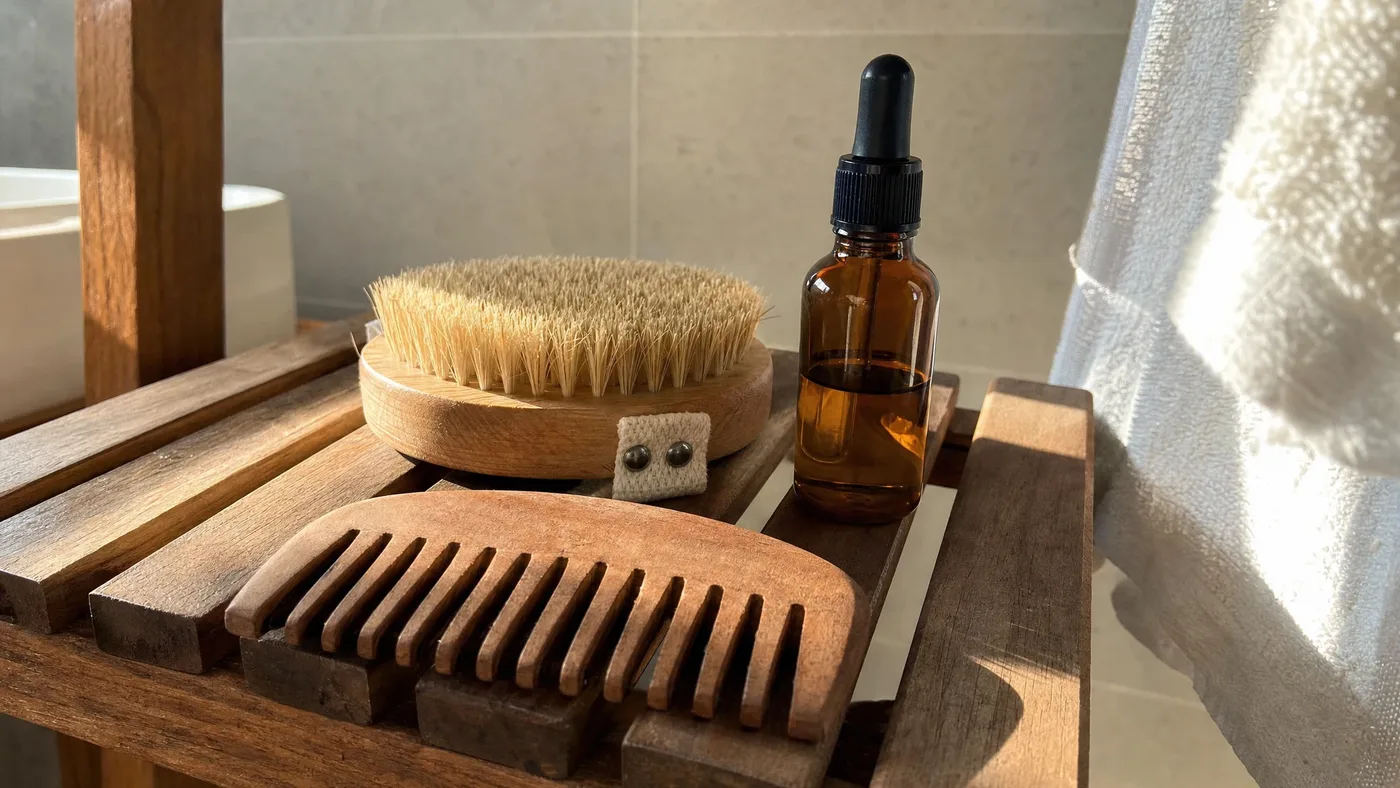
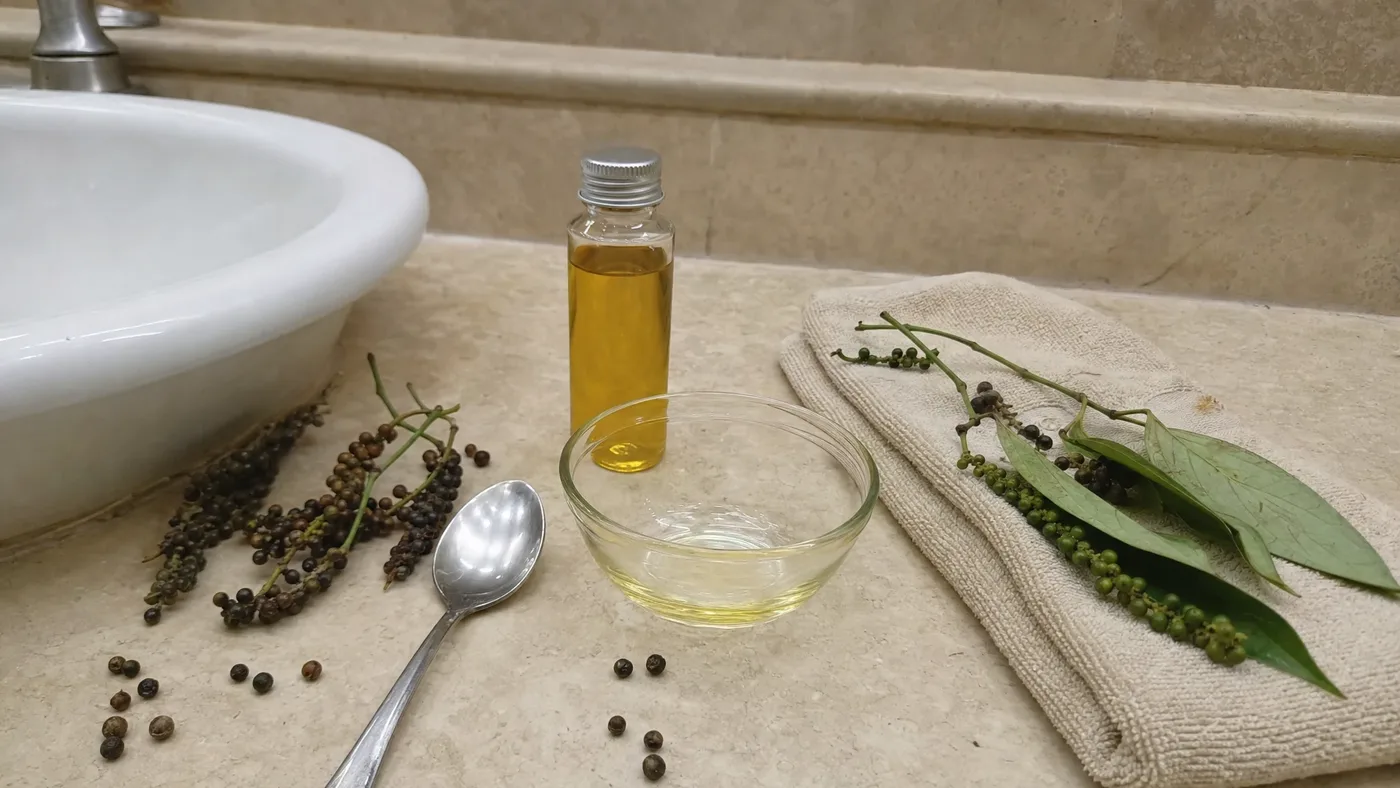
Blend a few drops into a carrier oil you already like on your skin, such as jojoba or sweet almond, label the bottle with the strength, and use a small amount on the body, away from eyes, broken skin and the face. We sell the black pepper oil only, so the carrier comes from a pharmacy, grocery or craft shop. Keep it away from children and pets, and ask a doctor first if you are pregnant or have sensitive skin. If skin turns red or itchy, wash it off and read what to do if skin reacts.
Black Pepper Essential Oil
Black Pepper Essential Oil from our own shop, in sizes from 0.5 oz to bulk.
From $13.99
Shop Now →