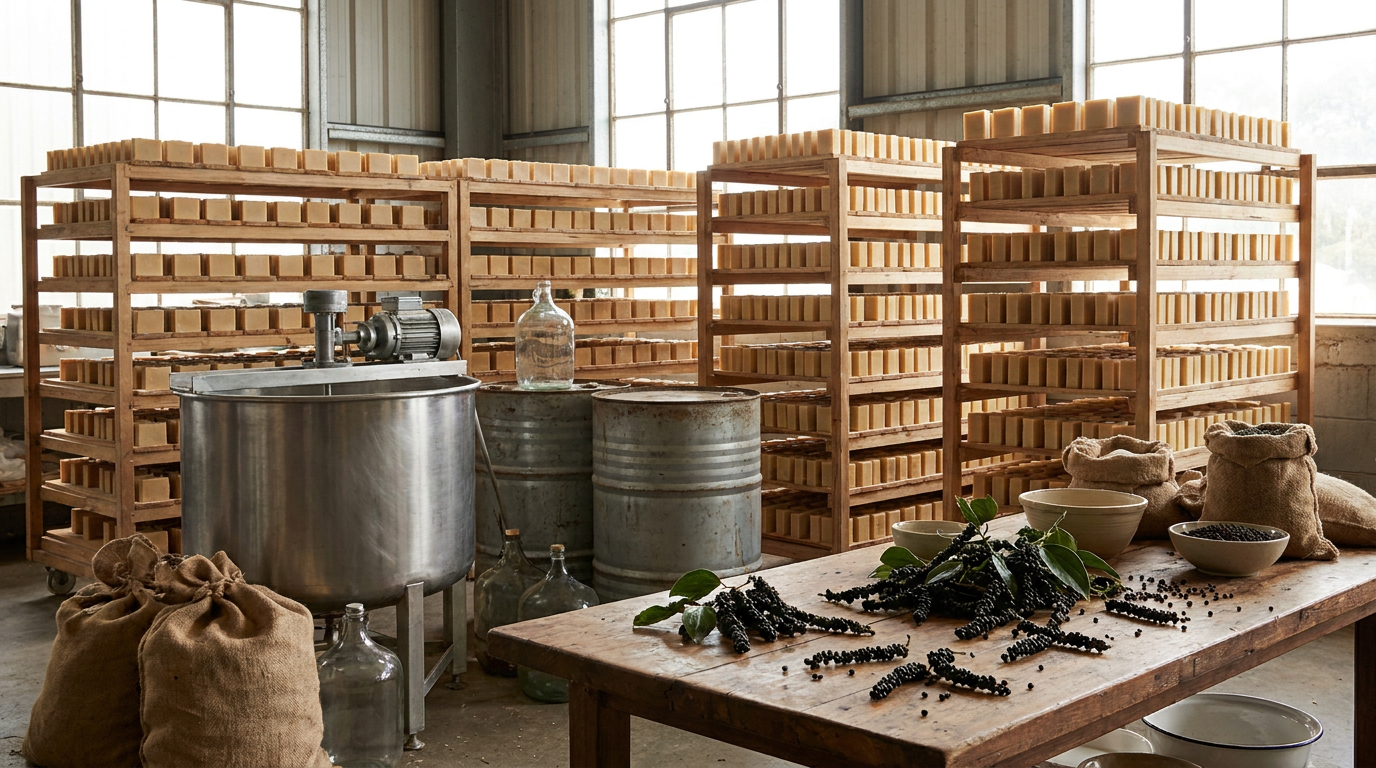
Cold-process soapmakers use black pepper oil for a dry, spicy accord in bar soap, often paired with woods or citrus rather than run on its own. This page is part of our Guide to Buying Black Pepper Essential Oil in Bulk.
Start with a working size and run it through a full cure cycle.
A soap bar built around black pepper reads as warm and grounding rather than sweet, filling a real gap in most bar soap lineups that lean heavily on floral and fruity scents. Our soapmaker case study tracks one formulator's batch notes from pour through full cure.
Because black pepper sits as a middle to base note, it holds up reasonably well through saponification and cure compared to lighter top-note oils that fade fast in cold process. Our properties reference covers where it sits on that scale.
Soapmakers generally treat black pepper as a supporting note in a blend rather than the whole fragrance, most often alongside frankincense, cedarwood, or a citrus top note to round out the profile. Discoloration and any drift in scent through trace and cure are worth tracking batch to batch, the same way our case study soapmaker did.
Scent behavior through saponification is alkaline-sensitive and specific to your base oils and lye concentration, so a small test batch through a full cure cycle is worth running before scaling to a full production pour.
Independent soapmakers testing a new bar typically start at 4 oz or 8 oz, while a shop running weekly batches moves to 5 lbs or 25 lbs for cost efficiency.
Move to 5 lbs or 25 lbs once your cure results are consistent.