Black Pepper and Sandalwood Solid Cologne: A Simple Recipe
A solid cologne is the most forgiving way to wear a spice oil. There is no alcohol, no spray, and the scent stays close to the skin, so a little black pepper does the job of a dry, sharp edge on a creamy wood. This is a 30 g batch built from three ingredients and a simple bit of arithmetic.

Black Pepper Essential Oil
Our own Black Pepper Essential Oil, in sizes from 0.5 oz to bulk.
From $13.99
Shop Now →Choose the sandalwood first
The wood matters more here than the pepper. Santalum album, the classic creamy sandalwood, is listed as vulnerable by the IUCN, and its oil is roughly 90% santalol. The cheaper Australian species, Santalum spicatum, runs closer to 39% (Wikipedia, Santalum album, a secondary summary). So you have three sensible routes. Buy S. album from a supplier who documents where it came from and expect a rounder, softer base. Buy S. spicatum and smell it first, because it will read lighter. Or leave sandalwood out and use cedarwood, a dry wood we recommend with pepper. The arithmetic below works for all three.
We sell black pepper oil only, so the wax, carrier and wood come from a craft supplier. Ask that supplier for the species and an IFRA certificate for the product type you are making.
Smell the pair before you commit
Open the sandalwood and the black pepper one after the other, put a drop of each on its own strip of blotting paper, and hold them together under your nose. Pepper opens dry, spicy and a little sharp, and the wood answers underneath with something softer and rounder. If that pairing already smells like something you would want to wear, the balm will too. If the pepper jumps out and shouts, hold to the amount in the formula below instead of nudging it up.
Setting the scent load
Our dilution guidance for black pepper oil on skin is 0.5% to 2% in a carrier oil, with a patch test first and the oil kept away from the eyes. European regulators describe the oil as a skin and eye irritant and a possible skin sensitiser (EFSA FEEDAP Panel, 2022), which is a good reason to keep the total modest. We set the whole aromatic load at 2%, so the two oils together stay inside our guidance. Treat that as a cautious ceiling for a personal balm, not a certified safe level.
The formula
| Ingredient | Grams | Share of balm |
|---|---|---|
| Beeswax | 7.50 | 25.0% |
| Jojoba oil | 21.90 | 73.0% |
| Sandalwood essential oil | 0.40 | 1.33% |
| Black pepper essential oil | 0.20 | 0.67% |
| Total | 30.00 | 2.0% aromatic |
One part wax to three of oil is a common starting point for a balm that is firm without being waxy. Spoon a little onto a plate and chill it: if it is hard to rub in, add a touch more jojoba, and if it will not hold its shape, add a touch more wax.
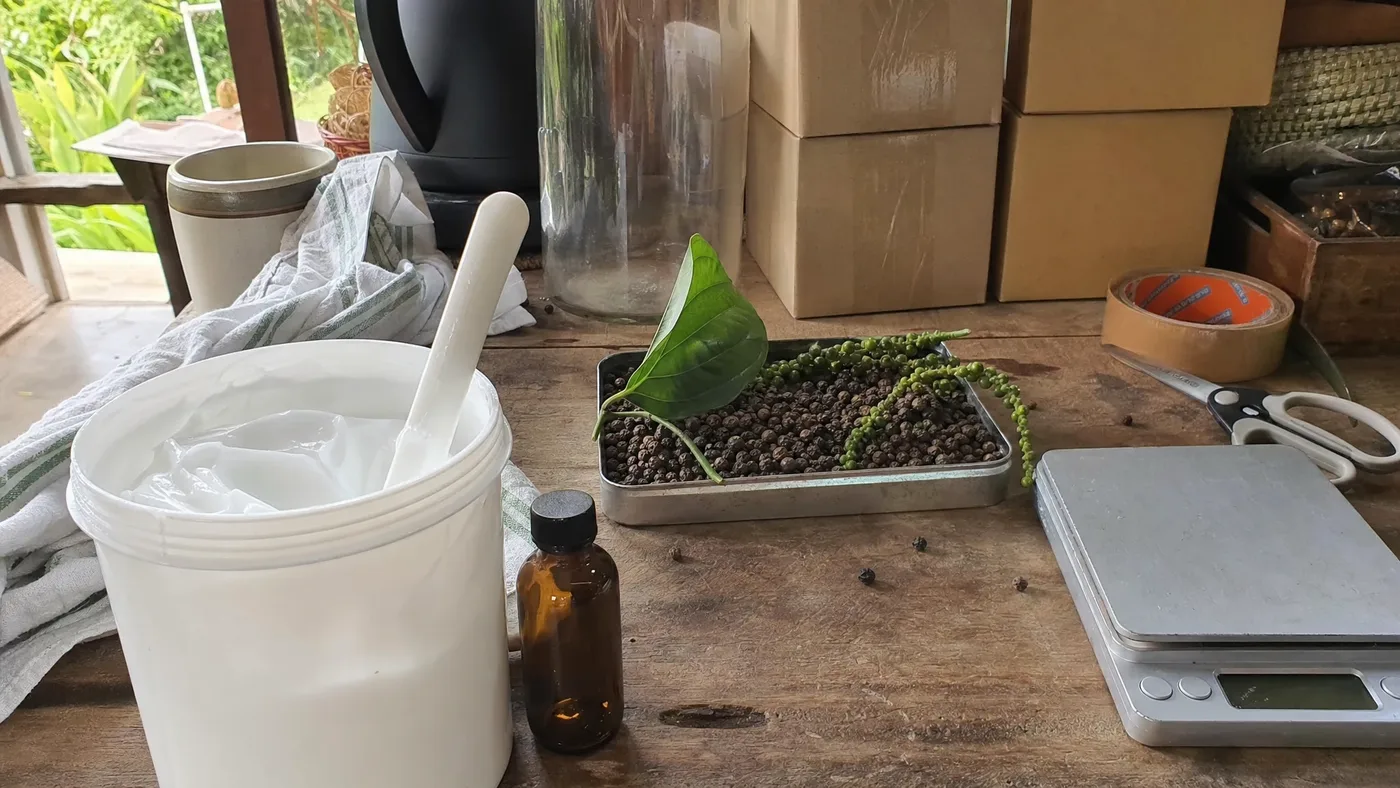
Weigh the oils on a scale that reads to 0.01 g. If you only have drops, the batch on our published Certificate of Analysis has a relative density of 0.873, so 0.20 g is about 0.23 ml, which is roughly five drops at the usual 20 drops per ml. Drop sizes vary, so the scale is better. Pepper here is a quarter of the scent mix by weight, a dry thread under the wood, and that is deliberate: pepper is easy to overdo. Our pairing guide covers other partners.
Making it
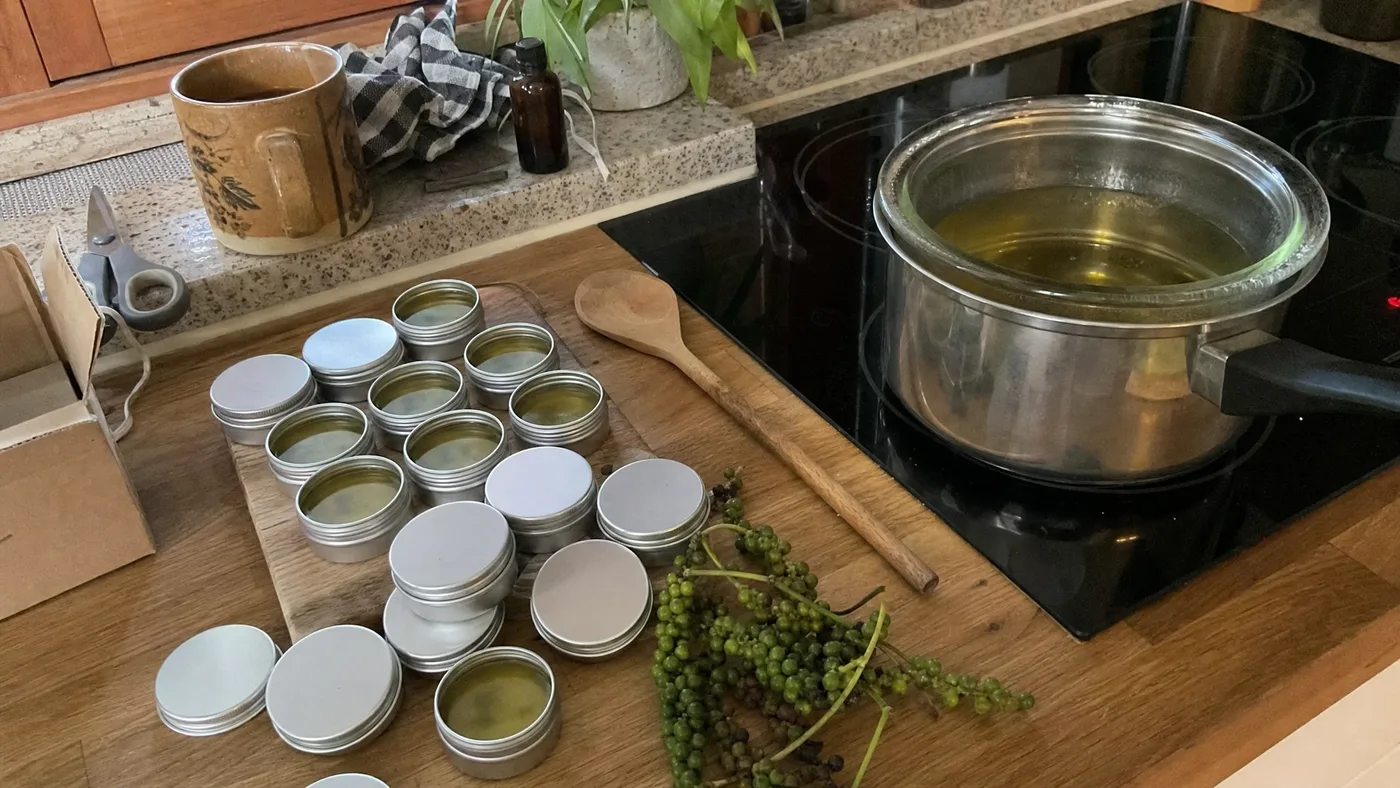
- Weigh the beeswax and jojoba into a heatproof jar and melt gently in a pan of hot water, stirring until clear.
- Lift the jar out and let it cool for a few minutes while it is still liquid. Very hot wax carries off the lightest part of a scent.
- Stir in the sandalwood, then the black pepper, for about a minute.
- Pour into the tin straight away, leave it alone until it sets, then cap it.
- Label it with the date and the lot numbers of each oil.
A shallow tin with a snug lid is the best container, because you can swipe a fingertip across the surface instead of digging. A tin about the size of a pocket watch holds a batch this size comfortably. Pour while the mixture is only just liquid and the surface will set smooth and flat. If you want a gift, a small label with the name and date makes it feel finished.
Wearing and keeping it
A rice-grain amount pressed to the inside of one wrist is plenty, and the classic spots for a solid cologne are the wrists and the base of the throat. Give it a minute: you will notice the pepper first, a dry flash that fades, and then the wood settles in and stays. The base is mostly jojoba and wax, so it leaves a thin, soft film rather than vanishing like a spray. Keep the tin closed and out of hot cars and sunny windowsills, since a balm that melts and re-sets can change texture. Make small batches you will finish within a few months, and let go of one that smells sharp, flat or rancid.
Patch test the finished balm, not just the neat oil, on a small patch of inner forearm before wearing it. Skip it if you have reacted to fragrance before, if you are pregnant or breastfeeding and have not checked with your midwife or doctor, or if it is for a child. Our carrier oil guide has other base options, and the perfume note post explains how the pepper note changes on skin.
Black Pepper Essential Oil
Black Pepper Essential Oil from our own shop, in sizes from 0.5 oz to bulk.
From $13.99
Shop Now →Sources & Further Reading
- Santalum album, Wikipedia (conservation status and santalol content).
- EFSA FEEDAP Panel, 2022, EFSA Journal 20(11):e07599, safety of black pepper oil as a feed additive.