Black Pepper in Perfume: Top, Heart or Base Note?
The pepper in a perfume has nothing to do with the compound that makes a peppercorn hot. That is piperine, and the distilled oil carries almost none: a European assessment measured it below 0.0005% on average across five batches (EFSA FEEDAP Panel, 2022). So what are perfumers smelling when they say pepper?

Black Pepper Essential Oil
Our own Black Pepper Essential Oil, in sizes from 0.5 oz to bulk.
From $13.99
Shop Now →The molecule behind the "pepper" smell
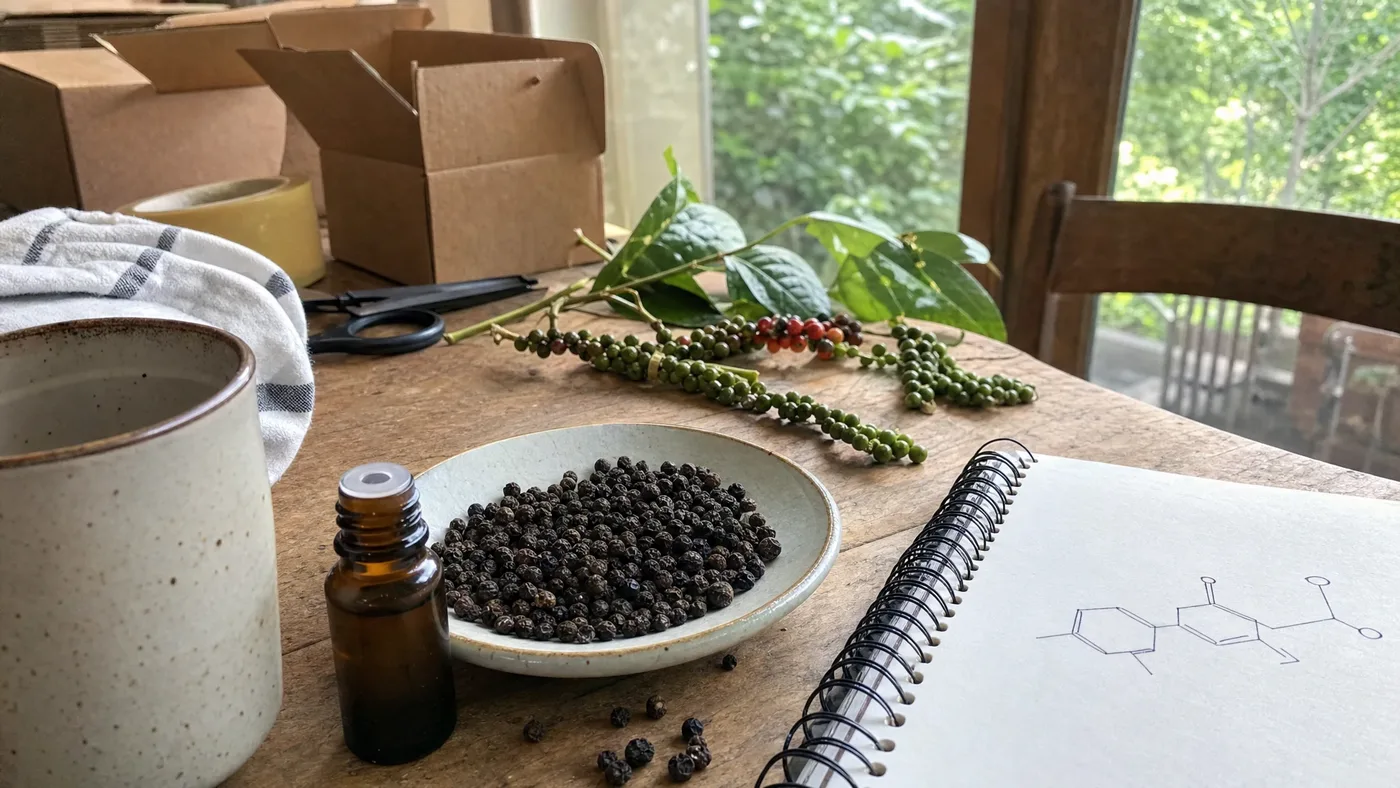
In 2008, researchers at the Australian Wine Research Institute and colleagues reported that rotundone, a sesquiterpene, is a powerful aroma compound with a peppercorn scent. They found it in black and white peppercorns, called it the first compound identified there with a distinctively peppery aroma, and estimated an odour activity value of 50,000 to 250,000. It is also what gives Shiraz wine its pepper note. About 20% of people tested could not smell it even at 4,000 ng/L in water, while the rest picked it up at around 8 ng/L (Wood et al., J Agric Food Chem, 2008).
For anyone building a fragrance, that last detail is useful. If you smell a pepper accord alone, you might be judging it without the molecule it is built around, so ask someone else to smell it too. A follow-up study found that alpha-guaiene is a precursor and that rotundone can form from it by oxidation in air (Huang et al., J Agric Food Chem, 2014). Our reading, not a result from either paper, is that an oil's pepper facet is not necessarily fixed on the day it is distilled.
What fills the bottle
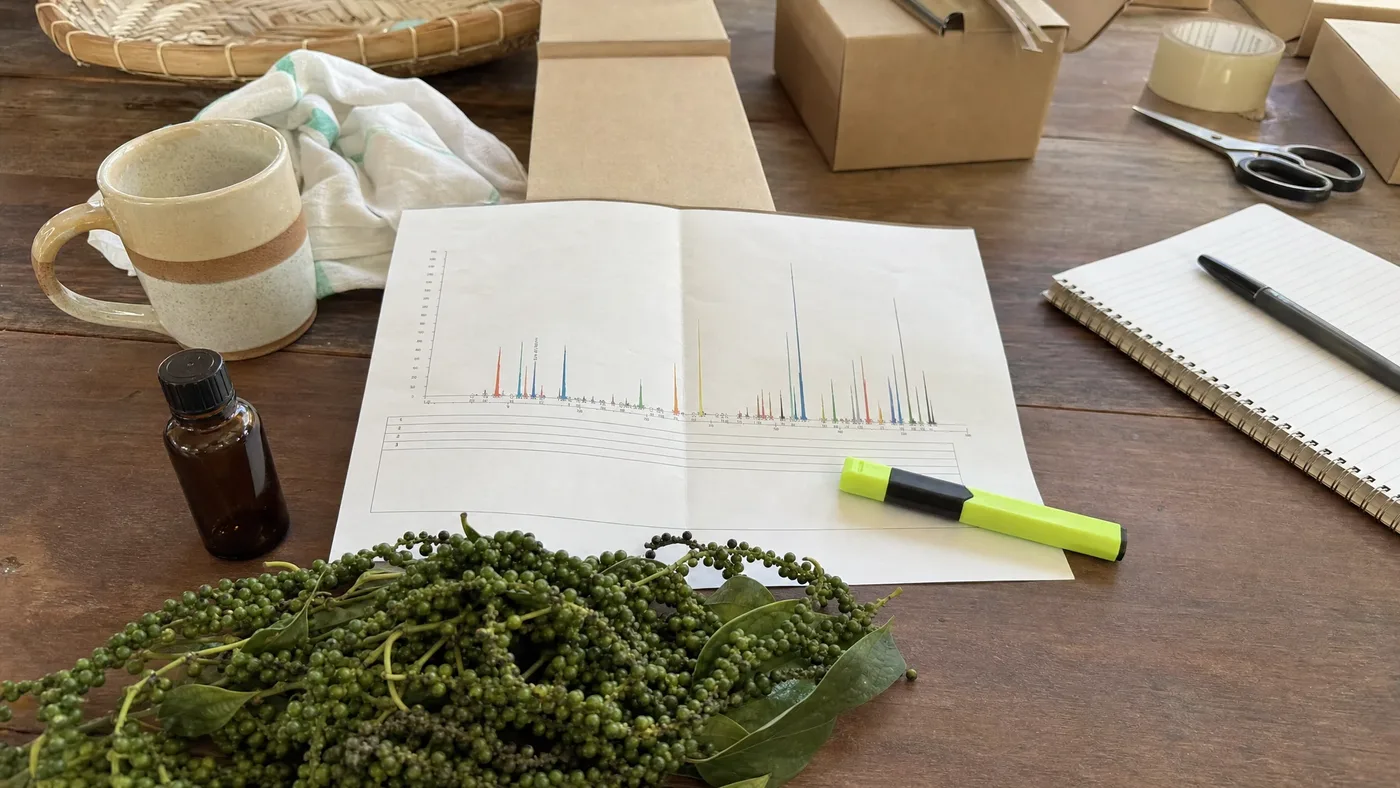
Rotundone is a trace player. The bulk of the oil is terpenes. In the European assessment, five batches of steam-distilled oil averaged 25.6% beta-caryophyllene, 12.5% limonene, 9.4% sabinene and 8.9% alpha-pinene, about 56% together, and that source describes the odour as spicy and woody. Tisserand, which sells a Sri Lankan oil, describes the scent as warm and spicy with fresh woody undertones (Tisserand, black pepper essential oil).
Our own description is dry, warm and peppery, opening spicy and sharp before settling into a woody, faintly floral warmth. If your formula depends on a particular compound profile, ask for the report for your lot in writing through our contact page.
Top, heart or base?
The perfume pyramid is really about how fast a material evaporates: top notes are small, light molecules that go quickly, middle notes form the body of the scent, and base notes are the deeper material, usually not noticed until around half an hour after application (Wikipedia, Perfume). Pepper gets filed in different places. Tisserand calls it a middle note whose scent lasts a few hours, and we call it a middle to base note.
Nobody is wrong. Roughly 31% of the oil is lighter monoterpenes (limonene, sabinene, alpha-pinene), and about 26% is heavier beta-caryophyllene, so the oil changes character as it dries on a strip and people place it differently. We would stop asking which note it is and watch what it does.
A notebook helps
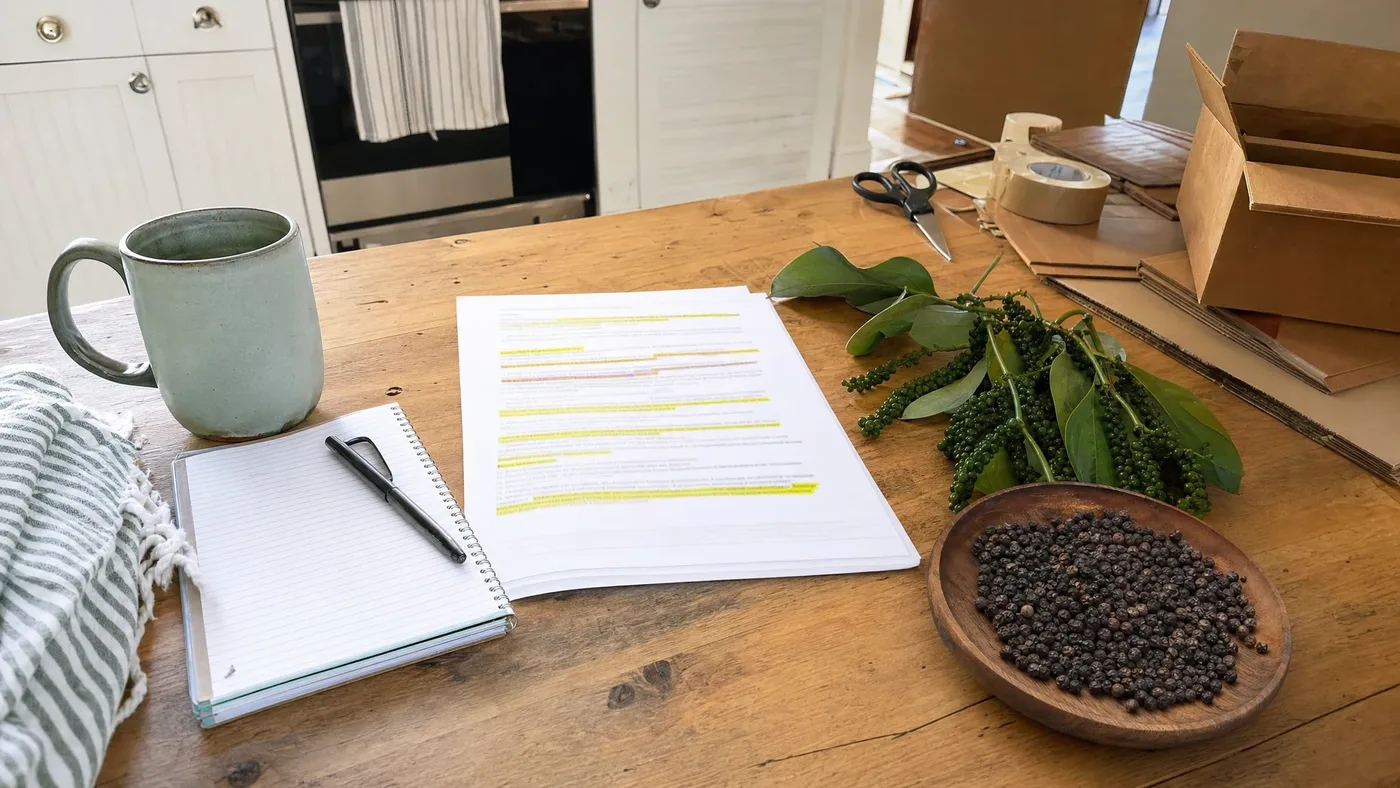
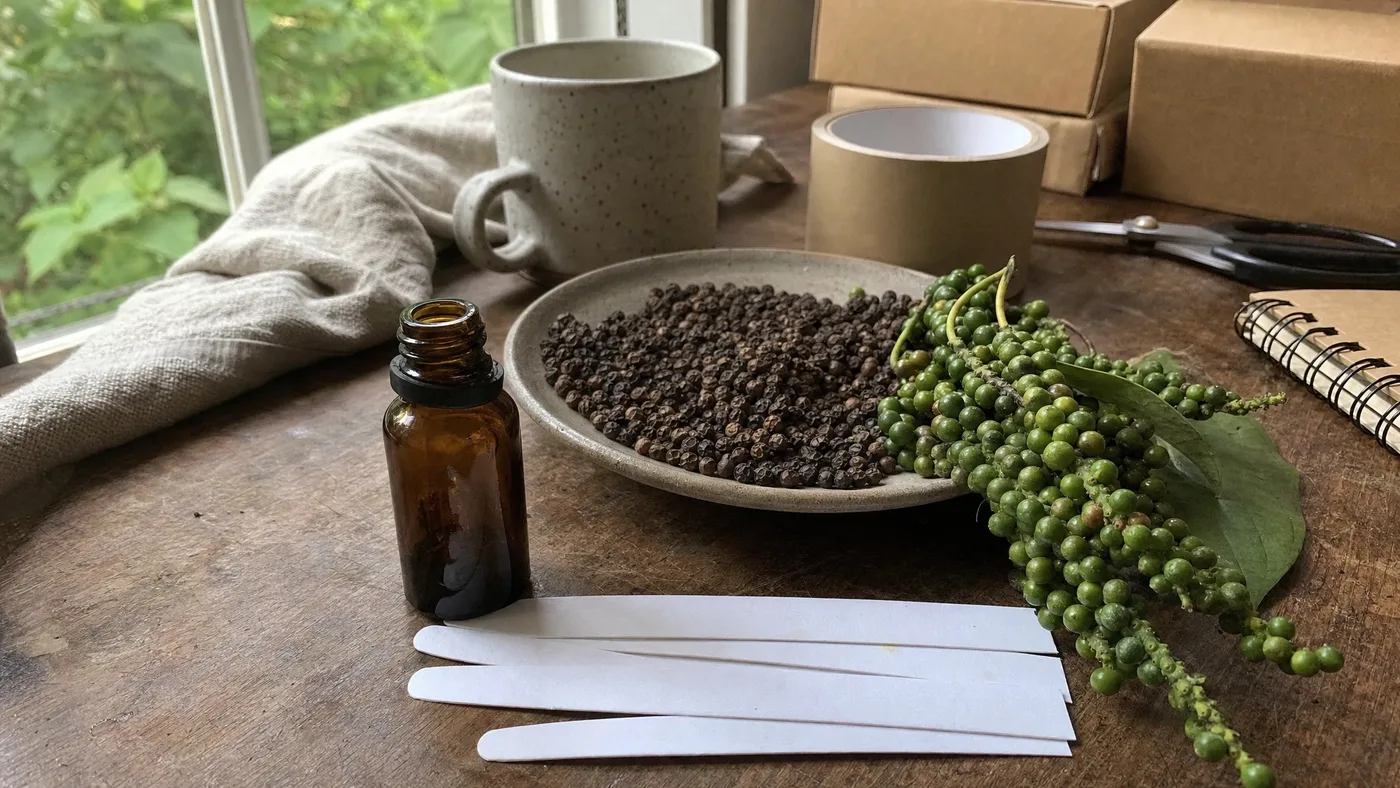
If you are serious about building a scent, keep a small notebook next to your strips. Write the date, what is on the strip, and a word or two at each stage: the first sniff, ten minutes in, an hour in. Over a few weeks, patterns appear. You will find that pepper behaves one way with citrus, another with wood, and another with a floral partner like rose. Nobody can hand you that knowledge, and it is a great pleasure to collect it yourself.
Judging an oil on a strip
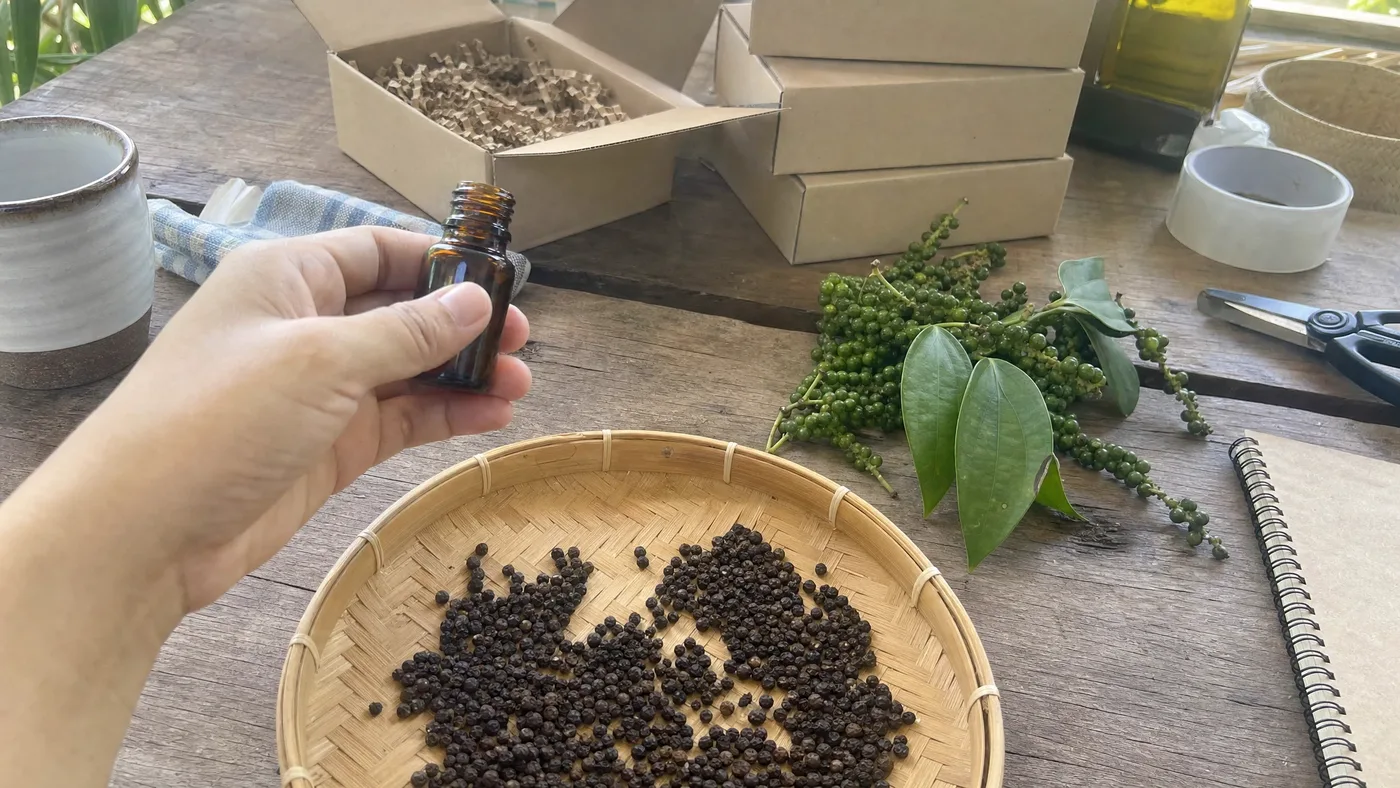
Dip a fresh paper strip about a centimetre and smell it straight away, then after ten minutes, then after an hour. Note how the sharp opening gives way to wood. Do it again with the oil in your own base, because alcohol, wax and carrier oils all change how pepper reads. Keep a separate strip for each oil so the scents do not mix.
Another nice trick is to smell your finished blend on a strip, then smell the strip again after a day. Pepper often settles into the background and lets the woods and resins speak, and you may like the quiet version better than the one you first made. Let it rest, then decide.
Working pepper into a formula
Pepper rewards restraint. A little gives a dry, sharp lift to woods and resins, and a lot can crowd the room. Our pairing guide suggests bergamot, frankincense, cedarwood, rose and clary sage as partners, and our blending guide goes into ratios. For a worked example, try the natural cologne formula.
Bring a mind for safety too. We recommend diluting pepper oil to 0.5% to 2% for skin and patch testing first. The oil is classed as a skin and eye irritant and a skin sensitiser, so check the IFRA documentation for your product category.
Black Pepper Essential Oil
Black Pepper Essential Oil from our own shop, in sizes from 0.5 oz to bulk.
From $13.99
Shop Now →Sources & Further Reading
- Wood et al., J Agric Food Chem 2008;56(10):3738-44, rotundone in peppercorns.
- Huang et al., J Agric Food Chem 2014;62(44):10809-15, alpha-guaiene as a precursor.
- EFSA FEEDAP Panel, 2022, EFSA Journal 20(11):e07599.
- Tisserand, black pepper essential oil.
- Perfume, Wikipedia.