Black Pepper vs Ginger vs Cardamom Oil: Warm Spice Oils Compared
Warm spice essential oils occupy a special corner of the aromatic world. They're complex, grounding, and endlessly useful in both fragrance and personal care. But if you've ever stood in front of a shelf of small amber bottles wondering whether to reach for black pepper, ginger, or cardamom, you're not alone. Each of these oils carries its own distinct character, and choosing the wrong one for a particular project can leave a blend smelling flat or off-balance.
This guide breaks down the real differences between black pepper vs ginger essential oil and cardamom vs black pepper oil, so you can make a confident, informed choice for your specific use case.
A Quick Introduction to Each Oil
Black Pepper Essential Oil
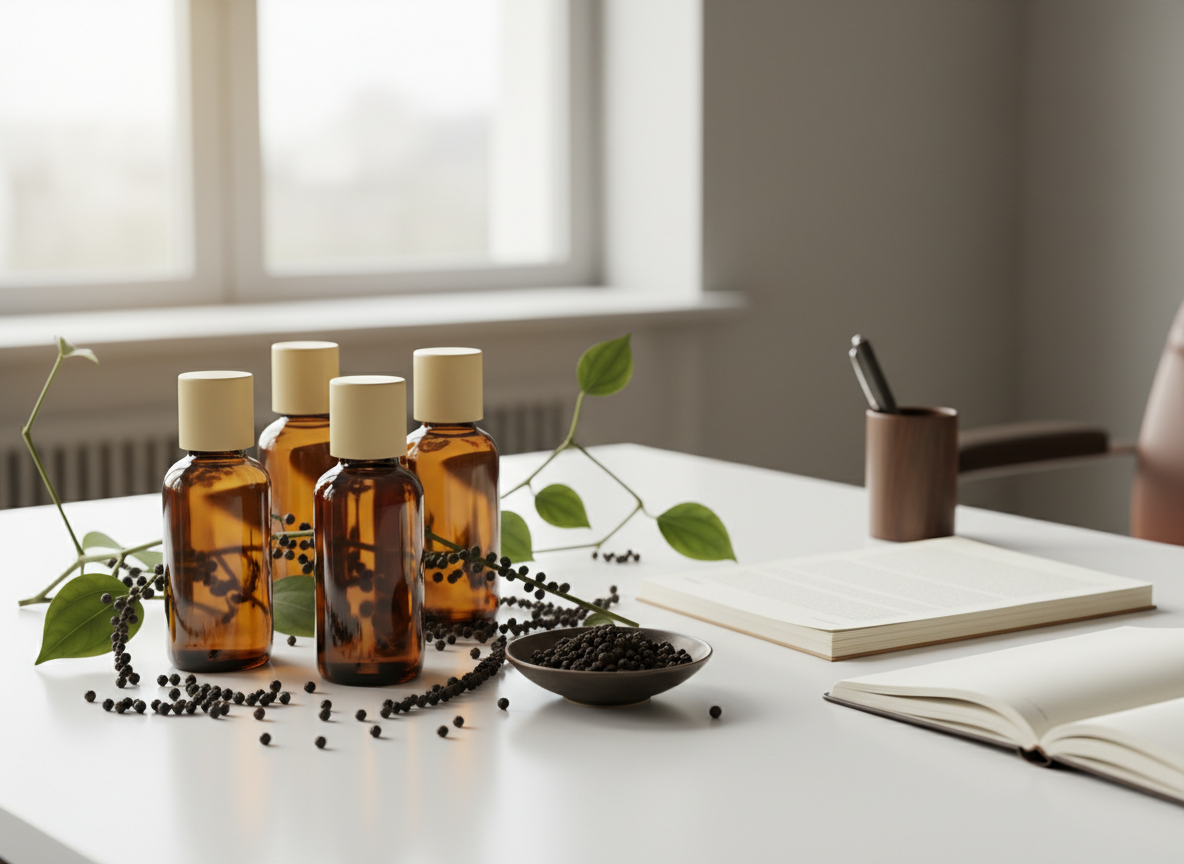
Steam-distilled from the dried, unripe berries of Piper nigrum, black pepper oil is sharper and drier than you might expect. The fresh, woody, faintly spicy scent is quite different from ground pepper in your kitchen. The primary aromatic compounds include beta-caryophyllene and limonene, which give it a green, almost citrusy edge beneath the spice. It sits comfortably in the base-to-middle note position in most blends.
Ginger Essential Oil
Distilled from the rhizome of Zingiber officinale, ginger oil is warmer and more overtly earthy than black pepper. Its scent is familiar and grounding, with a slightly sweet, woody undertone. The main constituents, including zingiberene and camphene, deliver that characteristic ginger warmth without the sharp bite of fresh root. Ginger oil typically functions as a middle note, though it can anchor lighter blends as a base.
Cardamom Essential Oil
Extracted from the seeds of Elettaria cardamomum, cardamom oil is the most complex of the three. It carries a sweet, floral spiciness with an almost eucalyptus-like brightness from its high 1,8-cineole content. Cardamom sits firmly in the middle note category and has a natural affinity for both floral and oriental fragrance directions. Of the three, it blends most easily into fine perfumery contexts.
Side-by-Side Comparison Table
| Attribute | Black Pepper | Ginger | Cardamom |
|---|---|---|---|
| Botanical source | Piper nigrum (dried berries) | Zingiber officinale (rhizome) | Elettaria cardamomum (seeds) |
| Extraction method | Steam distillation | Steam distillation | Steam distillation |
| Scent profile | Dry, sharp, woody, slightly citrusy | Warm, earthy, sweet, grounding | Sweet, spicy, floral, slightly camphoraceous |
| Fragrance note | Base-to-middle | Middle (can anchor as base) | Middle |
| Intensity | Moderate to high | Moderate | Moderate |
| Blending difficulty | Moderate | Easy | Easy to moderate |
| Typical cost | Mid-range | Mid-range | Mid to high |
| Key constituents | Beta-caryophyllene, limonene | Zingiberene, camphene | 1,8-cineole, alpha-terpinyl acetate |
| Best fragrance families | Oriental, woody, citrus | Earthy, oriental, gourmand | Floral, oriental, fresh spice |
| Skin dilution (general guideline) | 1% or less for most skin applications | 1% or less for most skin applications | 1% or less for most skin applications |
Note: Always patch-test any new oil before broader skin application. Individual sensitivities vary. Consult a qualified healthcare provider or certified aromatherapist for personal guidance.
Pros and Cons of Each Oil
Black Pepper Essential Oil
- Pros:
- Distinctive, complex scent that stands out in a blend without being sweet or cloying
- Excellent longevity as a base-to-middle note; helps anchor more volatile top notes
- Pairs beautifully with citrus, cedarwood, sandalwood, and frankincense
- Widely available from reputable distillers; relatively straightforward quality assessment
- A small amount goes a long way, making a bottle cost-effective
- Cons:
- Can overpower a blend if used too generously; requires a measured hand
- The dry, sharp character doesn't suit every project (it can clash with soft florals)
- Quality varies significantly by origin and distillation method; sourcing matters enormously
- Skin sensitization is possible at higher concentrations; always dilute properly
Ginger Essential Oil
- Pros:
- Approachable, familiar scent that most people respond to positively
- Blends smoothly into a wide range of aromatic directions
- Warm and grounding in diffuser blends; pairs well with citrus and wood oils
- Generally the most forgiving of the three for new blenders
- Cons:
- Can smell slightly medicinal at high concentrations
- Less distinctive than black pepper or cardamom in complex blends; may get lost
- CO2 extracts (a different product) smell more like fresh ginger root; standard distilled oil is earthier and more muted
- Photo-sensitivity is not typically a concern for distilled ginger oil, but always verify with your supplier's GC/MS data
Cardamom Essential Oil
- Pros:
- Uniquely complex scent: simultaneously sweet, spicy, and fresh
- Highly regarded in fine perfumery; adds sophistication to any oriental or floral blend
- Works in both masculine and feminine fragrance directions
- The 1,8-cineole content gives it a brightness that lifts heavier base notes
- Cons:
- Higher price point compared to ginger and often black pepper
- Can read as slightly sweet or even food-like in some blends, which may not suit every context
- Adulteration is more common at lower price points; GC/MS testing is important when sourcing
- The camphoraceous edge can conflict with delicate florals if overused
Scent Profile Deep Dive
Understanding the aromatic personality of each oil is the most practical way to choose between them. Scent descriptions only take you so far. These oils need to be understood in context.
Black pepper oil is the most surprising of the three for first-time users. People expect fire; what they get instead is a cool, dry spiciness with a green, woody backbone. This quality makes it especially effective in men's fragrance compositions and in blends that already have warmth from resins or woods. It sharpens without adding sweetness.
Ginger oil reads immediately as warm and familiar. The earthy, slightly sweet character connects it to gourmand and oriental fragrance families. It softens in a blend and rarely takes center stage, which makes it a reliable supporting note rather than a lead.
Cardamom is the standout for sheer complexity. The interplay between its sweet spice and bright, almost mentholated freshness means it can move in multiple aromatic directions at once. A single drop can link a floral middle to a woody base in a way neither ginger nor black pepper typically achieves.
For a deeper look at how black pepper specifically behaves in fragrance compositions, the complete guide to black pepper oil blending and perfumery covers this in detail, including usage rates and classic accord pairings.
Best For: Use-Case Recommendations

Best for Diffuser Blends Aimed at a Grounding, Cozy Atmosphere
Ginger. Its familiar warmth creates an inviting atmosphere without demanding attention. It layers naturally under citrus top notes and beside cedarwood or vetiver base notes. A simple blend of ginger, sweet orange, and frankincense creates exactly the kind of cozy, grounding atmosphere that suits cooler evenings.
Best for Fine Fragrance and Perfumery Projects
Cardamom. Its aromatic range is the widest of the three. Perfumers have used cardamom in some of the most celebrated oriental fragrances for exactly this reason. If you're building a blend with real complexity, cardamom earns its higher price tag. For guidance on where black pepper fits into this same space, see our black pepper blending and perfumery guide.
Best for Skincare and Body Care Formulations
Black pepper, used at a carefully managed low dilution. Its longevity on the skin means a small addition can extend the overall scent of a body oil or lotion throughout the day. Always keep skin dilutions at 1% or below as a starting point, and patch-test before broader use.
Best for Soap and Candle Making
Black pepper for cold-process soap (its scent holds reasonably well through saponification compared to more delicate oils), and ginger for candles where an approachable, welcoming warmth is the goal. Cardamom can work beautifully in candles too, though its higher cost makes it more of a premium choice.
Best for Beginners
Ginger. It blends forgivingly, is widely available from reliable sources, and rarely produces a jarring result. Black pepper rewards experience and a careful hand. Cardamom rewards an understanding of fragrance structure.
Best When Budget Is a Priority
Both black pepper and ginger sit in a similar price range from reputable suppliers. Cardamom generally costs more. If you're exploring warm spice essential oils on a limited budget, black pepper often delivers the most distinctive aromatic character per dollar spent. For questions about how much to order when starting out, this guide on black pepper essential oil bottle sizes offers practical purchasing advice.
Can You Use Them Together?
Yes, and the results can be remarkable. All three oils share a warm spice character, but their differences are complementary rather than redundant. A blend of black pepper (for dry, sharp lift), ginger (for earthy warmth), and cardamom (for sweet complexity) can form the spice core of a sophisticated oriental fragrance or a deeply grounding diffuser blend.
A reasonable starting point for a diffuser blend: 2 drops black pepper, 3 drops ginger, 2 drops cardamom, rounded out with 4 drops cedarwood or sandalwood. Adjust from there based on your preference. Black pepper and cardamom are both potent; start conservative.
Sourcing and Quality: What to Watch For
All three oils are subject to adulteration, though cardamom sees it more frequently at lower price points. When evaluating any warm spice essential oil, look for:
- Full botanical name, plant part, and country of origin on the label
- Extraction method specified (steam distillation for all three standard versions)
- GC/MS (gas chromatography/mass spectrometry) test results available from the supplier
- A clear batch number and expiry or distillation date
Sri Lanka and India are the primary origins for cardamom oil. Black pepper oil comes notably from India, Madagascar, and Vietnam, with meaningful scent differences between origins. Ginger is sourced widely, with notable production in India, China, and Australia. Origin affects scent character, so it's worth exploring once you're familiar with the basics.
If you're ever without one of these oils or find a batch that doesn't meet your quality expectations, our guide to black pepper essential oil substitutes outlines practical alternatives worth considering.
The Verdict
There's no single winner in the black pepper vs ginger essential oil vs cardamom debate. Each oil earns its place on a well-stocked shelf for different reasons.
Choose black pepper when you want something sharp, dry, and distinctive with real staying power. It's the most versatile of the three across fragrance families and adds a sophistication that's hard to replicate.
Choose ginger when approachability and blending ease are priorities, or when you want familiar warmth for atmospheric, everyday use.
Choose cardamom when the project calls for genuine aromatic complexity and you're building something with real depth: a fine fragrance accord, a luxury body oil, or a diffuser blend that surprises.
If you can only start with one and your focus is aromatic character and versatility, black pepper is the most rewarding place to begin your exploration of warm spice essential oils. Its depth repays attention, and its range across fragrance families is genuinely broad.