Does Country of Origin Matter for Black Pepper Oil?
Plenty of buying guides will tell you that pepper oil from one country is rounder and from another sharper, as if the flag on the label settled the matter. The measurements people have actually published tell a more interesting story: pepper oils really do differ, but a country name explains less of it than you would expect.

Black Pepper Essential Oil
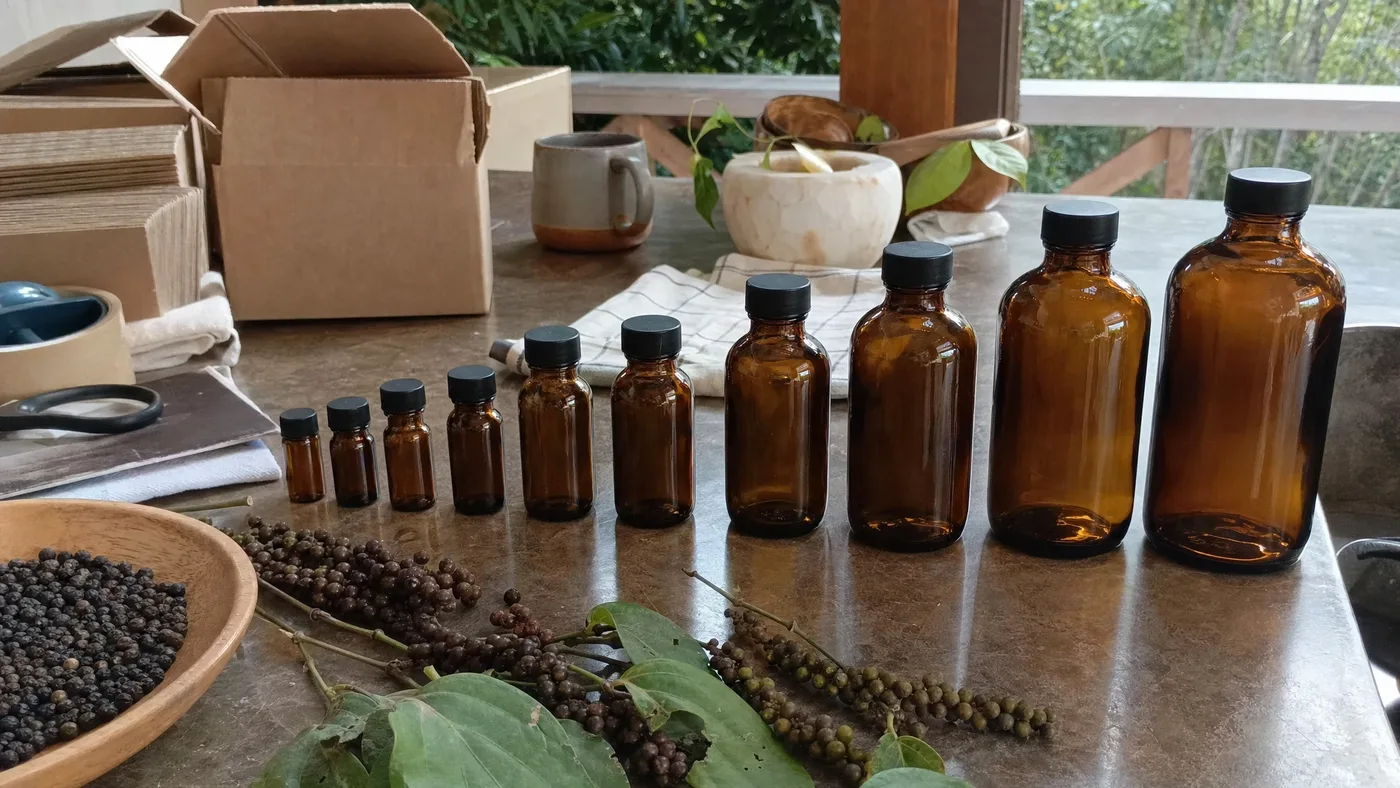
Our own Black Pepper Essential Oil, in sizes from 0.5 oz to bulk.
From $13.99
Shop Now →Where pepper comes from
Black pepper (Piper nigrum) is grown in many countries. FAOSTAT figures, as reproduced on Wikipedia's black pepper entry, put world production in 2023 at about 855,000 tonnes, with Vietnam growing around 257,000, Brazil 127,000, Indonesia 70,000 and India 66,000. Those are tonnes of spice, not oil, and they say nothing about aroma. Ours comes from peppercorns grown in India, which is as much as we claim about origin, and we do not name a grade for it.
Three published oils, side by side
The most useful thing we can do with origin is look at real analyses. Here are three, each from a different paper, with the compounds that make up most of the oil.
| Sample | Beta-caryophyllene | Limonene | Sabinene |
|---|---|---|---|
| Commercial oil labelled Sri Lanka, 2023 lot (Fratianni et al., 2026) | 24.5% | 17.1% | 20.2% |
| Five batches of steam-distilled oil, origin not stated (EFSA, 2022) | 25.1 to 26.0% | 11.5 to 13.4% | 9.1 to 9.6% |
| Peppercorns from Bangka Belitung, Indonesia, lab distillation (Nurjanah et al., 2025) | 37.4% | 13.4% | not reported |
Look at the sabinene column. One oil has about 20%, another about 9%, and the Indonesian authors say their oil lacks it. That is a real difference in what is in the bottle. But the rows differ in more than country: the lot, the scale of distillation, how long it ran, and who did the analysis all changed too. A 2024 review of earlier studies quotes fruit-oil beta-caryophyllene anywhere from 16% to 62% and sabinene from about 13% to 23%, and describes the variation as multifactorial, tied to genetics, season, plant part and extraction method.
So the fair statement is a modest one. Pepper oil varies a good deal from sample to sample, and origin is one reason among several. A country on the label narrows the field a little. It does not tell you the scent.
It is worth remembering that a printed country name is a summary, and summaries lose detail. Two crops from the same hillside in different years can smell different, and two crops from different continents can smell alike. If you love a particular oil, the useful thing is to notice what you love about it and write that down, rather than just the name on the label.
What to ask instead
If you care what is in the bottle, the more reliable questions are practical ones.
- Is the botanical name given? Piper nigrum on the label separates black pepper from pink pepper, a different plant altogether.
- How was it extracted? Steam distillation and CO2 give different oils; our comparison shows how much.
- Can the seller show a report for your lot? Our guide to reading a GC-MS report explains what the columns mean, and why a single lot's numbers describe that lot.
The Certificate of Analysis we publish for one batch lists density, refractive index and optical rotation. If you need GC-MS for a project, ask us in writing through the contact page before ordering and tell us which lot you have in mind.
Training your nose
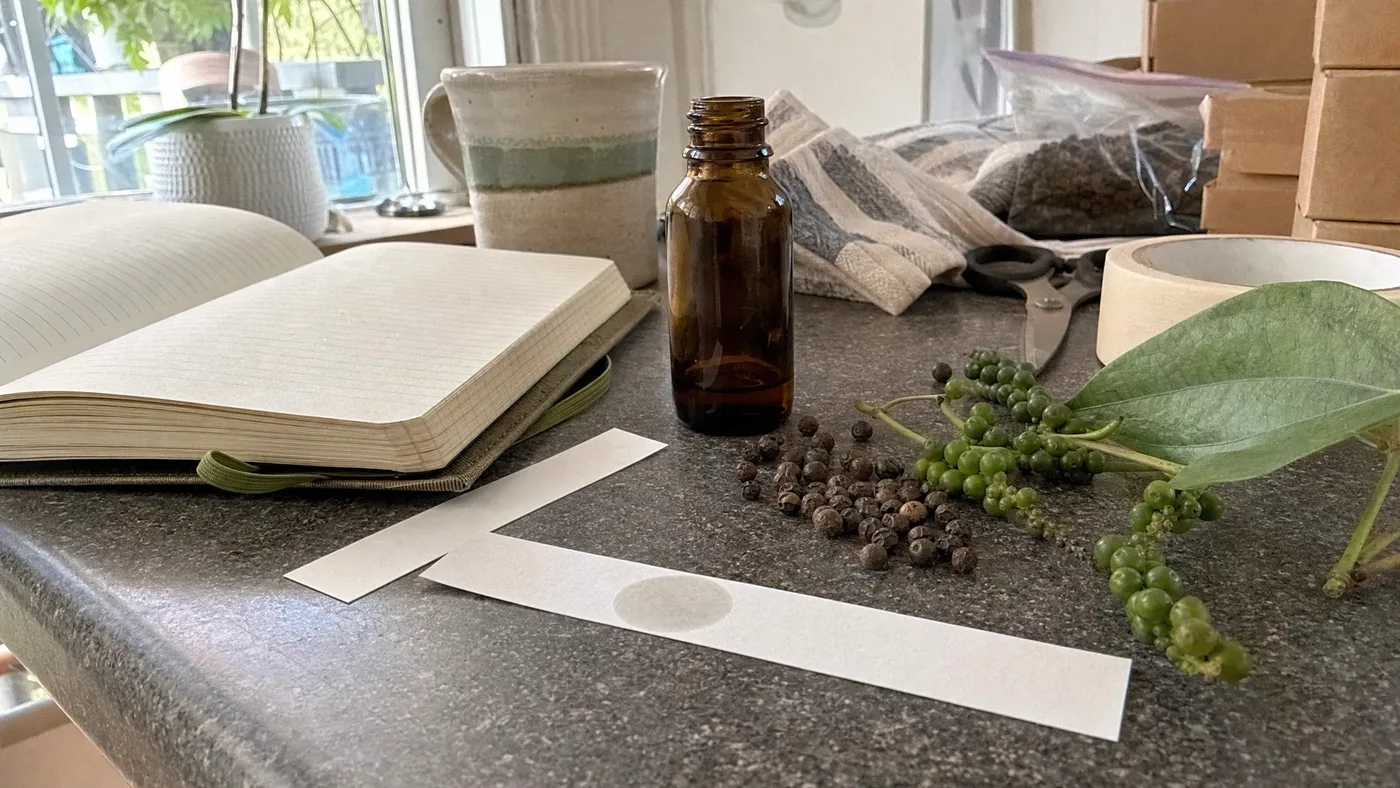
A lab report is only half the story. If you can, smell two or three pepper oils side by side on paper strips. Label each strip, wait a minute for the first sharp burst to pass, and come back to it after ten minutes and again after an hour. You will notice that the opening, the middle and the base can each be quite different from one bottle to the next, and that the base is often where a bottle wins or loses you.
Where origin does matter
Origin still has a place. It is a useful clue about the crop, and it is a reasonable thing to prefer for your own reasons, whether that is a region you like or a supply chain you want to understand. The point is to treat it as a clue and not a guarantee. A grade name is a trade term, not a measurement of the oil, and two bottles with the same name on the label can still smell different.
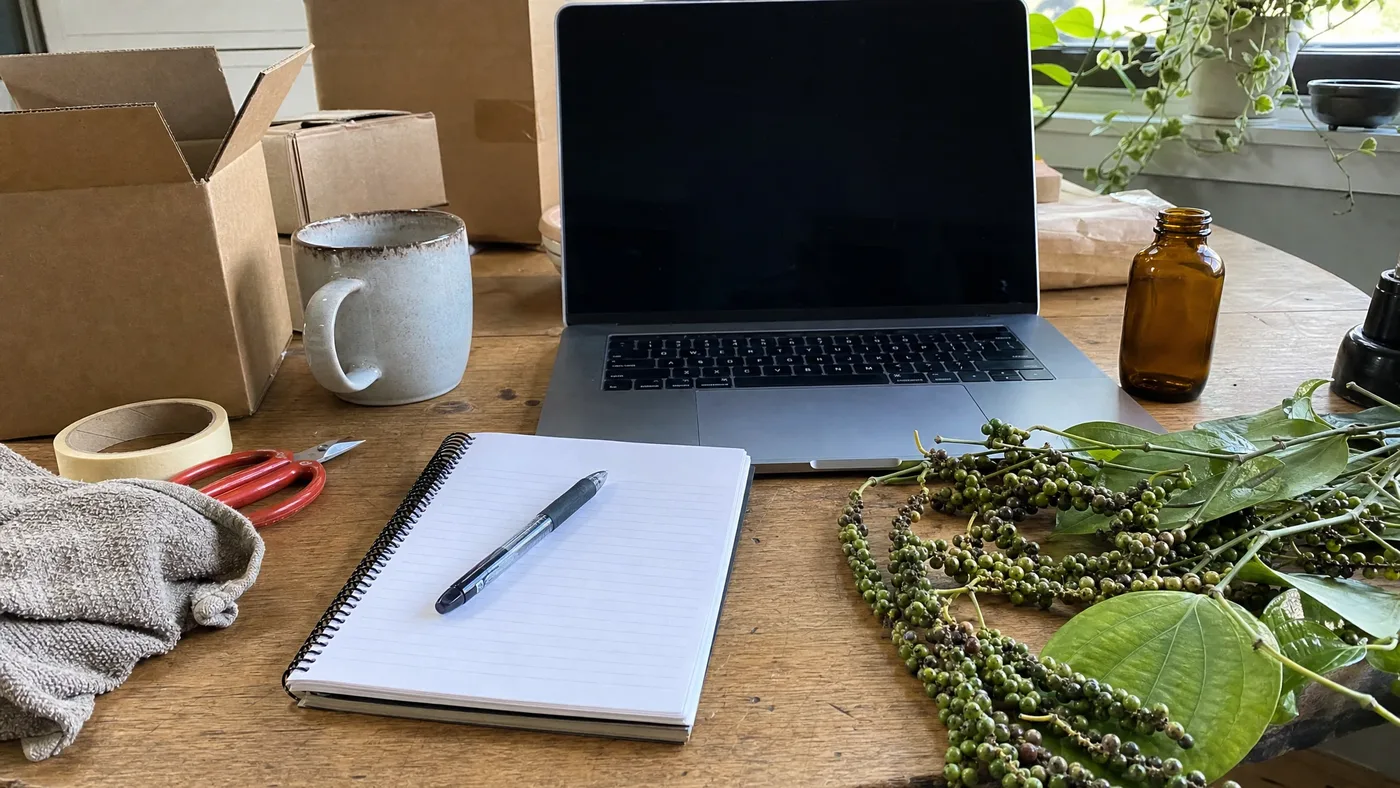
If you are shopping, keep a little notebook. Jot the date, the botanical name, the lot number and a line or two about how it smelled when you opened it. Months later you will be glad to have it, and so will anyone you share a recipe with.
The better test is your own nose and a lot report. Smell the oil at working strength, and match the report to the batch in your hand. That is also why price differences between sellers rarely come down to country alone, a subject we take up in our piece on why black pepper oil prices vary.
Black Pepper Essential Oil
Black Pepper Essential Oil from our own shop, in sizes from 0.5 oz to bulk.
From $13.99
Shop Now →