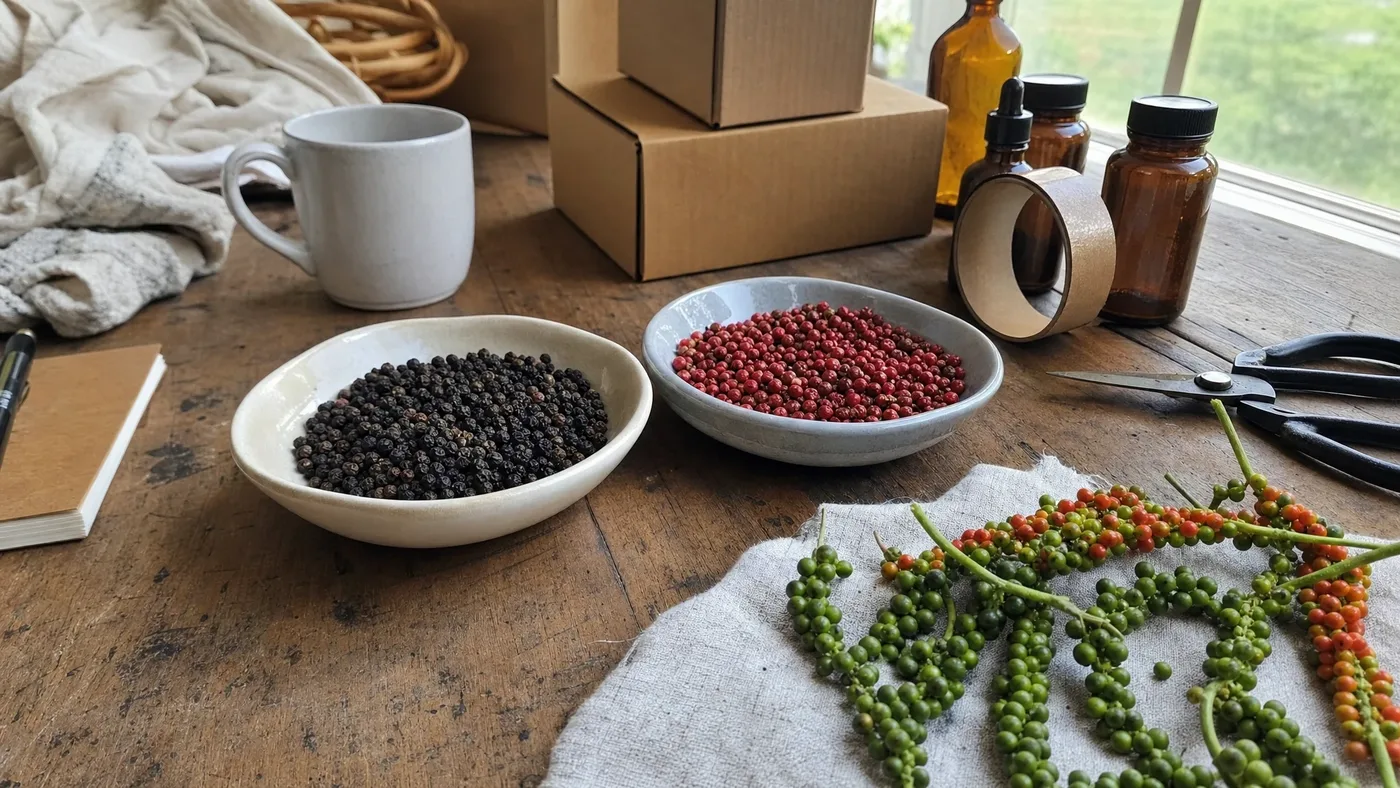
Black Pepper vs Pink Pepper Oil: Not Even Related
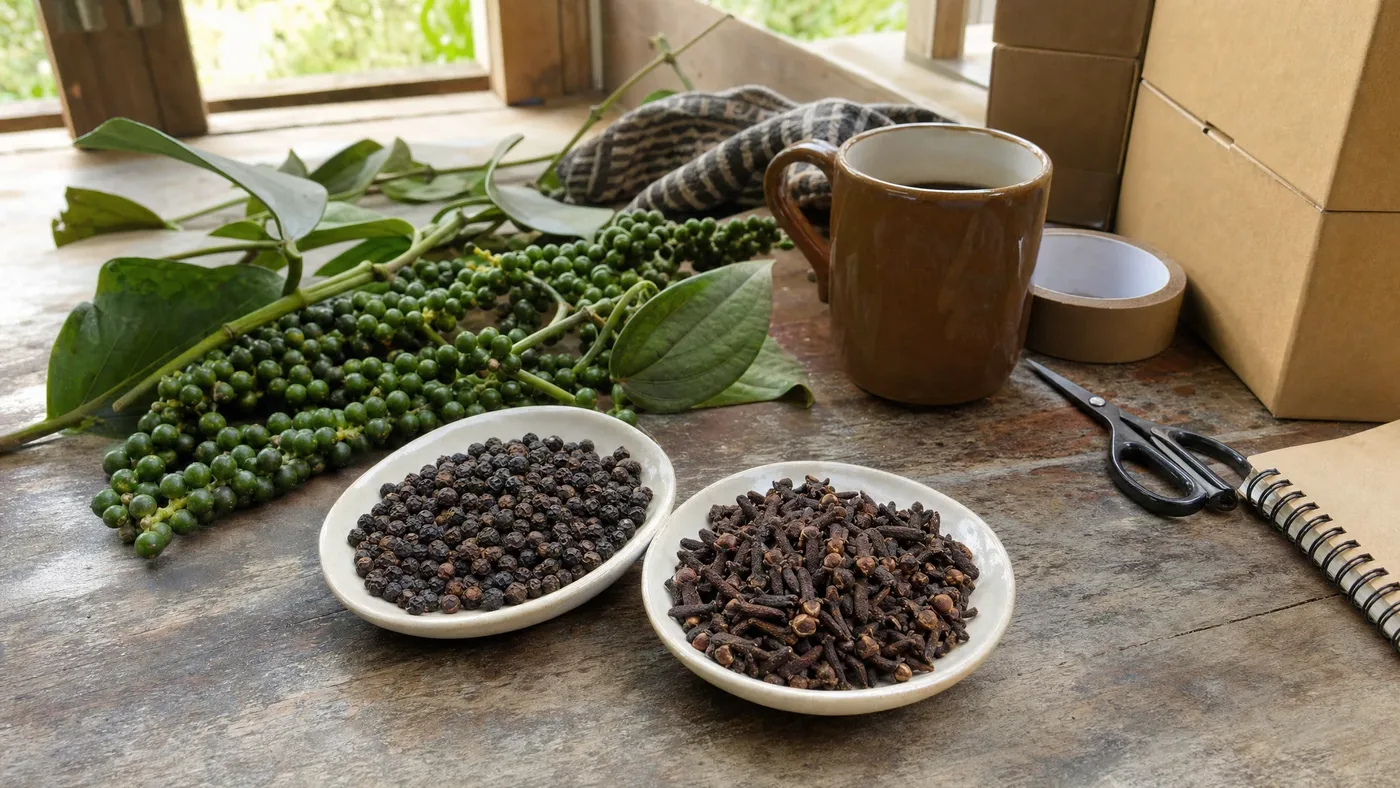
The word "pepper" is doing a lot of unearned work here. Black pepper is the dried fruit of a climbing vine, Piper nigrum. Pink pepper is the berry of a Schinus tree, a relative of the cashew and the pistachio. They share a name, a rough size and a place on the spice rack, and that is about it. The difference goes beyond scent and into who should be careful.

Black Pepper Essential Oil
Our own Black Pepper Essential Oil, in sizes from 0.5 oz to bulk.
From $13.99
Shop Now →Two plants, two families
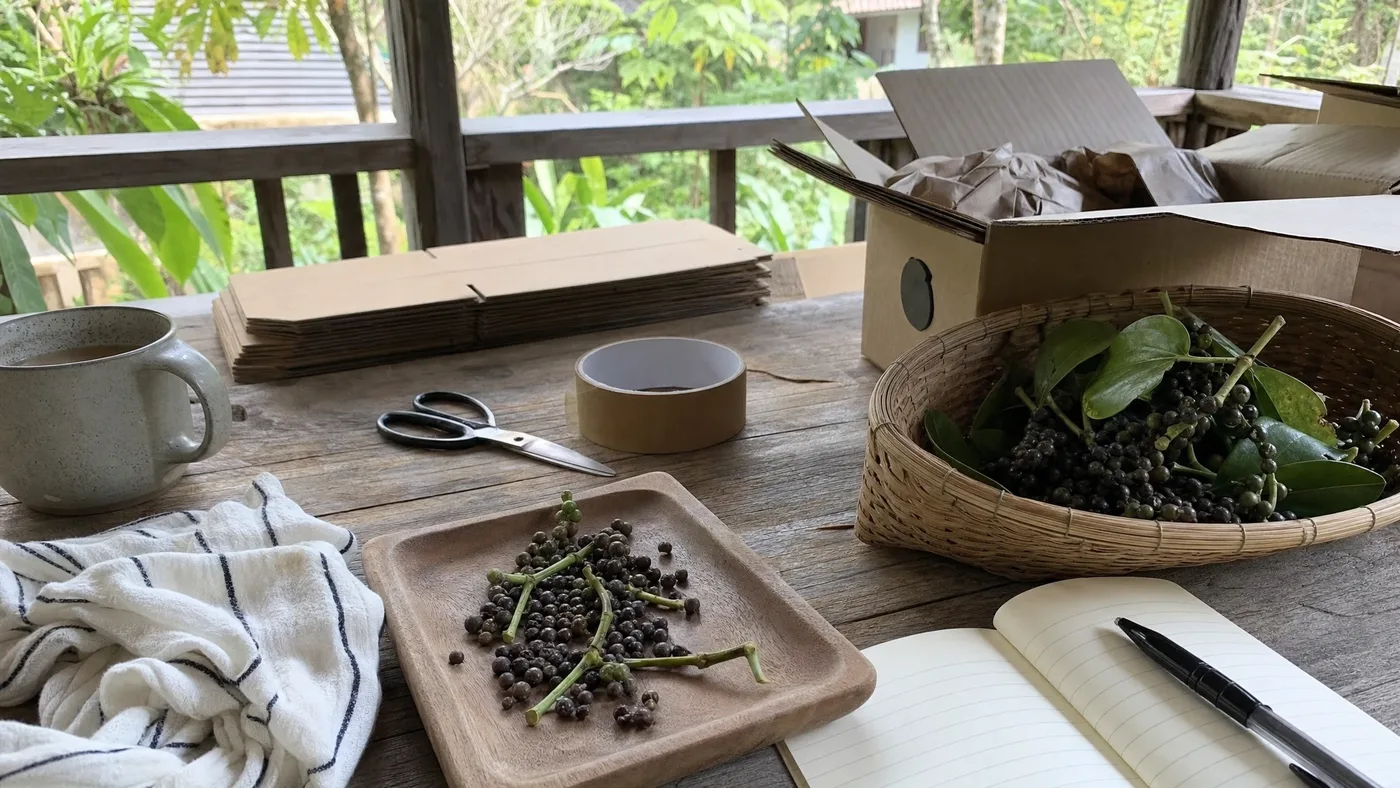
We sell black pepper oil, steam-distilled from Piper nigrum peppercorns grown in India. Pink pepper oil comes from Schinus terebinthifolius, the Brazilian pepper tree, or from the related Schinus molle, which are different plants. An allergy study notes that pink peppercorn belongs to the Anacardiaceae, the same family as cashew and pistachio (Too et al., 2019). Black pepper sits in the Piperaceae. If a seller does not name the species of a pink pepper oil, it is worth asking.
On the spice rack and in the bottle
It is easy to see why the two get lumped together. In a spice jar, a few pink berries scattered over black peppercorns look like a single family, and both give a little tingle of spice. But pink peppercorns are usually sold as a garnish and a sweet, fruity accent, and black pepper is the workhorse of the kitchen. They come from different plants and play different roles, and in the world of aroma oils that difference carries over.
Different chemistry, different character
Distilled black pepper oil is led by beta-caryophyllene, with limonene, sabinene and alpha-pinene close behind (EFSA FEEDAP Panel, 2022). A hydrodistilled Schinus terebinthifolius fruit oil in a 2024 study was dominated by pinenes instead, with beta-pinene at 43 percent and caryophyllene at only 3 percent (Oliveira et al., 2024). Both oils vary with origin and lot, so these are snapshots, but the contrast is real.
What that means for your nose is a reasonable inference rather than a measurement. A woody sesquiterpene backbone suggests a dry, warm, woody spice, which fits how we describe our oil: peppery and sharp at first, then warm and woody, sitting between the middle and base of a blend. A pinene-led oil points to something lighter, brighter and more resinous that should sit higher and fade sooner.
The allergy question
In a small Singapore study of children with cashew or pistachio allergy, 16 of the 21 analysed had a positive skin-prick test to pink peppercorn. No oral challenge was done, so that shows sensitisation rather than proven allergy, and it concerned one species. Still, it is a good reason for anyone with a tree nut allergy to ask their allergist before eating, handling or diffusing pink pepper products. The study says nothing about black pepper oil either way, so we make no claim for it in that context, and a person with allergies should take the same question to their allergist.
How to tell which one you are holding
Look at the label. A black pepper oil should name Piper nigrum. A pink pepper oil should name a Schinus species. If the label only says "pepper oil" or "pepper essential oil," do not guess. Ask the seller for the Latin name, since it settles the question immediately. Then smell the two, if you have the chance, and notice how different they feel: one drier and woodier, the other lighter and sparkling.
It is also worth deciding what you want from the blend before you pick. If the aim is a dry, warm spice that lasts, black pepper is the natural choice. If the aim is a fleeting, bright shimmer, you might enjoy a pink pepper oil, with the allergy question in mind. And if you are reading the label because someone in the house has a nut allergy, take a moment to talk to their allergist before bringing any new material home.
Choosing between them
- For dry, warm spice under citrus or resin, choose black pepper. Our blending guide shows where it sits.
- For a bright, peppery sparkle on top, pink pepper may suit, provided no nut allergy is involved and the species is named.
- If you are replacing black pepper because you ran out, our substitutes guide covers the options.
For everyday cautions on black pepper oil itself, read our safety and side effects article.
Black Pepper Essential Oil
Black Pepper Essential Oil from our own shop, in sizes from 0.5 oz to bulk.
From $13.99
Shop Now →