Is Organic Black Pepper Oil Worth It? What the Label Means
Seeing "organic" on a bottle of black pepper oil raises a fair question: is that the one to buy? It depends on what you want the word to tell you. It speaks about the farm. It says very little about the still, the bottle or how fresh the oil is.

Black Pepper Essential Oil
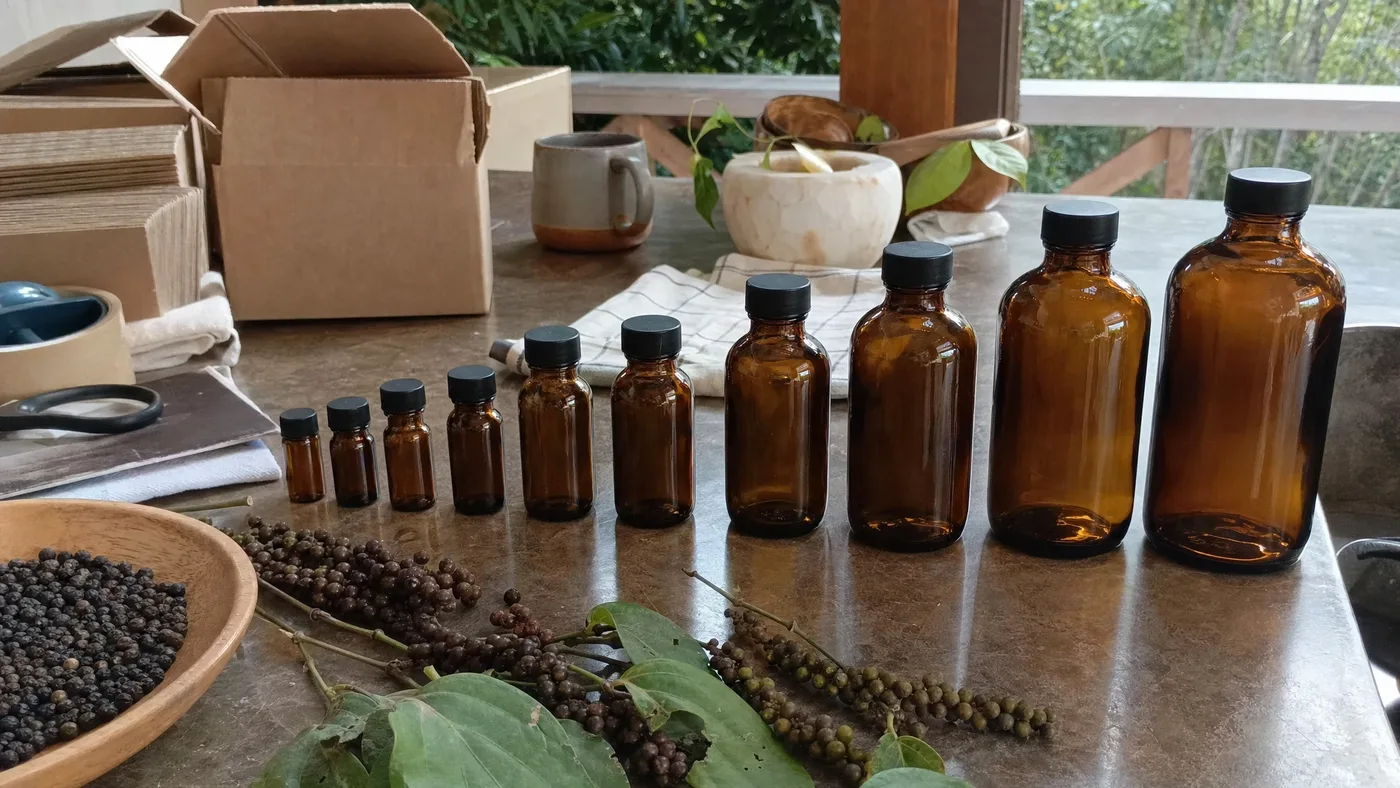
Our own Black Pepper Essential Oil, in sizes from 0.5 oz to bulk.
From $13.99
Shop Now →Our oil is not sold as organic, and we make no organic claim. This guide is for anyone deciding whether to look for one, and it is meant to help you ask better questions of any seller, including us.
What the label is about
Organic certification describes a process. In the United States, as summarized on Wikipedia's entry on organic certification, a farm or handler is certified as complying with USDA organic regulations. Applicants submit an Organic System Plan, there is a three-year transition period before the label can be used, and an inspector compares what happens on site with the plan. Samples of soil, plant tissue or product are taken "as needed," so testing is a backstop and not the basis of the label. The same source notes that certified organic food is not necessarily free of pesticides.
So an organic certificate answers questions about the grower: which inputs were allowed, and what records exist. It does not answer questions about distillation. A careful organic farm can be paired with a sloppy still, and a conventional farm with an excellent one. The two are independent, so one cannot stand in for the other.
The residue question
The usual argument for paying more goes like this: distillation concentrates whatever is on the plant, so start clean. The first half is real for the raw spice. A 2026 methods paper (Arena, Zoccali and Mondello) notes that Piper nigrum crops are prone to pests and fungal infections, and that pesticide use in the EU is controlled by maximum residue levels. Of ten commercial black pepper samples it analyzed, three contained diphenylamine (6.3 to 11.3 micrograms per kilogram), three contained quinalphos (9.5 to 52.6, one above its limit) and two contained phosalone, below its limit. Those were peppercorns and not oil, and the paper has an inconsistency in how it states one limit, so read it as evidence that residues turn up on commercial pepper, not as a precise standard.
The second half, that residues carry over into steam-distilled oil, is not something we can point to a measurement for. Steam moves volatile compounds, and whether a given residue travels with it depends on its chemistry. The sensible conclusion is not that organic is useless or essential. It is that a label cannot settle a question that a lot report can.
Questions to ask a seller who says organic
- Who certified it, and can you see the certificate?
- Is the certificate current, and does it name this product?
- Does it cover the finished oil or only the raw peppercorns?
- Is there a report for the lot in the bottle you will receive?
A seller who is proud of an organic claim will usually be happy to answer all four. If the answers come slowly or vaguely, treat the word as marketing until a certificate says otherwise.
What we would look for
- A lot report, not just a logo. A GC-MS report tells you what the oil contains, and our guide to reading one shows what to look at. If you need one for our oil, ask in writing through the contact page before you order.
- A clear botanical name and extraction method. Piper nigrum, steam distilled, in words. See our guide to spotting a cut oil.
- A freshness date and sensible storage. An aged oil can irritate more than a fresh one, organic or not.
- A realistic plan for use. For skin, black pepper oil is a concentrated oil that belongs well diluted, a point our safety overview covers.
Where to put your attention
There is only so much time anyone wants to spend researching a bottle of oil. If you are short on it, spend it where it pays off: a clear botanical name, an extraction method in words, a report you can read, a freshness date and a bottle size you will actually use up. Organic can be a bonus on top of that list. It is a poor replacement for any of it.
When organic is the right call
Plenty of people prefer organic for reasons that have nothing to do with the oil's chemistry: they want to support a farming method, or they buy organic across the board. Those are good reasons, and nobody needs to justify them with a lab result. If that is you, buy certified organic oil from a seller who can show the certificate and a lot report together.
If your priority is a well-distilled oil with documentation you can read, spend your attention there, and treat organic as one more fact on the table and not the whole story.
Black Pepper Essential Oil
Black Pepper Essential Oil from our own shop, in sizes from 0.5 oz to bulk.
From $13.99
Shop Now →