Does Black Pepper Oil Stain? Removing It From Fabric
The bottle tips, the cap was loose, and now there is a dark, damp spot spreading on your favourite cotton shirt. The good news is that black pepper oil is a thin oil, and thin oils respond well to quick action. What you are dealing with is a grease mark, not a dye.

Black Pepper Essential Oil
Our own Black Pepper Essential Oil, in sizes from 0.5 oz to bulk.
From $13.99
Shop Now →What kind of stain this is
Essential oils are oils, so on fabric they behave like any other oily spill: they soak in, darken the weave, and cling because water alone cannot lift them. The European safety assessment of black pepper oil describes it as a clear, mobile liquid that ranges from colourless to light yellow, green or blue (EFSA FEEDAP Panel, 2022). A liquid that pale is unlikely to leave lasting colour on its own. The mark you see is the oil itself, and your goal is to get the oil out.
One thing changes the picture. If the oil was already blended into a carrier such as almond or jojoba, you have a heavier, longer-lasting grease stain than a few drops of neat pepper oil would make, and the carrier is what you are really cleaning up. That is worth remembering if you were mid-way through making a massage oil when the spill happened.
The first minutes
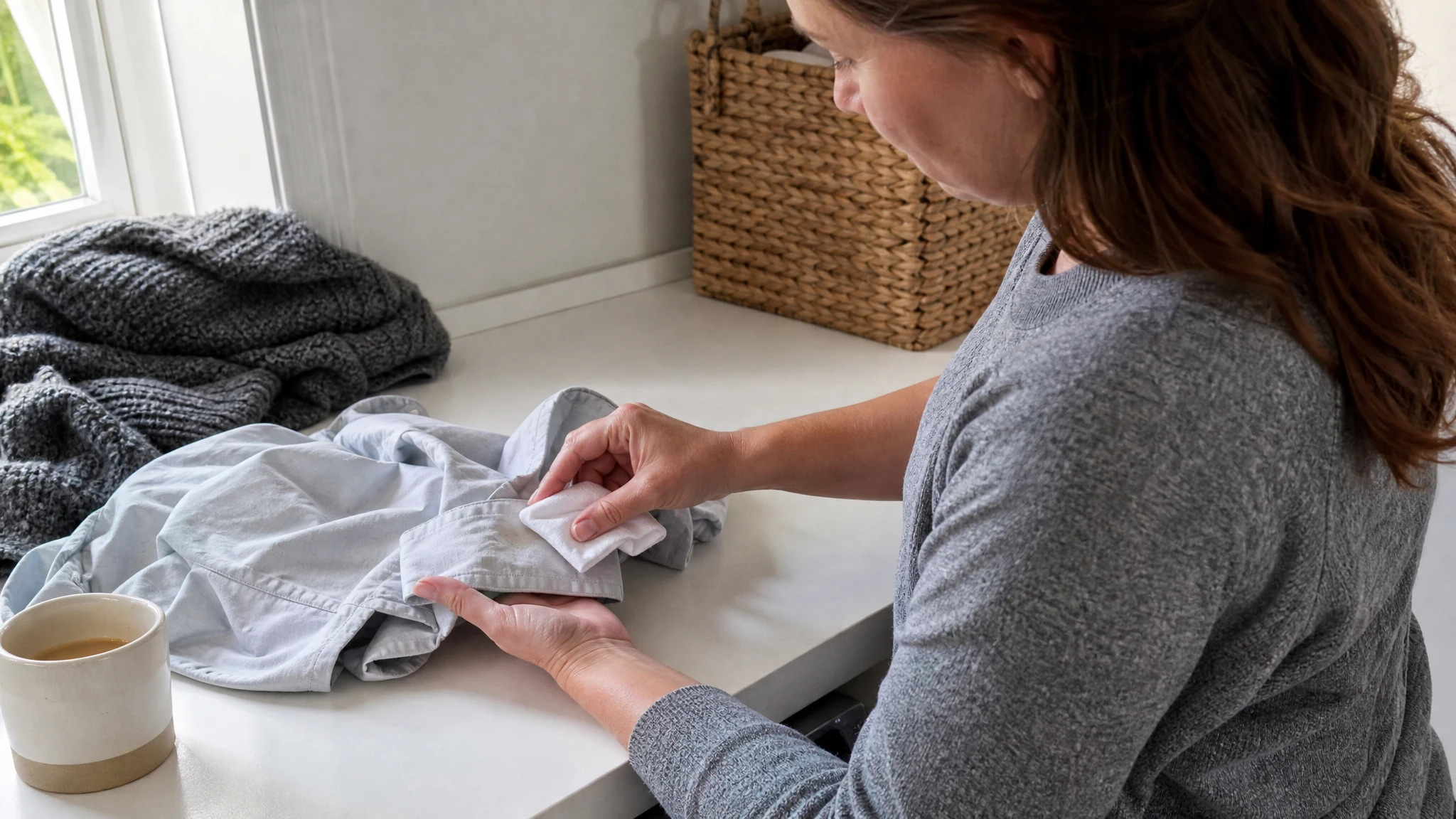
- Blot, do not rub. Press a clean cloth or paper towel on the spot to take up what is sitting on the surface. Rubbing pushes the oil deeper into the fibres and spreads the mark.
- Put something absorbent underneath. University of Georgia Extension's stain guide for oils starts by placing clean absorbent material under the stain, so the oil moves out of the fabric instead of through it (UGA Extension, Remove Stains From Oil).
- Check the care label. The same guide says to always read the label before trying any stain method, and to pretest each cleaning agent on an inconspicuous area for colourfastness.
Lifting it out
For washable cotton, linen and synthetics, the sequence most laundry guidance agrees on is simple. Tide's stain guide, for example, has you rub dish soap into a grease stain, work liquid detergent in, wash at the hottest temperature the garment label allows, and then check the stain before drying, because "drying will set the stain" (Tide, How To Remove Grease Stains). UGA's guidance for oily apparel stains likewise calls for diluted hand dishwashing detergent worked into a damp pad, changed as it picks up the stain (UGA Extension).
In plain terms, here is what we would do:
- Blot, then work a drop of dish detergent into the mark with a fingertip. Dish detergent is made to cut grease, which is the job here.
- Wait a few minutes, then wash on the warmest setting the care label allows.
- Take the garment out before it meets a dryer or an iron and look at it in daylight. If a shadow remains, treat it again and rewash.
The point about heat is worth repeating, because it is the one mistake that makes a fixable stain permanent. Leave the dryer for last.
When to stop and call a professional
Silk, wool, suede and leather, and anything marked dry clean only, are better handed over than treated at home. Water and detergent can leave rings or change the finish on those materials. Tell the cleaner what the stain is and how long ago it happened, and bring the garment in quickly. The same goes for upholstery and rugs you cannot take apart and wash. For polished wood, painted surfaces and stone countertops, blot the oil straight away and check the manufacturer's care guidance before using any cleaner; a harsh product can do more harm than a thin oil will.
Oil on skin, and keeping it off in the first place
If the oil got on your hands too, wash them with soap and water. Soap does for skin what dish detergent does for cotton. Undiluted pepper oil is not meant for skin, and we describe it as a skin irritant at any generous strength, so if your skin reddens or stings afterward, the guidance in our skin reaction post applies.
A few habits keep it from happening again:
- Pour over a sink, a tray or a folded towel, not above clothing or upholstery.
- Cap the bottle before you set it down. Our storage routine keeps bottles upright and in a cabinet, which also keeps them out of the way.
- Stand the bottle on a coaster or small dish when you are measuring drops for a diffuser or a blend.
- Keep an old cloth within reach while you work, one you would not mind marking.
A mark that looks dramatic in the first minute usually turns out to be a few drops, and a few drops come out. If something does stay, it is rarely the end of the shirt, just a good reason to wash it once more before the dryer gets a say.
Black Pepper Essential Oil
Black Pepper Essential Oil from our own shop, in sizes from 0.5 oz to bulk.
From $13.99
Shop Now →Sources & Further Reading
- UGA Cooperative Extension, Textiles, "Remove Stains From Oil". site.extension.uga.edu/textiles/care/stain-removal/remove-stains-from-oil
- Tide, "How To Remove Grease Stains - Stain Removal Guide". tide.com/en-us/how-to-wash-clothes/how-to-remove-stains/grease-stains
- EFSA FEEDAP Panel, "Safety and efficacy of feed additives prepared from Piper nigrum L.: black pepper oil and black pepper oleoresin for use in all animal species and a supercritical extract for use in dogs and cats (FEFANA asbl)", EFSA Journal 2022;20(11):e07599. pmc.ncbi.nlm.nih.gov/articles/PMC9641382