Black Pepper History: How a Spice Moved Empires
When Alaric the Visigoth besieged Rome, one thing on his ransom list was 3,000 pounds of pepper. A dried berry that once sat beside gold and silver is easy to take for granted now that it sits in a shaker. The history of pepper is really a history of why people wanted it so much.

Black Pepper Essential Oil
Our own Black Pepper Essential Oil, in sizes from 0.5 oz to bulk.
From $13.99
Shop Now →A vine from the Malabar side of India
Black pepper is the dried fruit of Piper nigrum, a climbing vine that grows to around four metres, with small fruits about five millimetres across. It is thought to be native to South or Southeast Asia, possibly including India's Malabar Coast and the Western Ghats (Wikipedia, Black pepper). The earliest use is not well dated, which is a good reason to be wary of confident claims about pepper in ancient India.
The first firm date: a pharaoh
The earliest dated evidence is in Egypt, where peppercorns were placed in the nostrils of Ramesses II after his death in 1213 BCE. That tells us embalmers had pepper. It does not tell us how it got there or what it cost, so it is a good detail but a poor basis for a trade story.
Rome and the sea routes
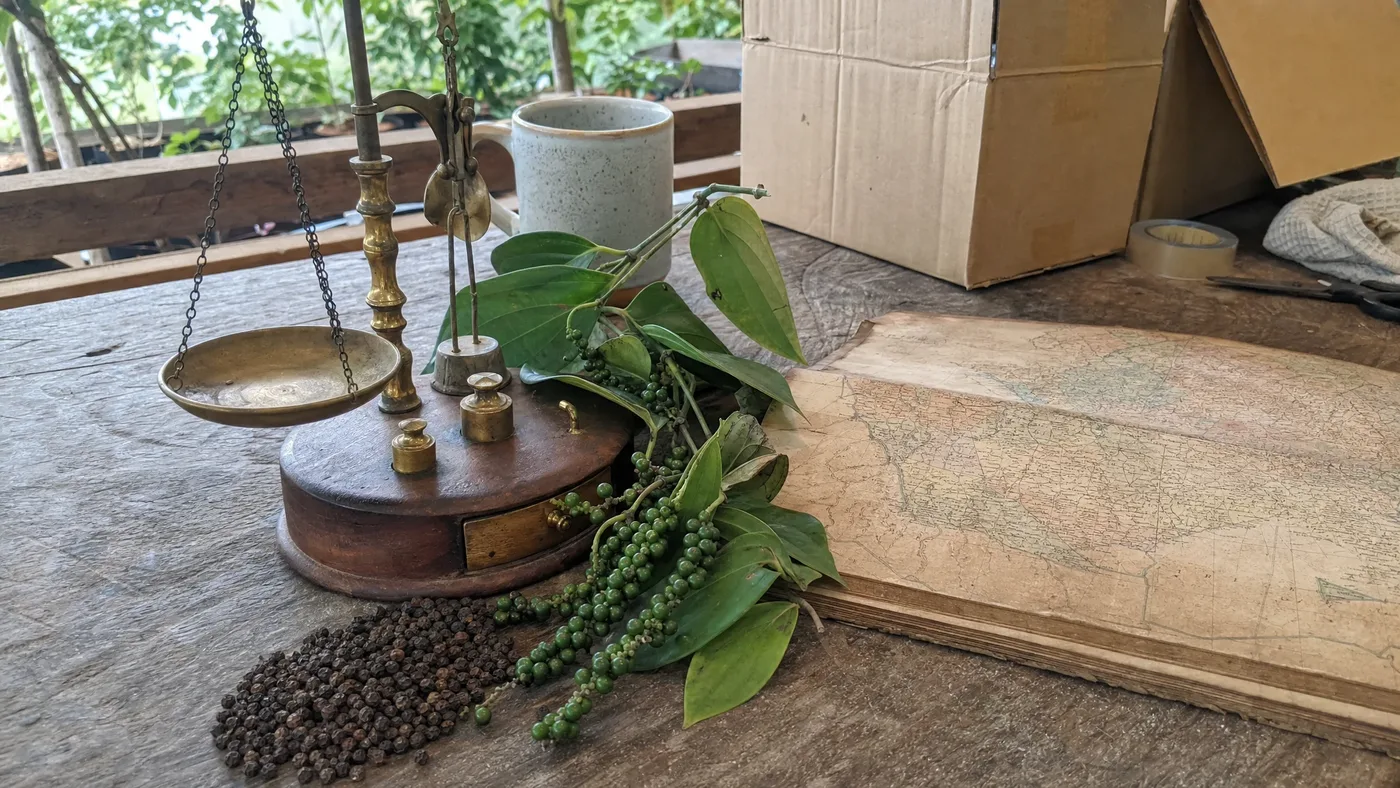
By the 4th century BCE pepper was known in Greece, probably scarce and costly. Once Rome took Egypt in 30 BCE, ships made the monsoon run to the Malabar Coast routinely, and the geographer Strabo is reported to have counted around 120 ships making the annual trip. Around 77 CE, Pliny the Elder listed black pepper at four denarii per pound, white at seven and long pepper at fifteen.
That list is a nice reminder that those were three different spices, not grades of one. White pepper is made from ripened berries with the skin removed, which is why the white pepper oil you may see elsewhere is not the same as the black pepper oil we sell. The figures reach us through summaries of the ancient authors, so treat them as colour for the trade rather than household budgets.
Ransoms, monopolies and a sea route
After the Roman era, the spice routes passed through Islamic powers, and once pepper reached the Mediterranean, Venice and Genoa largely controlled the trade, which helped fund their rise. That control is the backdrop to 1498, when Vasco da Gama reached India by sailing around Africa. The Portuguese held much of the spice trade for about 150 years, until the Dutch and English took most of it in the 17th century.
The twist is that India is no longer the giant of pepper. In 2023 FAOSTAT figures, as cited by Wikipedia, world production was about 855,000 tonnes, with Vietnam at roughly 257,000 and India near 66,000. The vine that sent fleets to Malabar now grows widely around the tropics.
Why a dried berry mattered so much
It helps to picture a world before refrigerators. Meat spoiled, food was plain, and anything that made a meal more interesting was valued. Pepper was light, it kept for a long time and a little went a long way, so it was easy to carry across oceans and deserts. That mix of portability and appeal is a big part of why it travelled so far.
There is a nice sensory thread through the whole story. Anyone who has cracked a fresh peppercorn knows the way the aroma jumps out the moment the skin breaks. Traders, cooks and cooks' guests across thousands of years were reacting to that same first sniff you get from a mill today.
Where the oil comes in
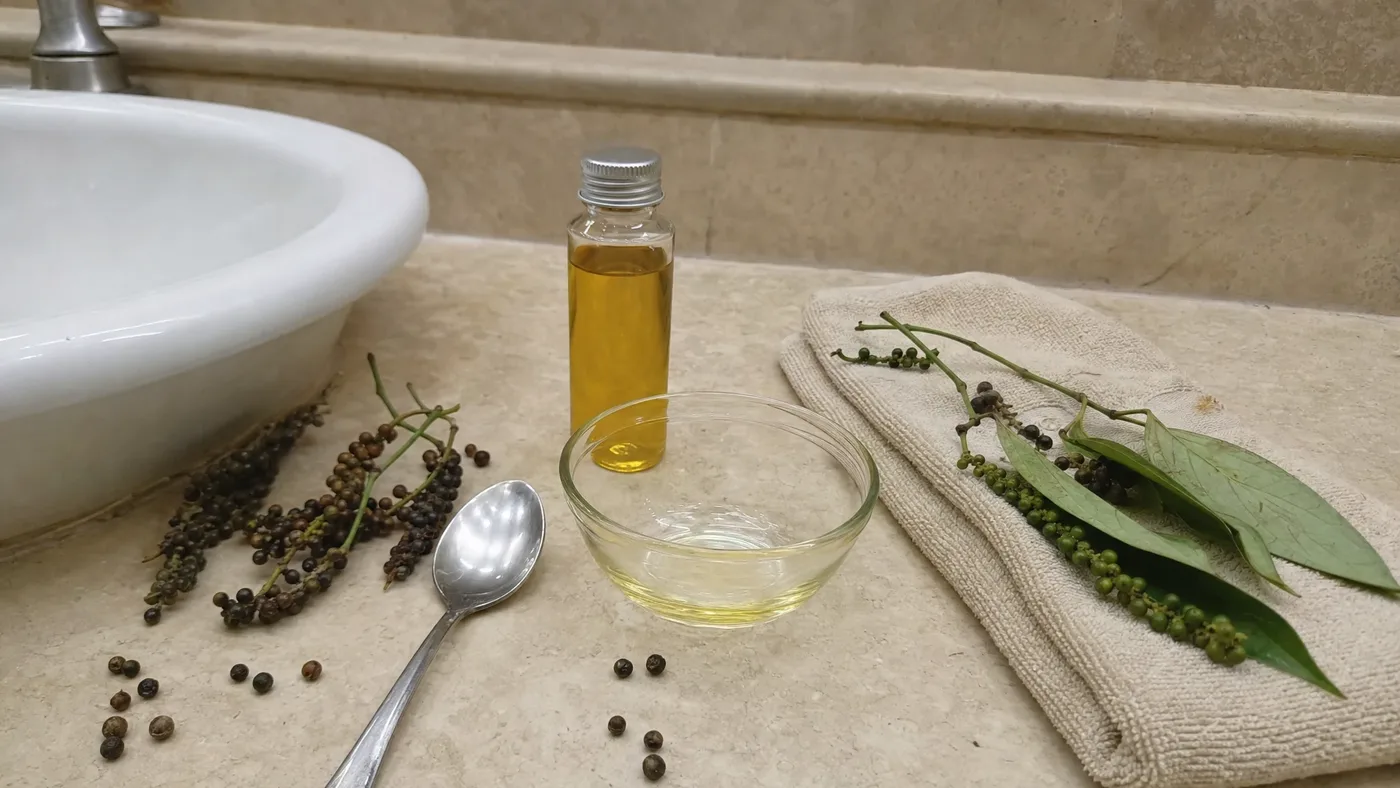
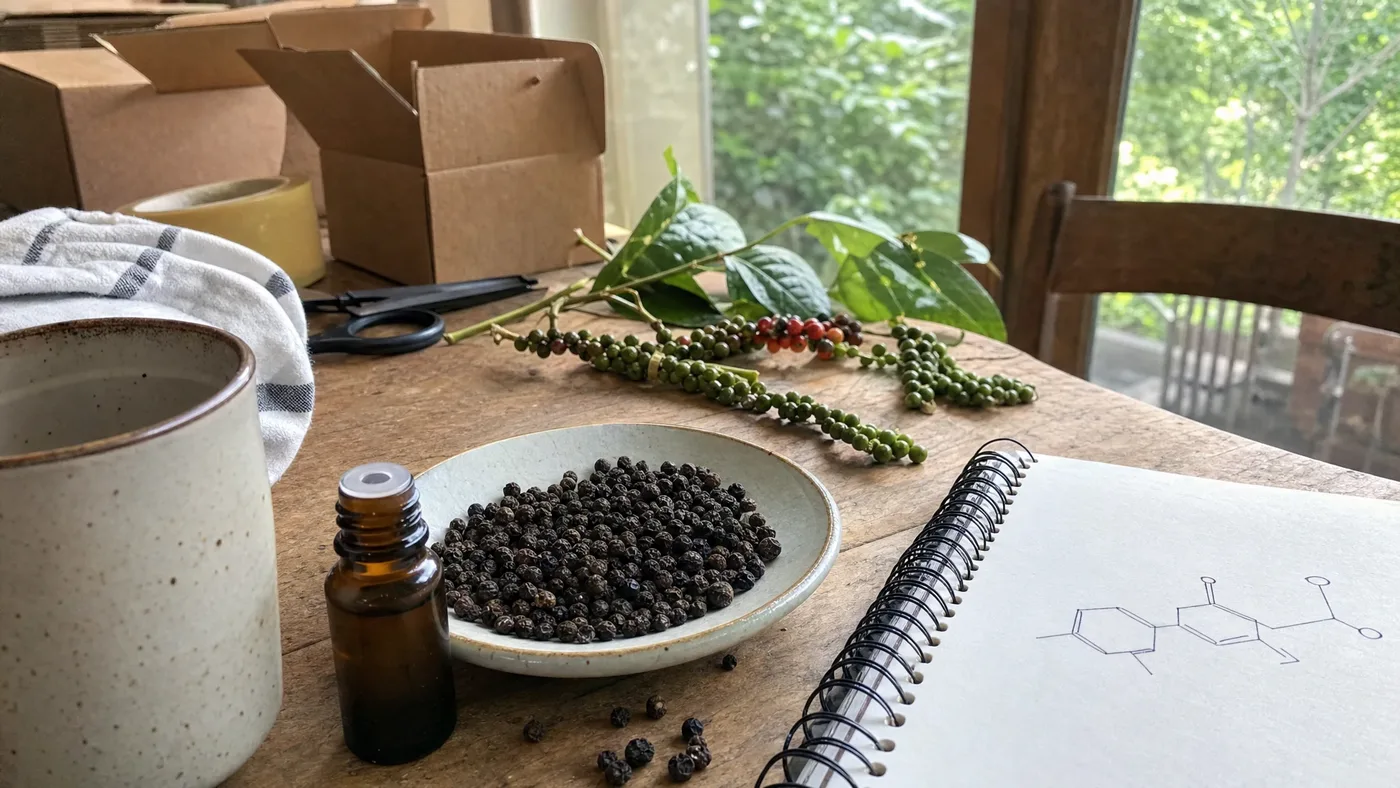
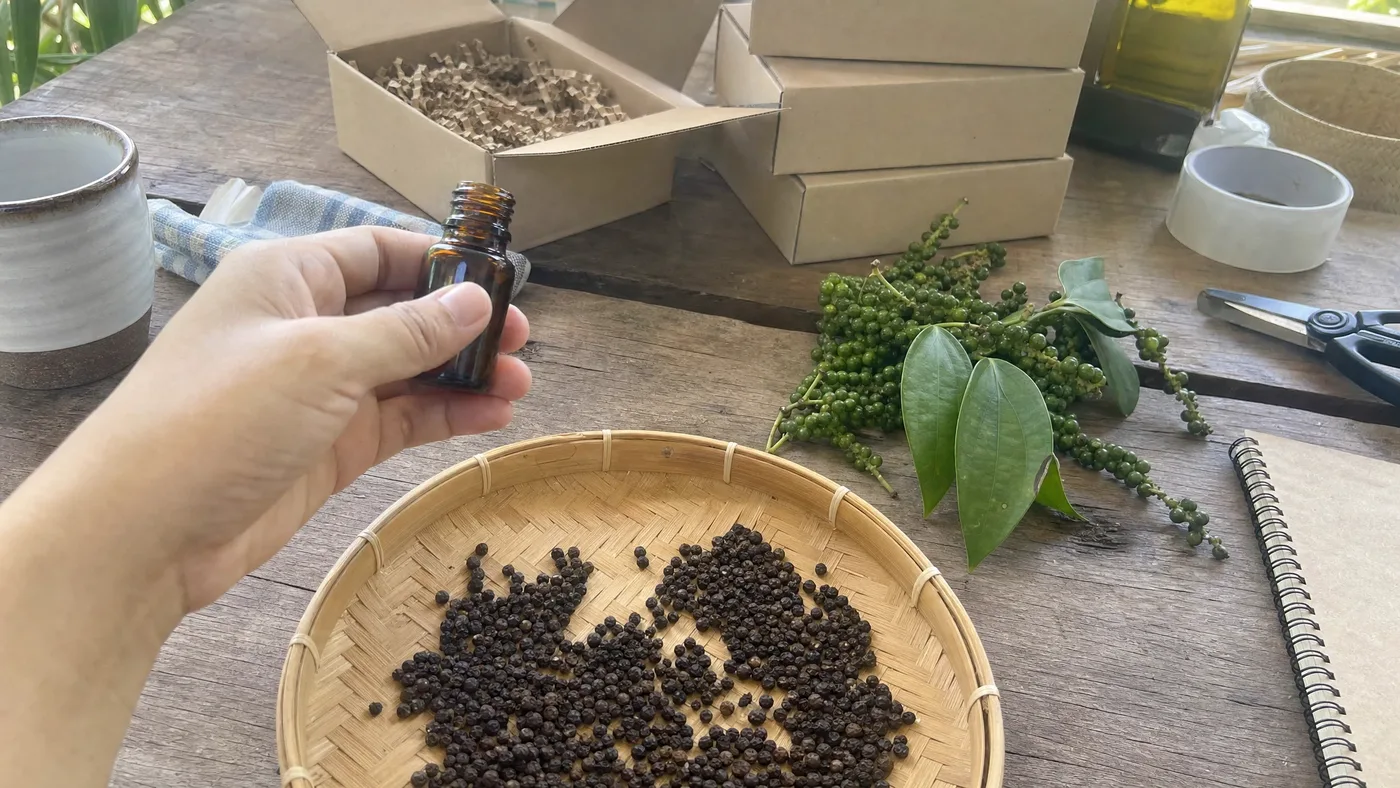
Nothing we found dates when pepper was first distilled, so we will not offer a date. What we can describe is the modern oil. A European safety opinion describes it as the product of steam distillation of dried, crushed fruit (EFSA FEEDAP Panel, 2022). Ours is steam-distilled from Piper nigrum peppercorns grown in India, and we sell it neat in sizes from half an ounce to bulk.
The oil is not the spice in a smaller bottle. The heat of a peppercorn comes largely from piperine, which makes up a few percent of the dried fruit (Ziegenhagen et al., Foods, 2021) but sits at under 0.0005% on average in the distilled oil. What carries over is the aroma: a dry, warm, peppery scent that opens sharp and settles woody, which is why perfumers have loved it. See how it behaves in our post on pepper as a perfume note or learn about the vine itself.
A small way to feel the history
If you want to connect with all this, take a few whole peppercorns and crush them on a board with the flat of a knife. Hold them to your nose and notice how the scent opens sharp and then rounds out. Then open a bottle of the oil and compare. The oil is a quieter, woodier relative of that smell, not a copy of it, but it is the same plant and the same tradition.
It is a pleasing thought that the scent in a diffuser or a cologne comes from the same berry that once moved fleets.
Black Pepper Essential Oil
Black Pepper Essential Oil from our own shop, in sizes from 0.5 oz to bulk.
From $13.99
Shop Now →Sources & Further Reading
- Black pepper, Wikipedia (history, botany and production figures, as cited there).
- EFSA FEEDAP Panel, 2022, EFSA Journal 20(11):e07599.
- Ziegenhagen et al., Foods 2021;10(9):2121.