Black Pepper Essential Oil vs Fragrance Oil: Which to Pick?
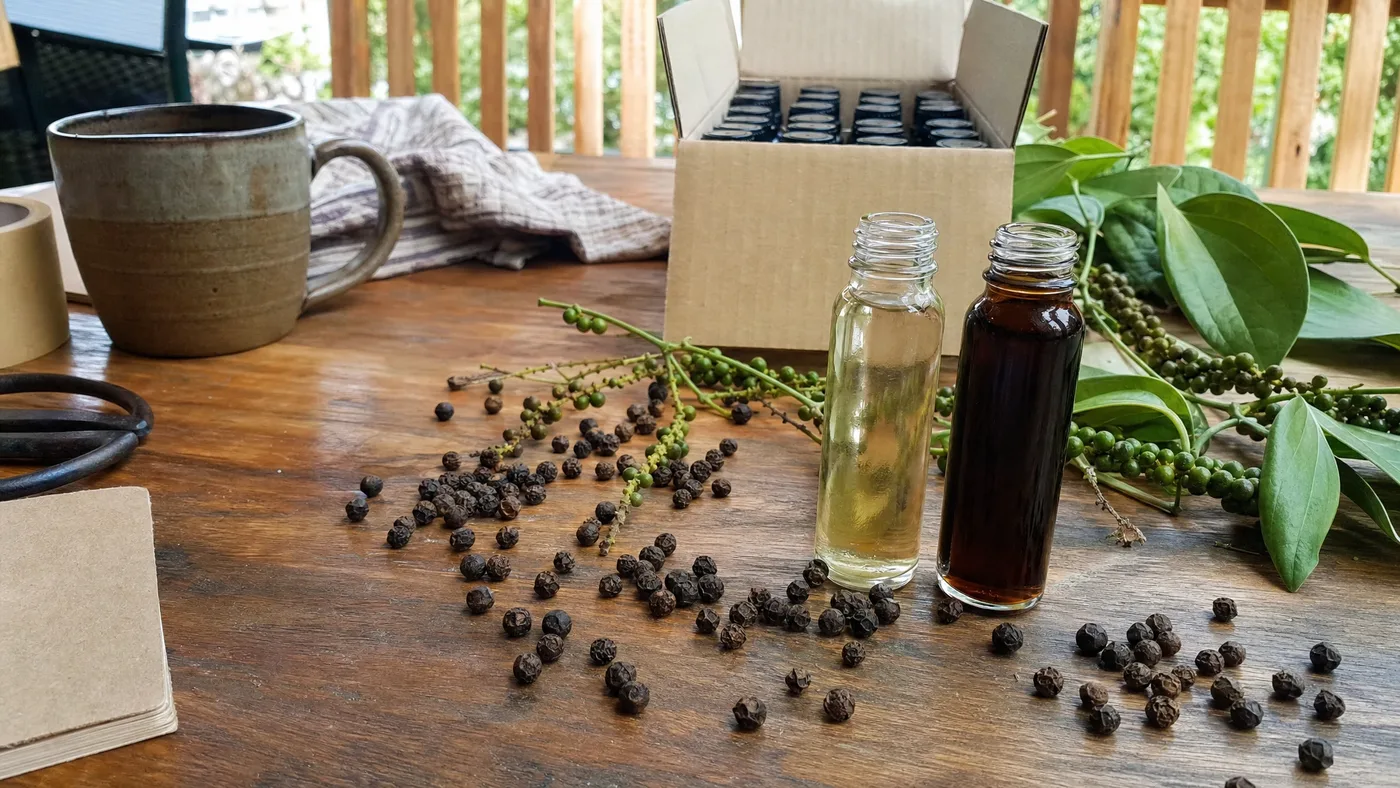
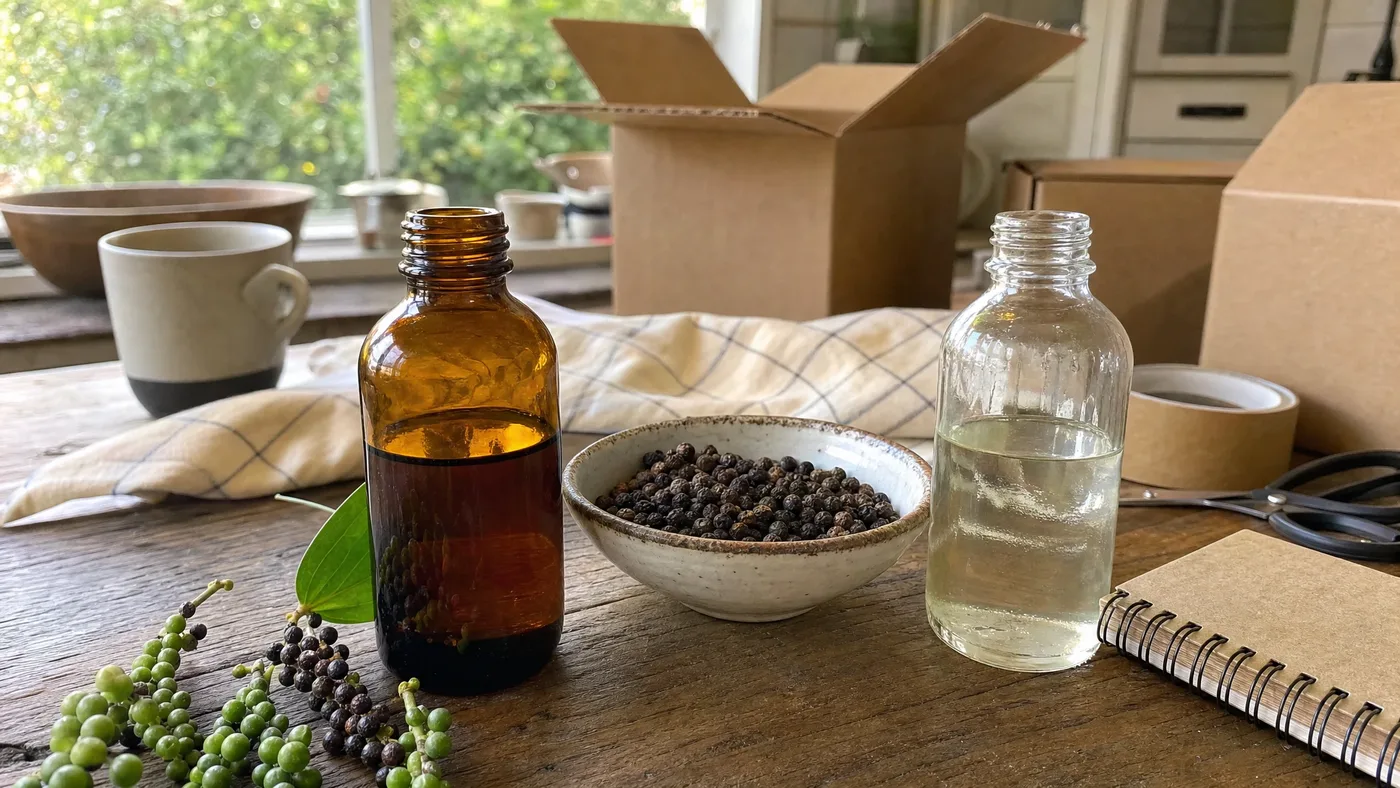
The two bottles can both say "black pepper" and smell convincingly of it, yet they are different kinds of thing. One is a single plant material with a Latin name, a distillation method and published chemistry behind it. The other is a scent that someone has designed, and its recipe usually stays with the maker. Neither is wrong. The right one depends on what you want the label to say.

Black Pepper Essential Oil
Our own Black Pepper Essential Oil, in sizes from 0.5 oz to bulk.
From $13.99
Shop Now →What you can look up
We steam-distill black pepper oil from Piper nigrum peppercorns, and because it is a plant material, its chemistry has been studied. In an EU review of distilled black pepper oil, five batches were led by beta-caryophyllene (mean 25.6 percent), limonene, sabinene and alpha-pinene (EFSA FEEDAP Panel, 2022). A separate study of one Indian sample came out quite differently, with limonene and sabinene on top (Ghosh et al., 2021). That variation is part of what natural oil is: like a harvest, it has a character of its own from lot to lot.
A fragrance oil has no equivalent public record. The FDA notes that fragrance formulas are complex blends of natural and synthetic ingredients, that a label may simply say "fragrance," and that trade secrets are protected (FDA, Fragrances in Cosmetics). So if you buy a fragrance oil, ask the maker for the safety data sheet and any allergen declaration, because the bottle will not carry them.
Smell them the way you will use them
A scent can behave very differently in the bottle than it does in the room. If you have both kinds on hand, try them in the form you plan to use: a drop on a strip, a few drops in a diffuser, a pinch on a cloth. Give each one time. A quick sniff at the neck of the bottle tells you very little, and the real character shows up after the first minutes, when the sharp opening has gone and what is left is what your room will smell like.
Choosing for your project
Pick the essential oil when the plant is the point. That means a diffuser blend (see our diffuser blends), a room spray (our room spray formulation) or a seasonal scent such as a simmer pot or candle. In a candle we suggest a fragrance load of around 3 to 5 percent, and a test burn before you scale up.
Consider a fragrance oil when you need a fixed, repeatable scent across many batches, or a precise candle load from a vendor who publishes one. A natural oil will shift a little between lots, so if exact repeatability matters more to you than a plant name, that is a legitimate reason to choose differently. We sell only the essential oil, so we will not pretend the choice is always ours to make.
What the label can tell you
A label gives you clues if you know how to read them. A plant oil should name the plant by its Latin name, the part used and the method. A fragrance oil will often just say "fragrance" or give a catchy name. Neither is a mark against the product, but the first gives you something to look up, and the second means you will need to ask the maker for more. When in doubt, write to the seller and ask. A good one is glad to answer.
A quick way to decide
- Want a plant you can name and read about? Choose the essential oil.
- Want exactly the same scent in every batch? A fragrance oil from a vendor who publishes usage guidance may fit better.
- Making something for skin? Whichever you pick, read the safety information for that specific product first.
- Not sure? Order the smallest size and try it before you commit to a big project.
Handle either one sensibly
Black pepper oil is a concentrated material, and the EU panel classed it as irritating to skin and eyes and a skin and respiratory sensitiser. Our guidance is to dilute to 0.5% to 2% in a carrier oil for skin, patch test on a small area first, and keep it away from eyes, children and pets. Fragrance oils carry their own hazards that are often unlisted, so "synthetic" tells you nothing in either direction.
For a full comparison of everything sold as "black pepper oil," read our oleoresin and infused oil article.
Black Pepper Essential Oil
Black Pepper Essential Oil from our own shop, in sizes from 0.5 oz to bulk.
From $13.99
Shop Now →