Black Pepper vs Peppermint: Where Warm and Cool Come From
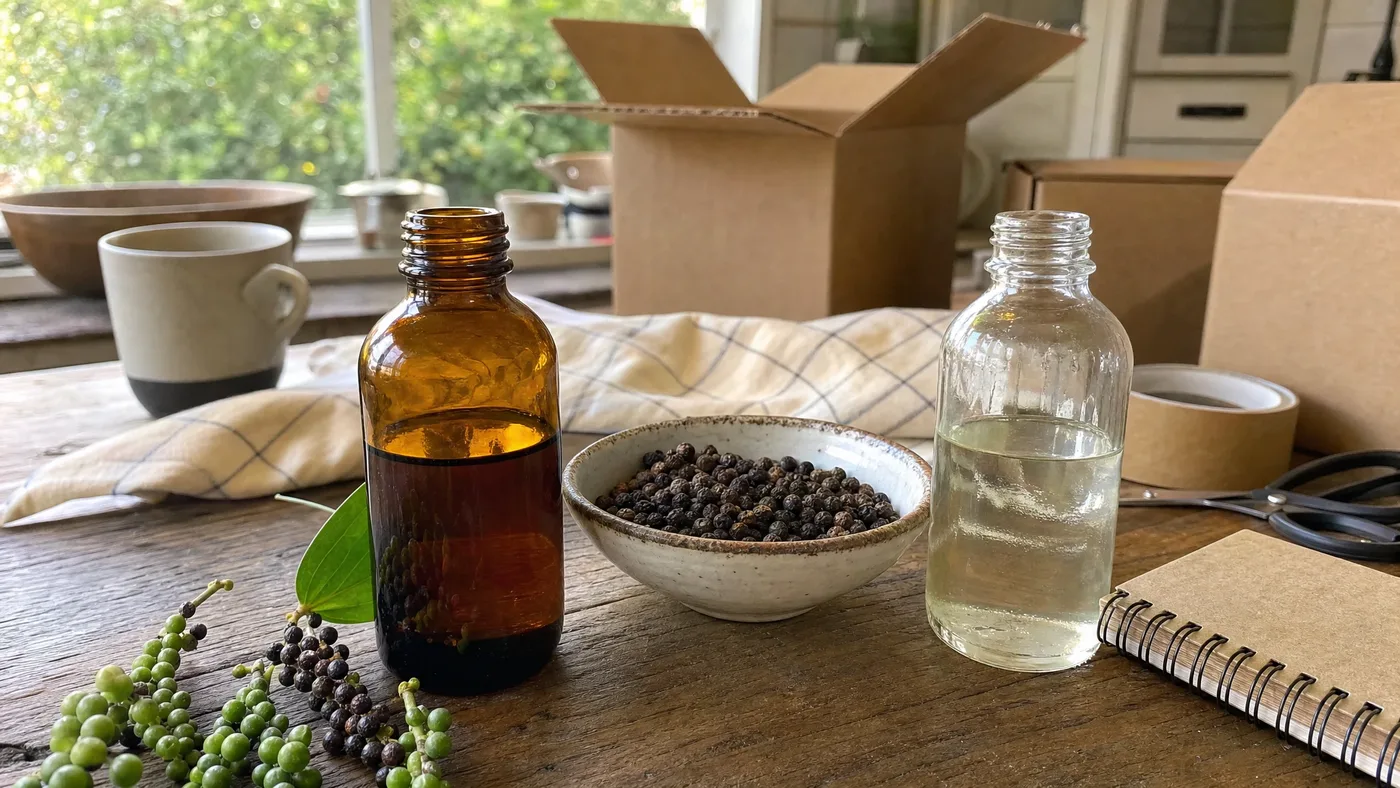
Put a bottle of black pepper oil next to a bottle of peppermint oil and you have two opposite moods: one dry, spicy and settled, the other sharp and icy. People call them warming and cooling, and as shorthand for how they smell, that works. It gets more interesting once you ask where each sensation actually comes from.

Black Pepper Essential Oil
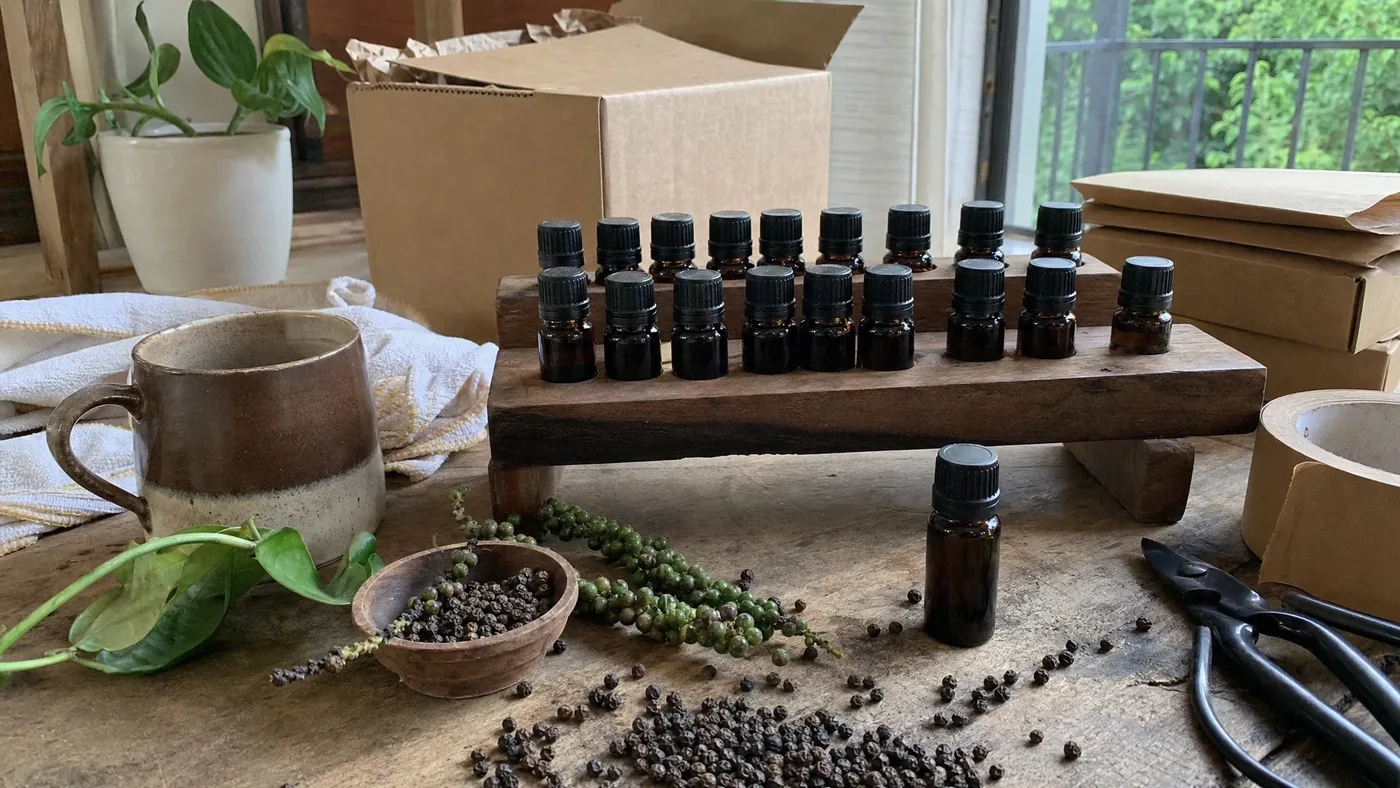
Our own Black Pepper Essential Oil, in sizes from 0.5 oz to bulk.
From $13.99
Shop Now →Mint's chill has a known address
Menthol, the molecule peppermint oil is famous for, switches on a sensor in our skin called TRPM8. A research group described it in 2002: a channel found on a subset of temperature-sensing nerve cells that responds both to cold and to menthol (Peier et al., Cell). So when mint feels cool on skin, nothing has actually gotten colder. A nerve that normally says "cold" has been nudged by chemistry. That is a tidy piece of biology, and it explains why even a small amount of peppermint feels so decisive.
Pepper's warmth lives mostly in the aroma
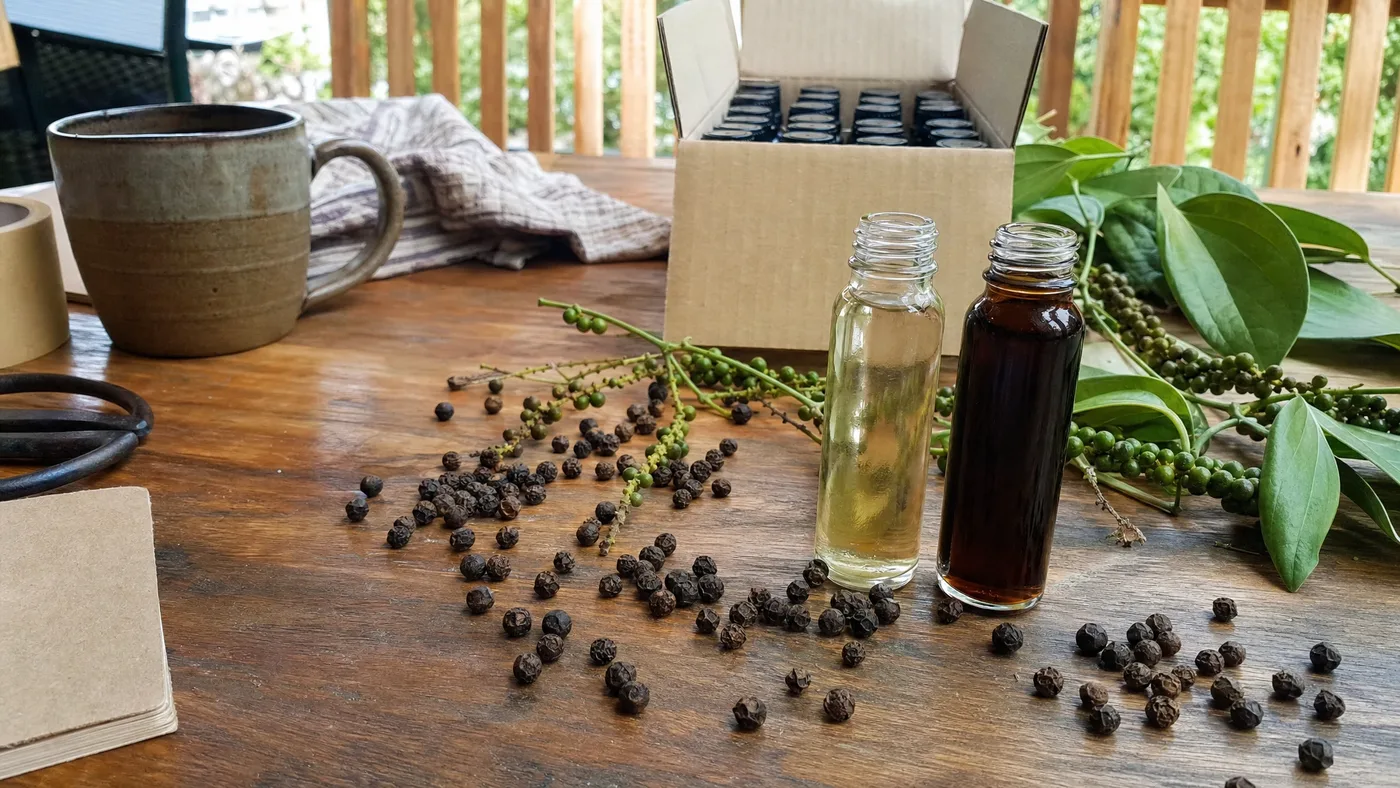
It is tempting to assume black pepper oil works the same way in reverse, with a hot molecule standing in for menthol. The hot molecule in a peppercorn is piperine, and it does not travel with steam. An EFSA review of black pepper products measured piperine in steam-distilled black pepper oil at an average below 0.0005%, against roughly 30 to 40% in the oleoresin, a solvent extract of the same fruit (EFSA FEEDAP Panel, 2022). Distillation leaves the bite behind and carries the fragrance over.
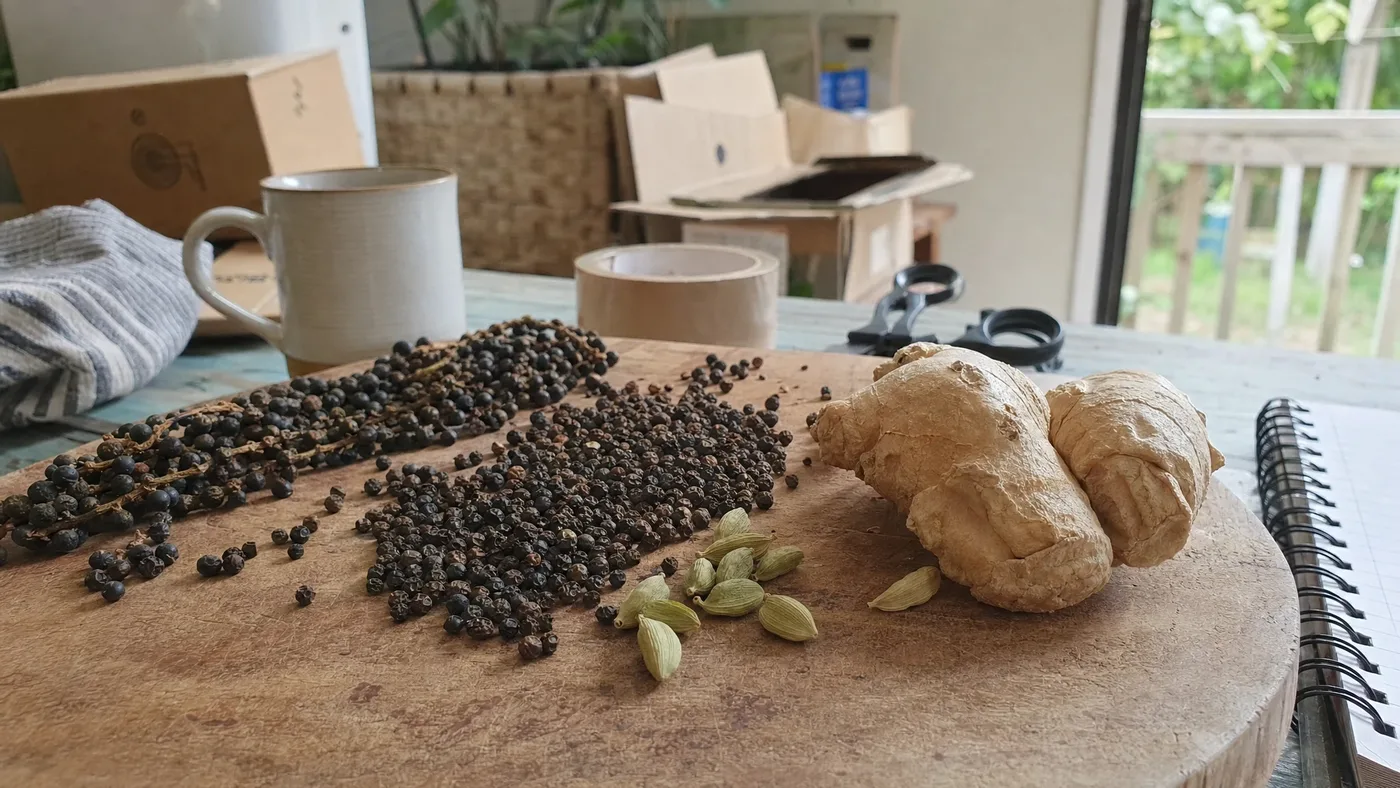
That is why we describe our black pepper oil the way we do: dry, warm and peppery, opening spicy and sharp before settling into a woody warmth. The "warm" in black pepper oil is first of all a scent impression, the same one you get from a freshly cracked peppercorn, rather than the heat of eating the spice. A small compound called rotundone carries much of that pepper character, and it is potent enough that a trace of it does a lot of work (Wood et al., 2008). We went deeper on this in our post on whether black pepper oil contains piperine.
Choosing by scent
Once you see the two oils as scents rather than as opposites, the choice gets easier.
- Reach for black pepper when you want a grounded, woody, slightly smoky spice. It sits comfortably with bergamot, frankincense, cedarwood, rose and clary sage, and it suits evening and cooler weather.
- Reach for peppermint when you want something bright and clean that wakes a room up. We do not sell peppermint, so you will find it at a pharmacy or craft supply shop.
- Use both if you like layered scents. A body oil can carry a little of each, but treat the two as one total: whatever dilution you would use for a single oil is the ceiling for the pair together.
Try them side by side
The quickest way to understand the difference is to smell them together. Put a drop of each on its own strip of blotting paper and hold them a few inches from your nose, one at a time. Peppermint hits at once, clean and bright, and then mostly stays at that pitch. Black pepper takes a little longer to unfold: spicy and sharp at first, then dry and woody as the strip sits. Notice which one you want to keep smelling after a minute.
Which mood for which room
Black pepper suits cooler evenings and rooms with a cosy feel: a living room, a reading corner, a hallway in autumn. Peppermint suits the opposite mood, a morning kitchen or a room you just cleaned. There is no need to pick a winner. They do different jobs, and a shelf with one of each covers a lot of ground.
A word about sore muscles
Many people arrive at this comparison searching for something for aching muscles. We sell a cosmetic aroma oil, and we cannot offer it as a remedy for pain or recovery; a lasting ache is a question for a clinician or pharmacist. What we can say is how to handle either oil sensibly. Both are concentrated. Our guidance for black pepper oil is to dilute to 0.5% to 2% in a carrier oil (roughly 3 to 12 drops per ounce) and patch test first, and to keep it away from eyes, children and pets. The National Center for Complementary and Integrative Health notes that peppermint oil on skin can cause rashes and irritation, and that it should not be applied to the face of infants or young children because inhaling menthol may affect their breathing (NCCIH).
If the scent of warm spice is what you are after, our black pepper massage oil formula shows how to dilute it, and our scent profile will tell you whether you like it before you buy.
Black Pepper Essential Oil
Black Pepper Essential Oil from our own shop, in sizes from 0.5 oz to bulk.
From $13.99
Shop Now →