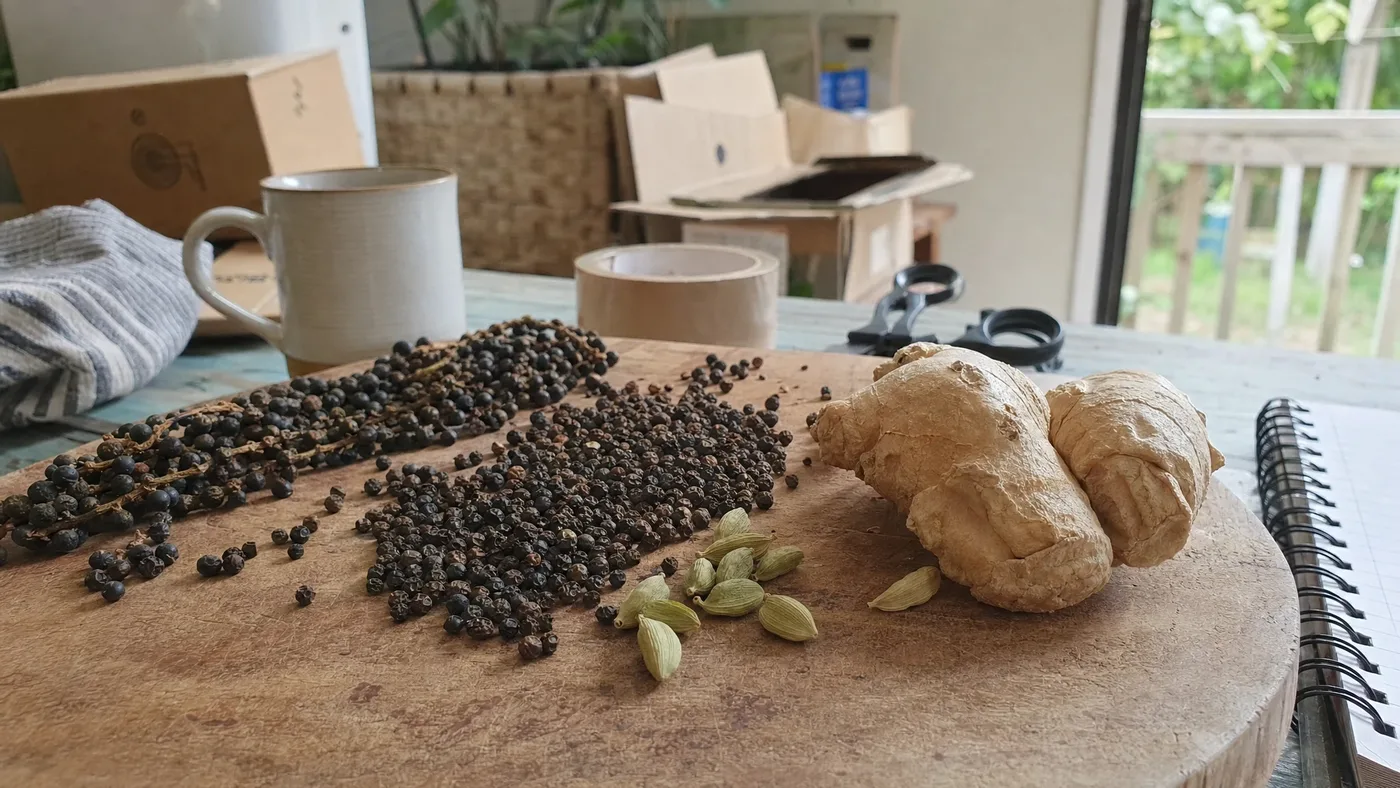
Black Pepper vs Ginger vs Cardamom Oil: Which to Use?
Our verdict first: pepper is the dry, woody one, ginger is the round, earthy one, and cardamom is the bright, fresh one. All three get filed under "warm spice," but they come from different parts of different plants and carry different molecules. Think of them as three tools rather than three versions of one idea.

Black Pepper Essential Oil
Our own Black Pepper Essential Oil, in sizes from 0.5 oz to bulk.
From $13.99
Shop Now →If you only keep one spice oil nearby, the right one depends on the job. Imagine a rainy afternoon and a cup of tea: pepper is the pinch from the mill, ginger is the slice from the root, cardamom is the crushed pod. Each one changes the mood of a blend in a different direction.
What each is made from
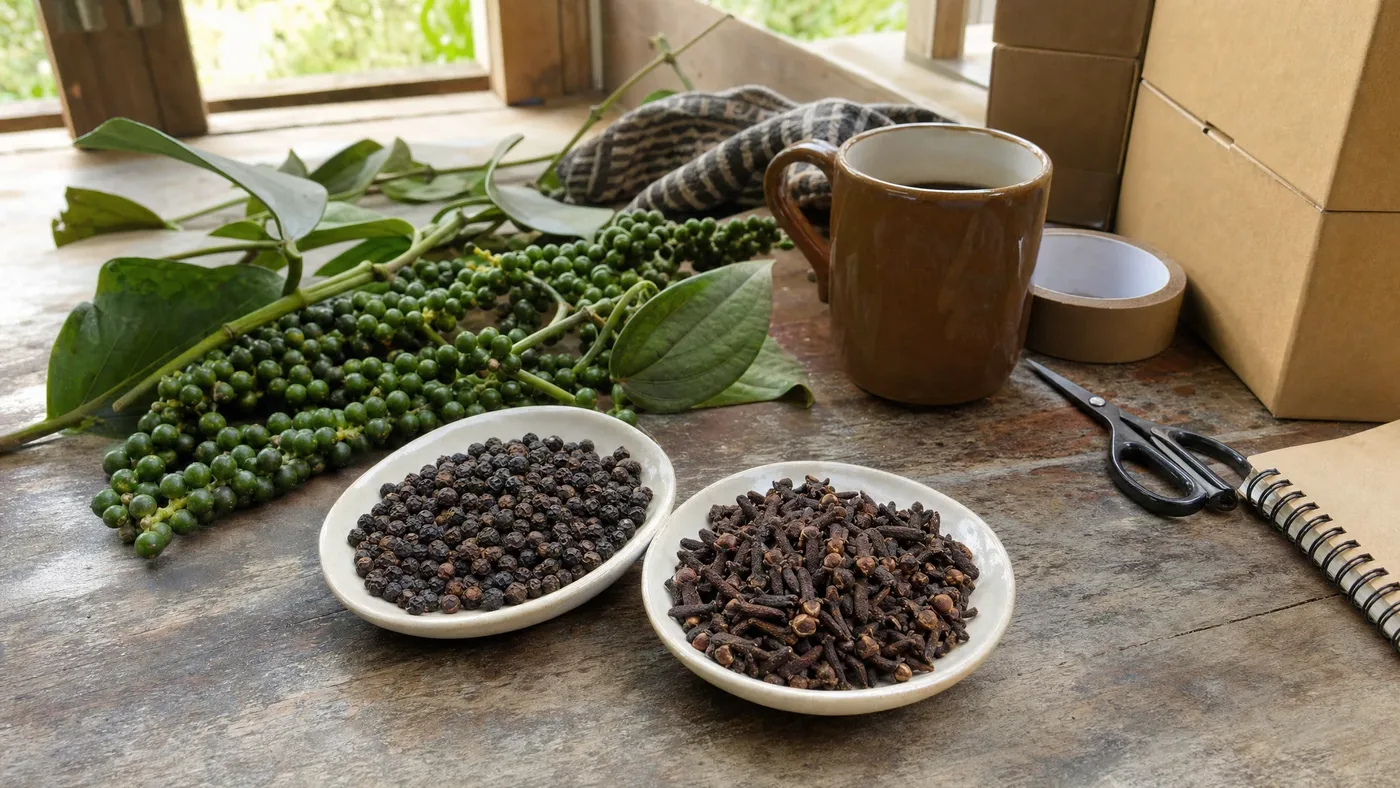
We sell the first of the three: black pepper oil, steam-distilled from the dried peppercorns of Piper nigrum. Ginger oil comes from the rhizome of Zingiber officinale, and cardamom oil from the seeds of Elettaria cardamomum. When one study analysed ginger and cardamom oils, ginger was led by zingiberene at 22 percent, while cardamom was led by 1,8-cineole at 43 percent (Tarfaoui et al., 2022). Distilled black pepper oil has a different lead altogether, beta-caryophyllene, with limonene, sabinene and pinene behind it (EFSA FEEDAP Panel, 2022). These are single studies of single samples, so treat them as tendencies rather than promises about any bottle.
Pepper for structure
When a blend feels sweet and shapeless, pepper gives it a dry spine. We describe our oil as dry, warm and peppery, opening spicy and sharp before settling into a woody warmth, and we suggest bergamot, frankincense, cedarwood, rose and clary sage as companions. For placement, see our blending guide and the perfume note article.
Ginger for roundness
Ginger suits a blend that needs earthy warmth without pepper's edge. Since it is built on zingiberene instead of pepper's mix, it should read softer and rounder, and it makes a friendlier partner for citrus and sweet notes. It is also the first thing most people try when the pepper has run out, and our substitutes guide walks through that swap.
Cardamom for lift, with a note on names
Cardamom brings a fresh, aromatic edge that pepper does not. A study of three cardamom-type species (Elettaria cardamomum, Aframomum corrorima and Amomum subulatum) found oxygenated monoterpenes dominant in each, with 1,8-cineole the main compound they shared (Noumi et al., 2018). In practice that means "cardamom oil" can be more than one plant, so ask for the Latin name.
A word on aroma and scent strength
Pepper tends to announce itself with a dry, spicy first impression and then recede into woody warmth, which is why we place it between the middle and base of a blend. Ginger and cardamom are described more by their plant parts: a rhizome that gives a root-like, earthy depth and a seed that gives a clean, aromatic top. Smelling each from its own blotter before you blend is the surest guide, because your nose will settle the question faster than any table.
How to compare them at home
The simplest test costs almost nothing. Put one drop of each oil on its own paper strip (a coffee filter cut into slivers works), label them in pencil and wait a minute. Smell each at arm's length, then up close, then again after ten minutes and after an hour. You will probably notice that one starts loud and fades, one stays round, and one gets cleaner as it dries. Write down which you reach for again. Your nose is the judge here.
Then try pairs on a single strip. Pepper and ginger together tend to read as warm and gingerbread-like, while pepper and cardamom read as crisp and aromatic. Neither is better; they are just different moods.
Which one for which project
- A woody, masculine cologne or candle: pepper, with a wood beside it.
- A cozy, bakery-style diffuser blend: ginger, with something sweet.
- A bright, clean room scent: cardamom, with citrus.
Using them together
The three overlap more than they compete. Pepper's dry edge on ginger's round warmth, lifted by a touch of cardamom, makes a lovely diffuser accord, and our diffuser blend ideas are a good place to start. For skin products, each oil has its own dilution limits, so look up the specific one for ginger or cardamom rather than carrying a number across. For ours, we recommend diluting black pepper oil to 0.5% to 2% in a carrier and patch testing first.
Start with pepper if you want structure, ginger if you want comfort and cardamom if you want freshness.
Black Pepper Essential Oil
Black Pepper Essential Oil from our own shop, in sizes from 0.5 oz to bulk.
From $13.99
Shop Now →